Ethnobotany.A food for many Amerindian Peoples: the bulbs were eaten raw or roasted.
Descriptionby the California Native Plant Society. Calochortus nudus is a species of flowering plant in the lily family known by the common name naked mariposa lily. It is native to the mountains of northern California and southern Oregon, where it grows in wet areas such as meadows and lakeside bogs. It is a perennial herb producing an unbranching stem up to about 25 centimeters tall. The basal leaf is 5 to 15 centimeters long and does not wither at flowering. The flower cluster bears one or more erect, bell-shaped flowers. Each flower has three small, pointed sepals and three wider petals all pinkish or lavender in color. The petals are mostly hairless and about 1.5 centimeters long. The fruit is a capsule about 2 centimeters long.
Ethnobotany.A food for many Amerindian Peoples: the bulbs were eaten raw or roasted.
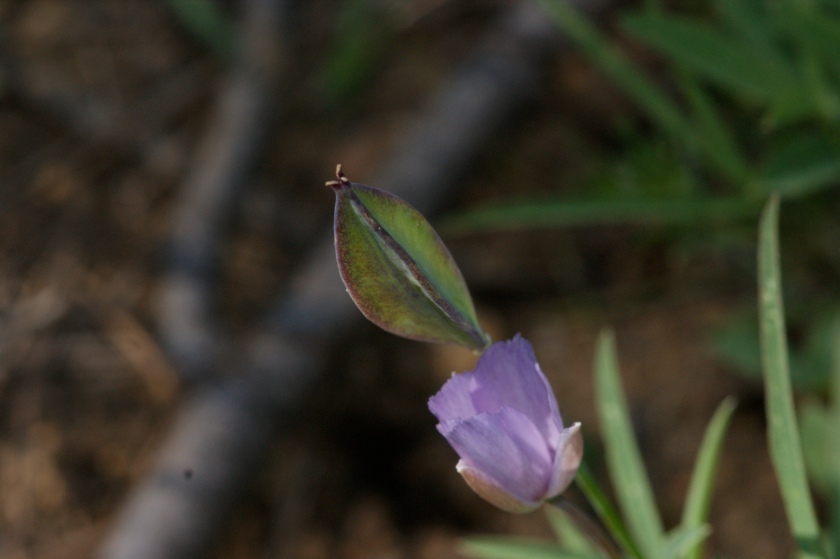
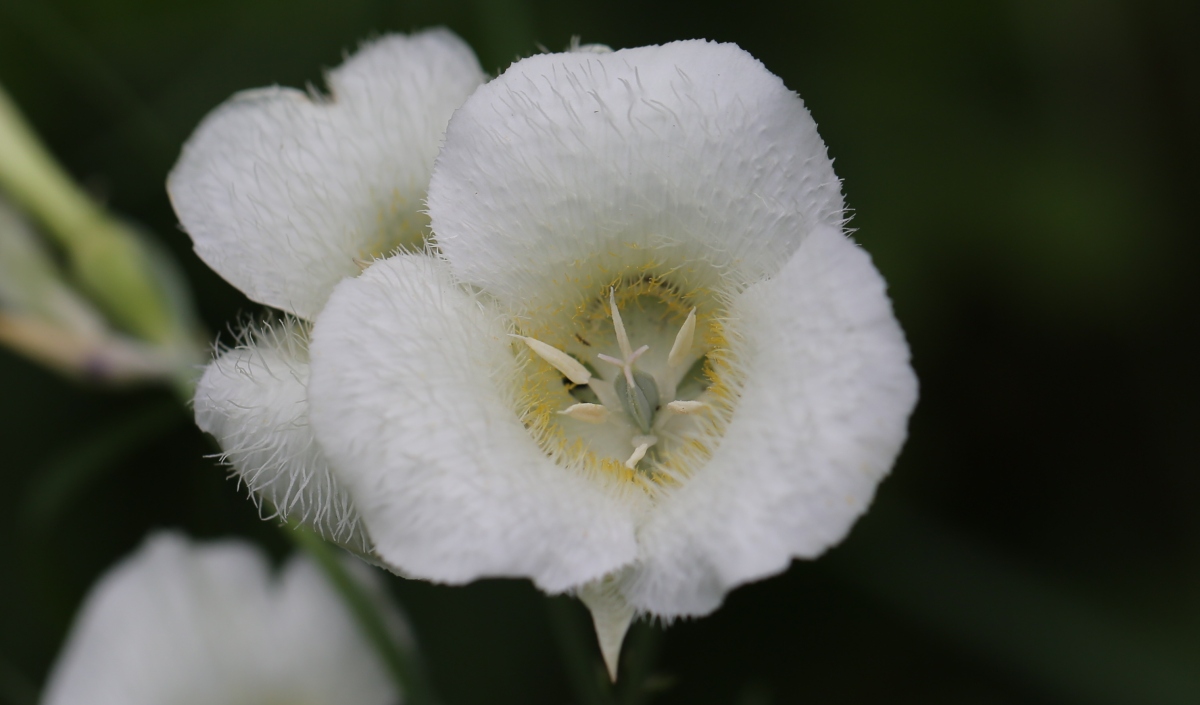
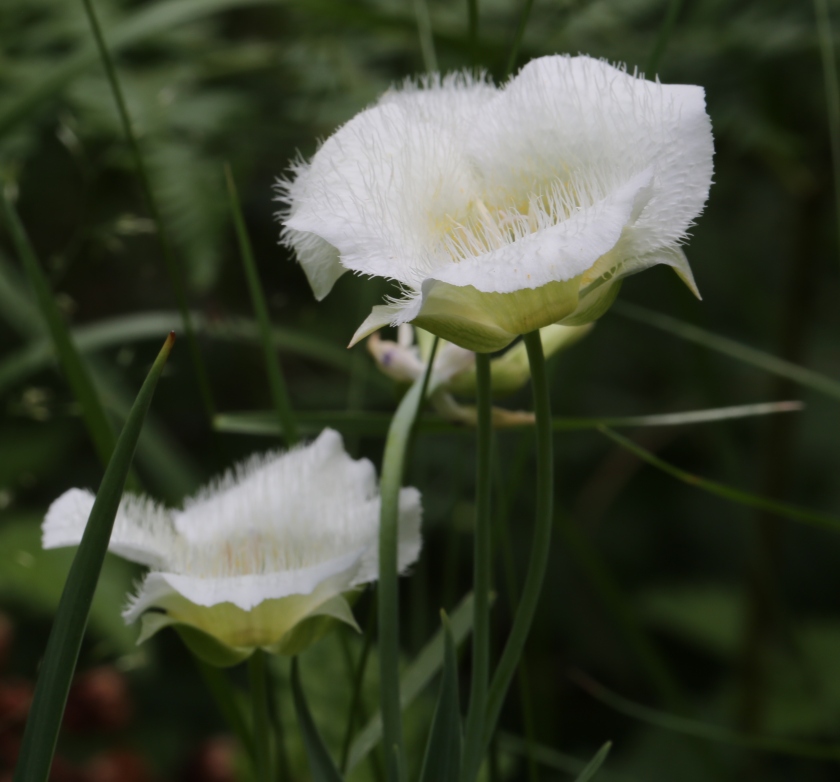
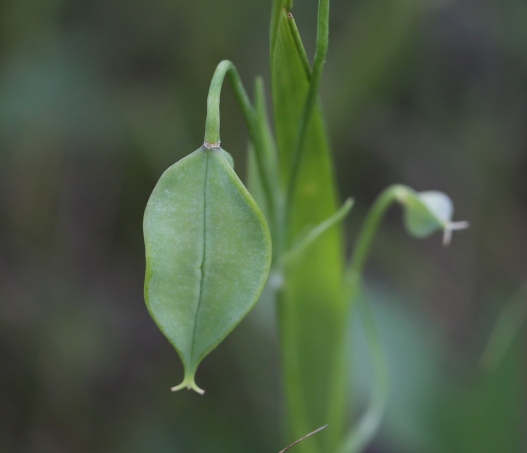
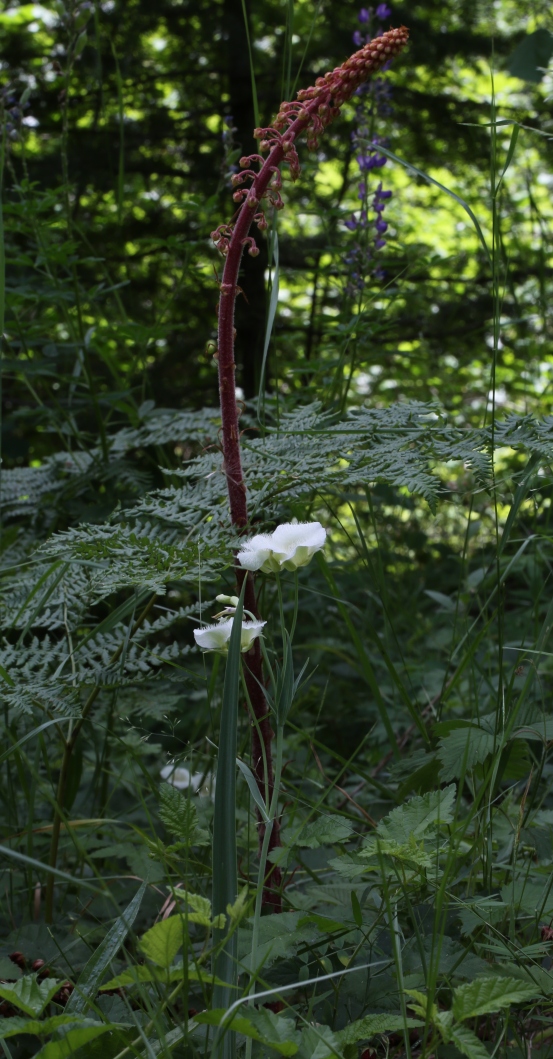
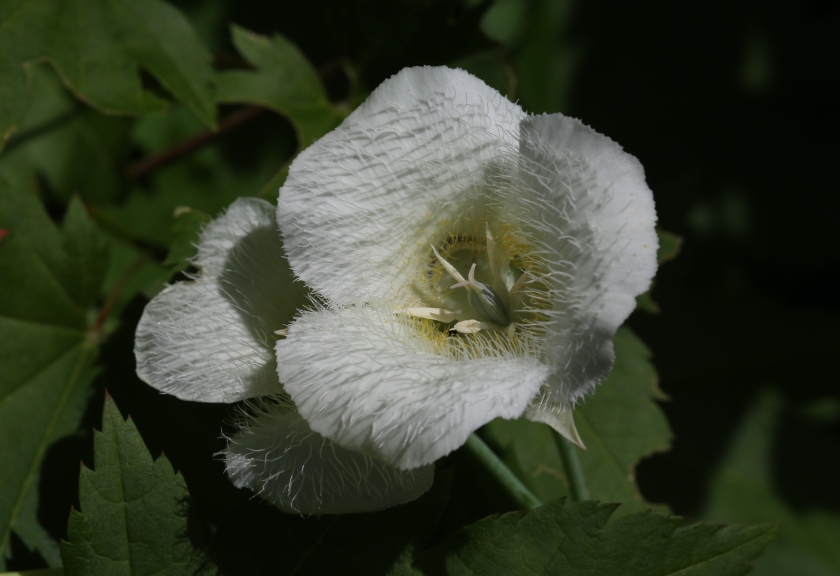
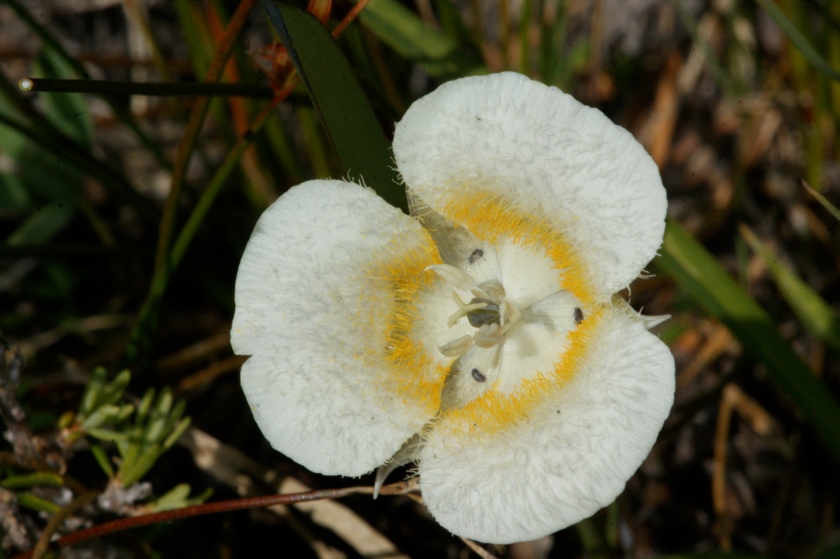
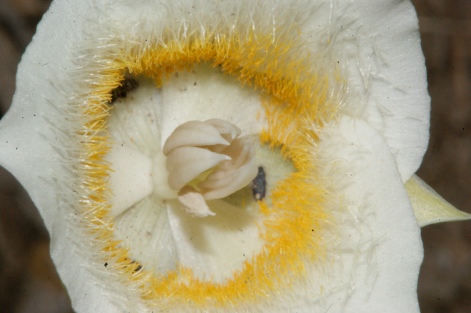
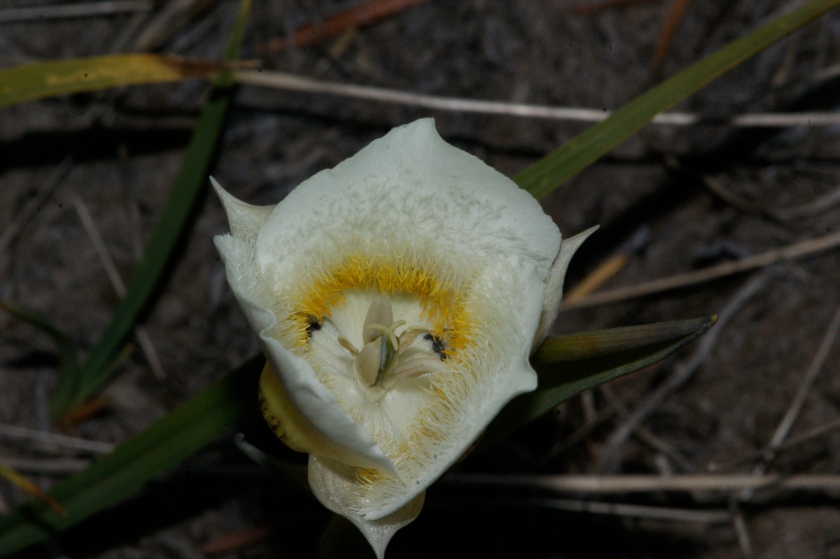
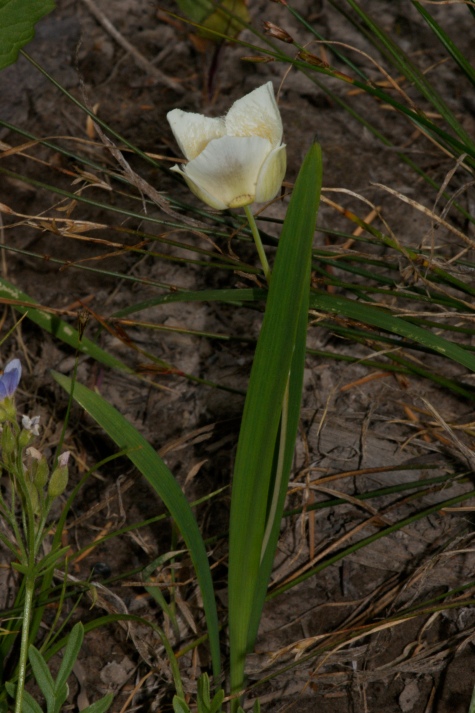
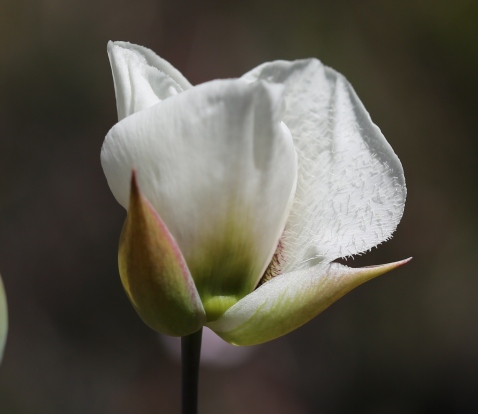
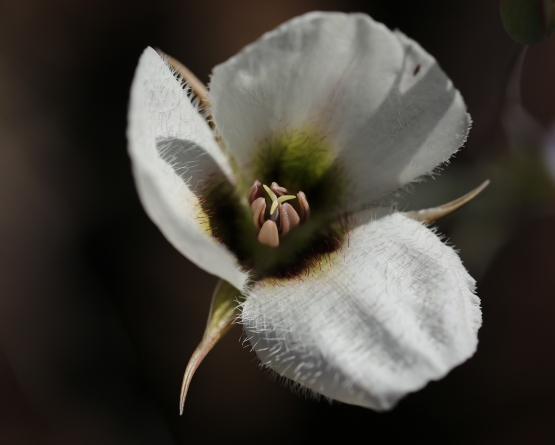
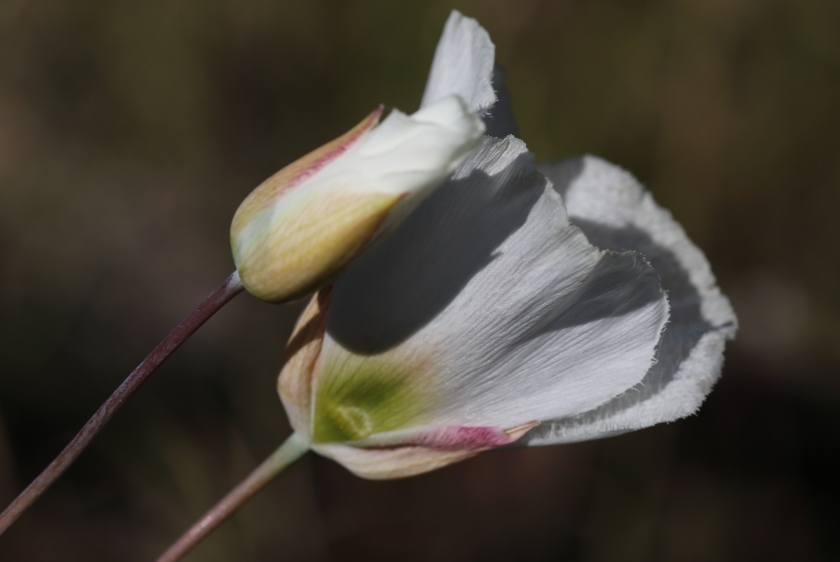
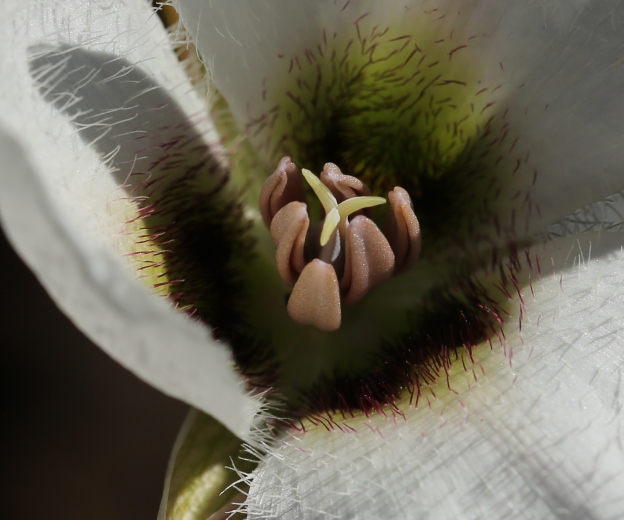
Descriptionfrom the Flora of North America. Stems usually not branching, straight or flexuous, often scapelike, 0.5–3 dm. Leaves: basal 1–3 dm × 2–15 mm, usually equaling or exceeding stem length; blade flat, adaxial surface glabrous. Inflorescences subumbellate, 1–5-flowered; bracts 2–several, lanceolate to linear, unequal, 1–5 cm, apex acuminate; peduncle slender, becoming stouter, deflexed in fruit. Flowers erect or spreading; perianth open, campanulate; sepals typically with purple glandular blotch near base, oblong-lanceolate, shorter than petals, adaxial surface minutely hairy, apex acute to acuminate; petals yellowish white, sometimes lavender-tinged, frequently with narrow purple crescent distal to gland, broadly obovate, cuneate, moderately bearded nearly to apex, adaxial surface densely hairy, margins fringed, apex obtuse or acute; glands transversely oblong, arched upward, ± deeply depressed, bordered proximally by narrow, ascending, deeply fringed membrane, distally by narrow, crenate membranes, gland surface with rather long, slender hairs toward distal portion; anthers lanceolate, apex long-apiculate. Capsules nodding, 3-winged, ellipsoid, apex usually acute. Seeds pale yellow. 2n = 20. Flowering summer. Open forest in loose volcanic soils; 1000–2200 m; Oregon, Washington.
The pictures above of Calochortus subalpinus were taken on Mount Adams in Washington in July 2017. The pictures below of Calochortus subalpinus were taken in July 2009 in central Oregon.
Ethnobotany.A food for many Amerindian Peoples: the bulbs were eaten raw or roasted.
Description. Siskiyou mariposa lily is an herbaceous perennial with a single, basal leaf arising from a bulb. The basal leaf can be up to 20 centimeters (7.9 inches) in length and the flowering stem approximately 10 centimeters (3.9 inches) high. One to three large showy, pink to lavender, erect, bell-shaped flowers have a yellow fringe above the nectary at the base of the petals.
Ethnobotany.A food for many Amerindian Peoples: the bulbs were eaten raw or roasted.
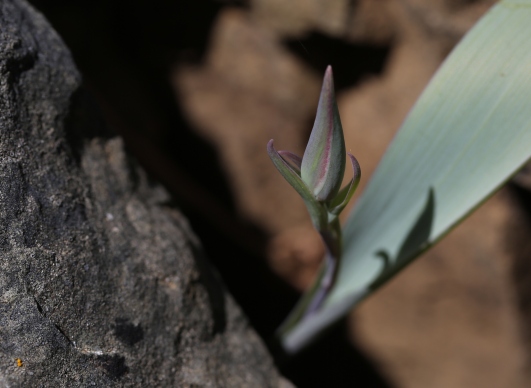
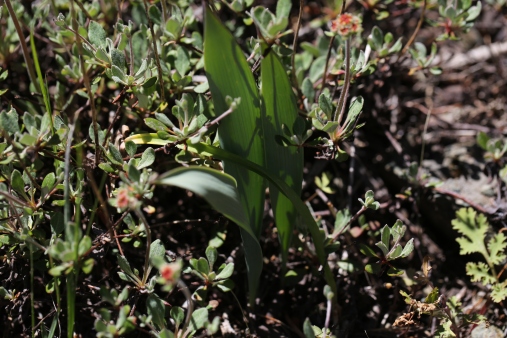
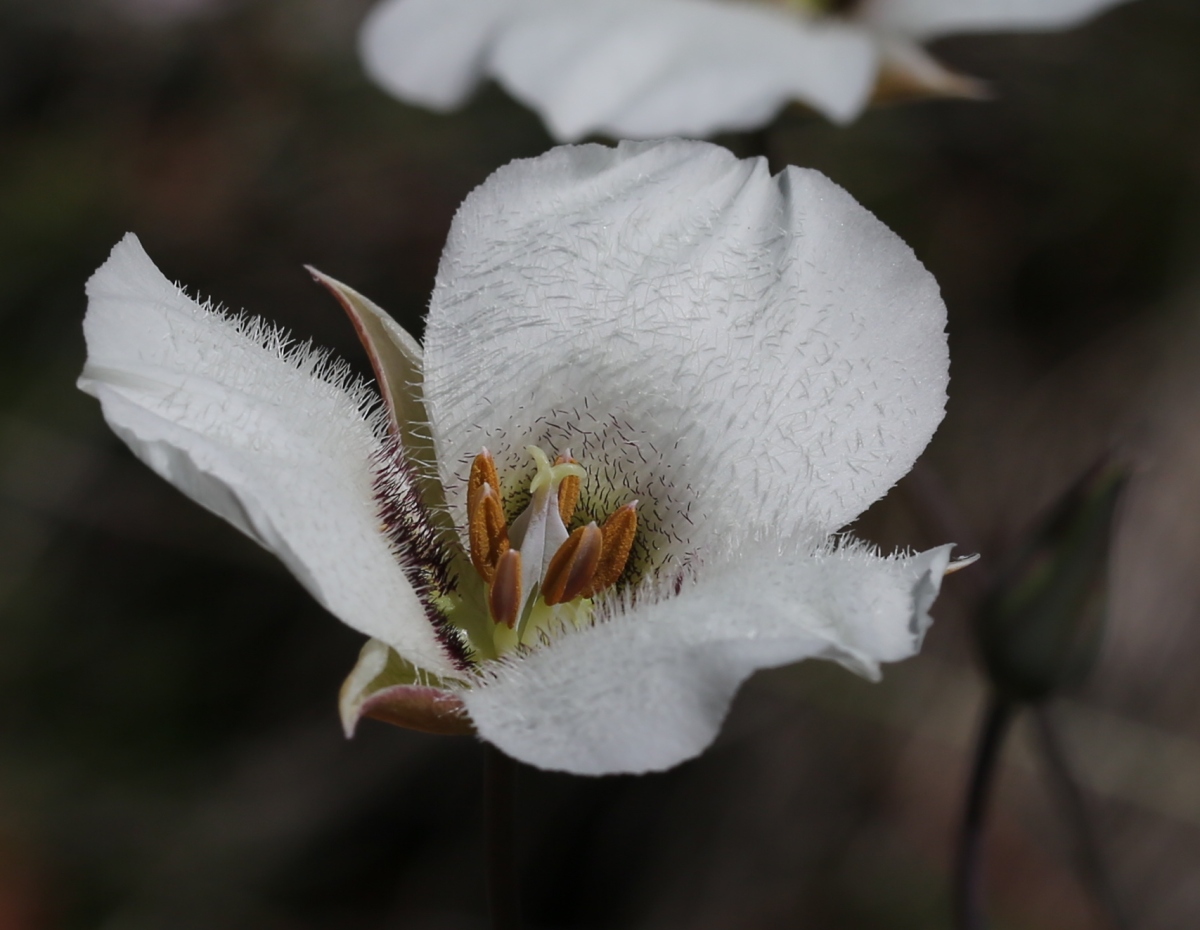
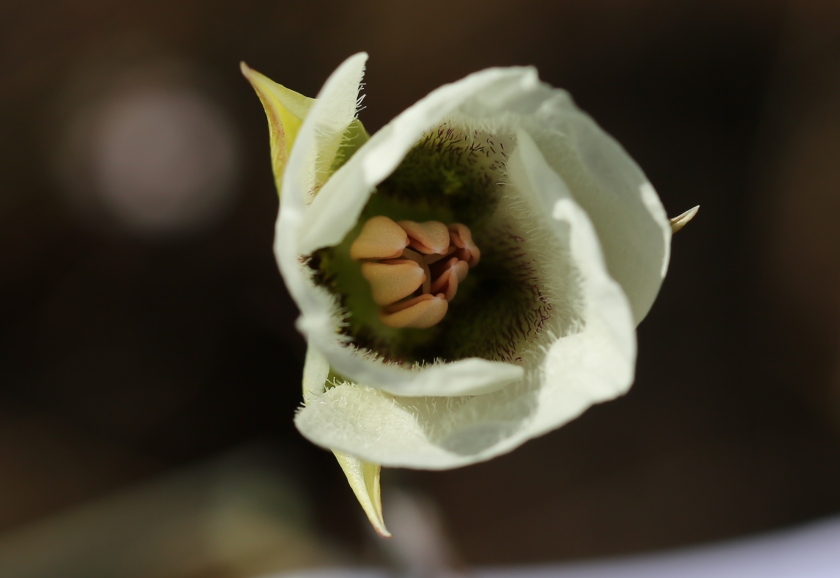
Description from the Oregon Department of Agricuture. Howell’s mariposa lily is a bulbous perennial, 2-4 dm tall, that bears a single large basal leaf (averaging 30 cm in length). These deep green, somewhat leathery basal leaves are distinctly parallel-veined with rows of hairs on the undersides that correspond to the veins. The broadly cup-shaped, showy flowers have three white to cream-colored petals 2.7-3 cm long, each with a lime green petal spot that is covered with dark purple hairs. The upper portions of the petals have few or no hairs. Each stem usually produces one or two (sometimes three) flowers, which develop into 2-cm-long capsules that remain erect until seeds are released. Plants begin to bloom in mid June and can continue into August under ideal conditions. In most populations, many more vegetative than reproductive plants occur, with only a relatively few mature individuals flowering each year. The number of plants flowering varies greatly among years and is dependent on seasonal conditions.
All the pictures and videos of Calochortus howellii were taken, in the Kalmiopsis wilderness along the Illinois river, on June 18 th 2017. 42°14’43” N 123°41’6″ W
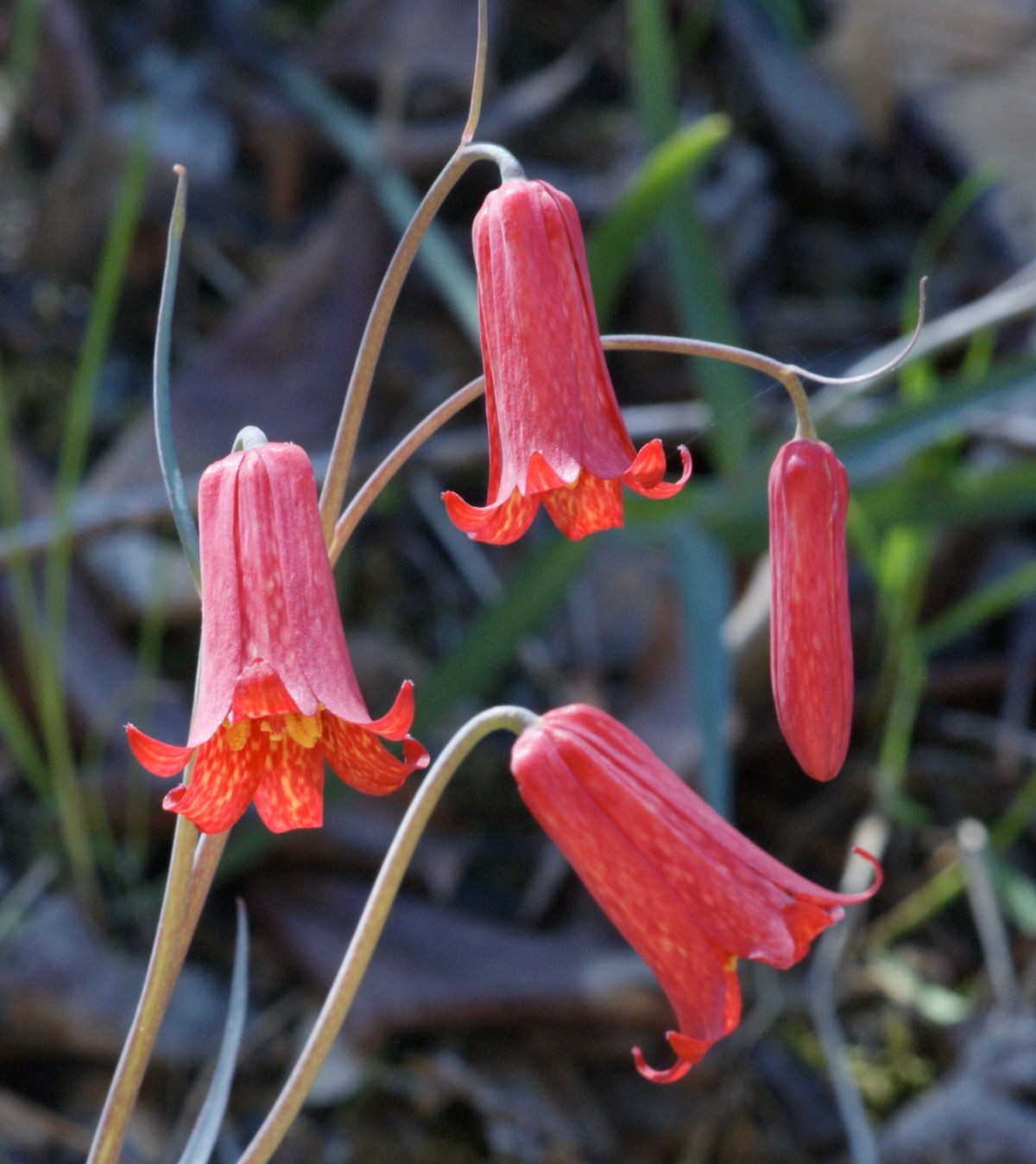
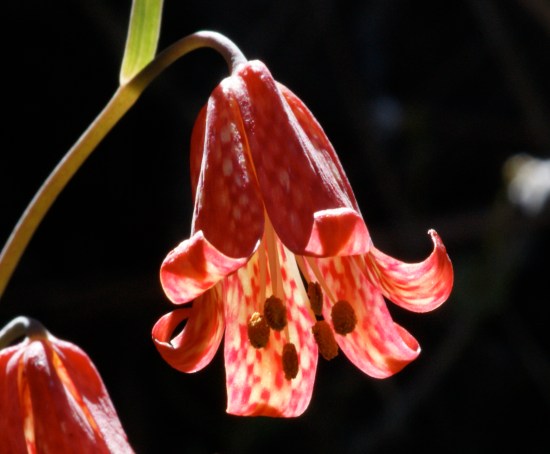
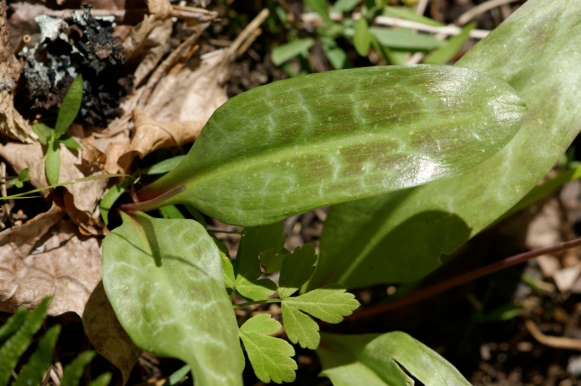
Ethnobotany. As mentioned in “Shasta Ethnography, Anthropological Records” (Holt, Catharine, 1946), the bulbs of Fritillaria recurva were boiled or roasted for food by the Shasta People.
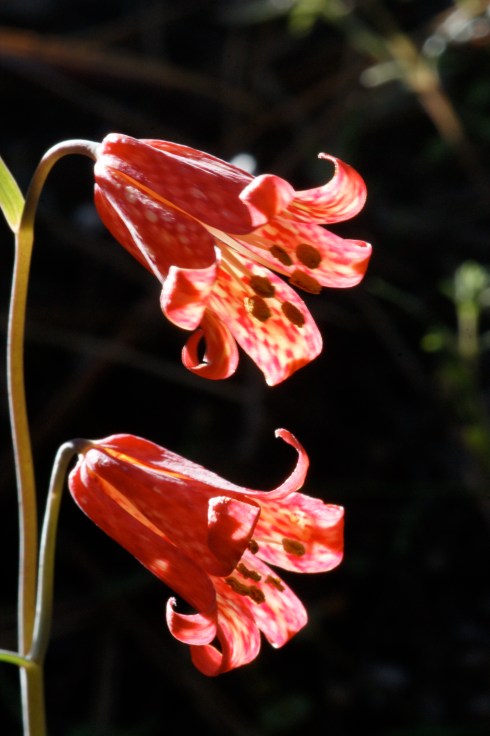
Description by the California Native Plants Society. Fritillaria recurva, the Scarlet Fritillary, is native to southwest Oregon from Douglas County south into California where it grows in the Klamath Mountains, Northern Coast Ranges, Cascade Range, and Sierra Nevada. It grows in dry, open woodlands and chaparral from 300 to 2200 meters, and it blooms in spring from February to July. Throughout its range it is distinguishable from other Fritillaria species by its scarlet red color, checkered with yellow on the inside, and recurved petals. Its leaves are arranged in whorls and are linear to narrowly lance-shaped. In southwest Oregon it is similar to the rare Fritillaria gentneri. The latter can be distinguished from Fritillaria recurva by its branching style and longer nectary glands. Additionally, it blooms about two weeks after Scarlet Fritillary and has a different reddish color.
Ethnobotany. The bulbs of Fritillaria pudica were boiled or roasted for food by the Ute, Spokan, Thompson, Blackfoot, Flathead, Montana, Gosiute, Okanagan-Colville, Paiute and Shuswap Peoples.
As mentioned in “The Salishan Tribes of the Western Plateaus” (Teit, James A., 1928); “Ethnobotany of the Blackfoot Indians, Ottawa” (Hellson, John C., 1974); “Montana Native Plants and Early Peoples, Helena” (Hart, Jeff, 1992); “The Ethno-Botany of the Gosiute Indians of Utah” (Chamberlin, Ralph V., 1911); Native Economic Plants of Montana, Bozeman” (Blankinship, J. W., 1905); “Ethnobotany of the Okanagan-Colville Indians of British Columbia and Washington, Victoria.” (Turner, Nancy J., R. Bouchard and Dorothy I.D. Kennedy, 1980); “Ethno-Botany of the Indians in the Interior of British Columbia” (Perry, F., 1952); “Ethnobotany of the Oregon Paiutes of the Warm Springs Indian Reservation” (Mahar, James Michael., 1953); “Shuswap Indian Ethnobotany” (Palmer, Gary, 1975); “Some Plant Names of the Ute Indians” (Chamberlin, Ralph V., 1909). The plant is called “skni” in the Sahaptin languages.
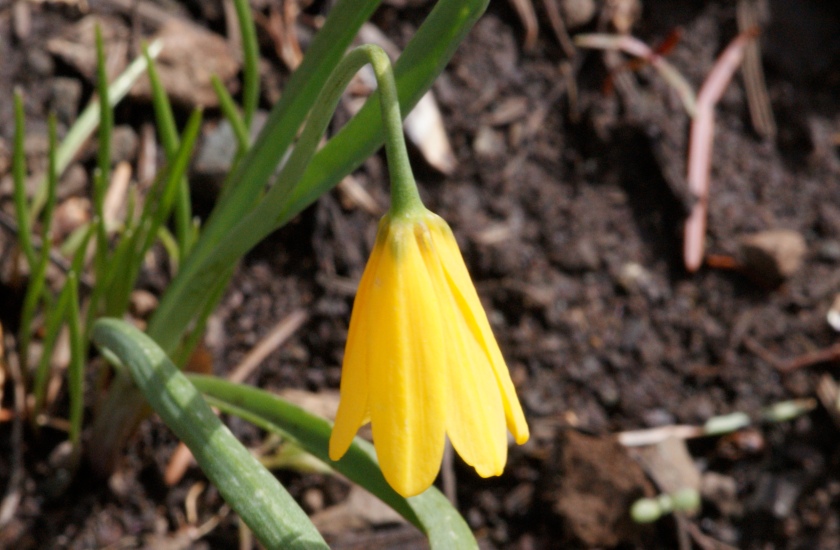
Description by the California Native Plants Society. Fritillaria pudica, (Yellow Fritillary) is a small, charming plant of sagebrush country in the western U.S. It is a member of the Lily family, or Liliaceae. Another (somewhat ambiguous) name is “yellowbells”, since it has a bell-shaped yellow flower. It may be found in dryish, loose soil; it is amongst the first plants to flower after the snow melts, but the flower does not last very long; as the petals age, they turn a brick-red colour and begin to curl outward. This lily produces a small bulb, which can be dug up and eaten fresh or cooked; it served Native Americans as a good source of food in times past, and is still eaten occasionally.
Ethnobotany. This plant was used by many First Peoples: Blackfoot, Chehalis, Cowlitz, Hesquiat, Hoh, Hupa, Karok, Klallam, Maidu, Makah, Montana, Nitinaht, Okanagan-Colville, Pomo, Quileute, Quinault, Yama, Yurok. Poultices of chewed roots were applied to wounds, breaks and sprains. The plants used to decorate baskets and garments. The leaves were woven into water tight baskets used for cooking. The bulbous rhizomes were roasted for several days before being eaten.
Description from the Flora of America. Stems (0.8–)1.2–1.8(–2) m. Leaf blade 2–8(–10) dm × 2–4(–6) mm. Racemes 5–7 dm. Tepals oblong to lanceolate, 6–9 × 2–3 mm; styles 4 mm. Capsules 5–7 mm. Seeds 4 per locule. 2n = 30. Flowering spring–early summer. Open coniferous woods, dry ridges, rocky slopes, and clearings; 0–2300 m; Alta., B.C.; Calif., Idaho, Mont., Oreg., Wash., Wyo.
Ethnobotany. A food and a medicine for many Amerindian Peoples. Calochortus gunnisonii was a food for the following First Peoples: Keres, Cheyenne, Navajo Ramah. Among the Navajo Ramah, the juice of the leaves was applied to pimples; a decoction of the whole plant was taken to ease delivery of placenta; and the plant was also used a ceremonial medicine. Among the Keres, an infusion of the was plant taken for swellings. Among the Cheyennes, the dried and chopped bulbs were used as an ingredient for a medicinal mixture. These informations were mentioned in: “The Ethnobotany of the Ramah Navaho”; “The Cheyenne Indians – Their History and Ways of Life Vol 2”; “The Ethnobotany of the Northern Cheyenne Indians of Montana”.
Description from the Flora of America. Calochortus gunnisonii. Plants usually bulbose; bulb coat, when present, membranous. Stems not branching, straight, 2.4–5.5 dm. Leaves: basal withering, 18–35 cm; blade linear. Inflorescences subumbellate, 1–3-flowered. Flowers erect; perianth open, campanulate; sepals marked similar to petals, lanceolate, usually much shorter, glabrous, apex acute; petals white to purple, greenish adaxially, clawed, often with narrow, transverse purple band distal to gland and purple blotch on claw, obovate, cuneate, usually obtuse and rounded distally; glands transversely oblong, not depressed, densely bearded with distally branching hairs, outermost of which somewhat connate at base to form discontinuous, deeply fringed membranes; filaments shorter than anthers; anthers lanceolate, apex acute to apiculate. Capsules erect, linear-oblong, 3-angled, 3–6 cm, apex acute. Seeds flat, inflated. 2n = 18.usually bulbose
Reference Books. The gem of a book for all Calochortus aficionados is : “Calochortus Mariposa Lilies and their Relatives”. By Mary E. Gerritsen and Ron Parsons. 2007. Timber Press.
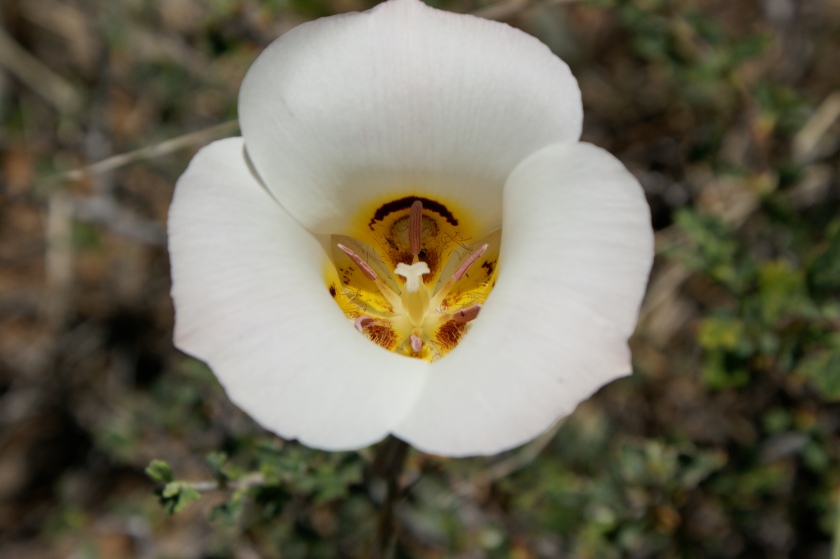
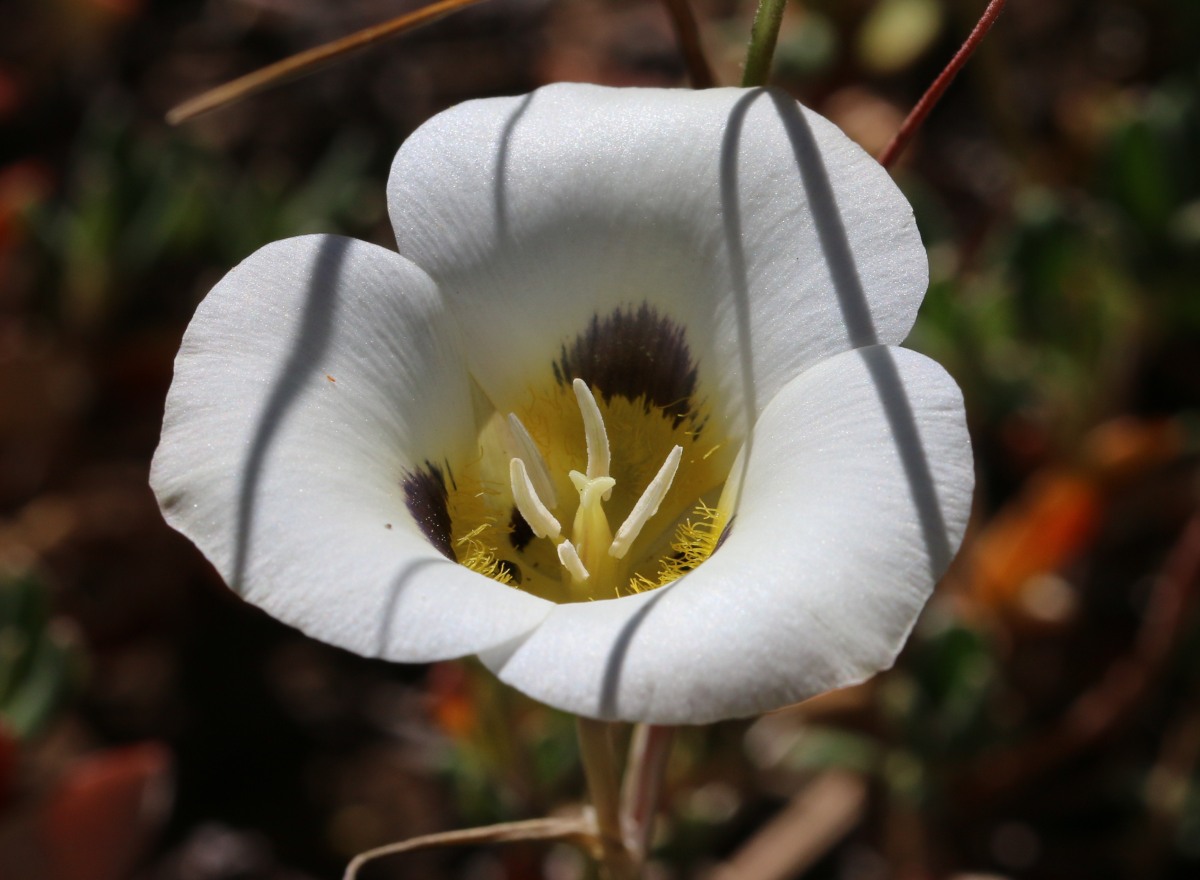
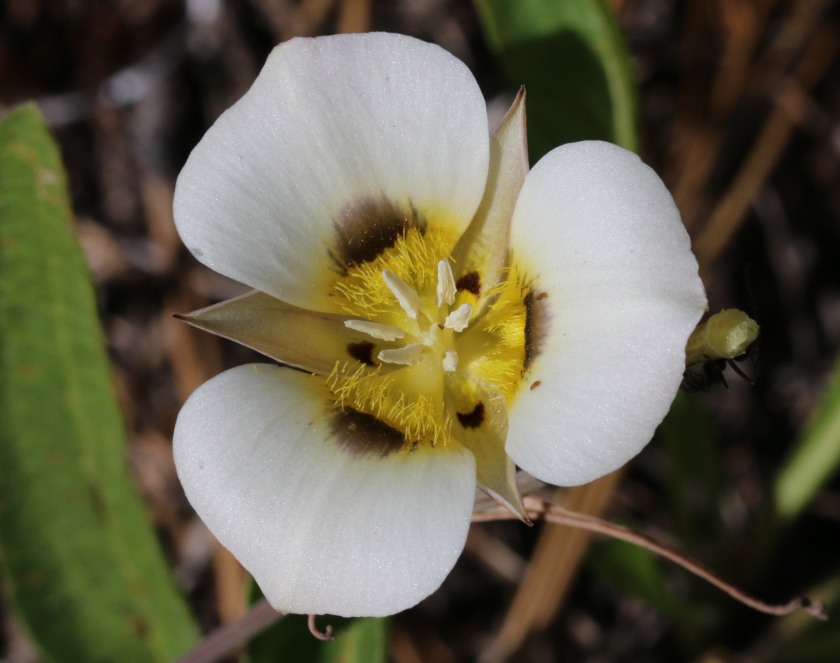
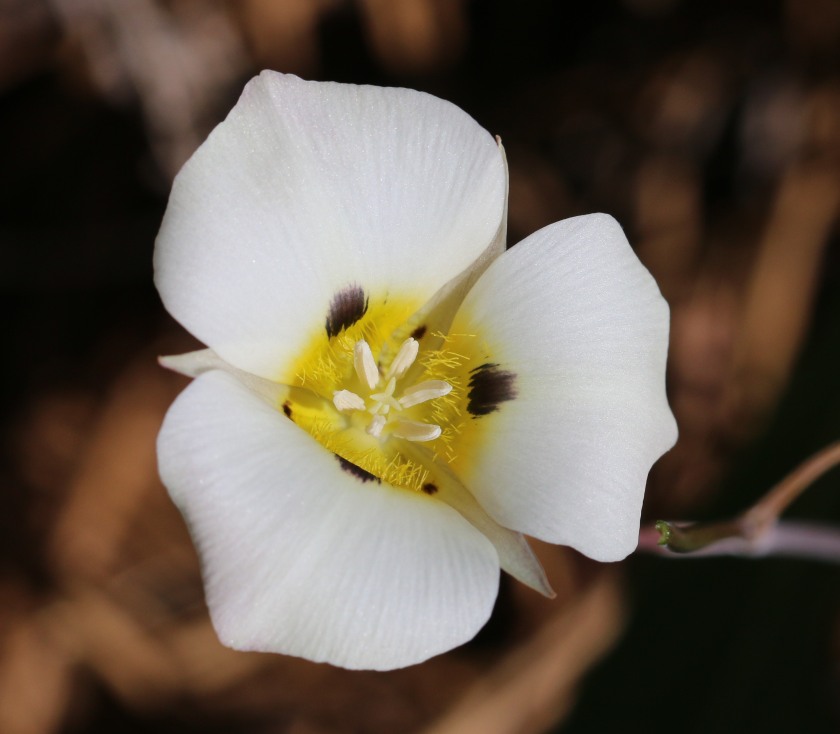
Ethnobotany. A food and a medicine for many Amerindian Peoples: the bulbs were eaten raw or roasted. Calochortus nuttallii was a food for the following First Peoples: Hopi, Gosiute, Navajo, Havasupai, Ute et Païute. These informations were mentioned in “Willards Z. Park’s Ethnographic Notes on the Northern Paiute of Western Nevada 1933-1940”; “Indian Uses of Native Plants”; “Some Plant Names of the Ute Indians, American Anthropologist”; “Some Data on Plains and Great Basin Indian Uses of Certain Native Plants, Tebiwa”; “Ethnobotany of the Navajo”; “Hopi History And Ethnobotany”; “Havasupai Habitat: A. F. Whiting’s Ethnography of a Traditional Indian Culture”; “The Ethno-Botany of the Gosiute Indians of Utah, Memoirs of the American Anthropological Association”.
Kate C. Snow, President of the Daughters of Utah Pioneers, in a letter dated April 17, 1930, says that “between 1840 and 1851” food became very scarce in Utah due to a crop-devouring plague of crickets, and that “the families were put on rations, and during this time they learned to dig for and to eat the soft, bulbous root of the sego lily. The memory of this use, quite as much as the natural beauty of the flower, caused it to be selected in after years by the Legislature as the floral emblem of the State. By an act of the Utah State Legislature, approved on March 18, 1911, the sego lily was declared to be the State floral emblem. The sego lily was made the official state flower after a census was taken of the state’s school children as to their preference for a state flower.
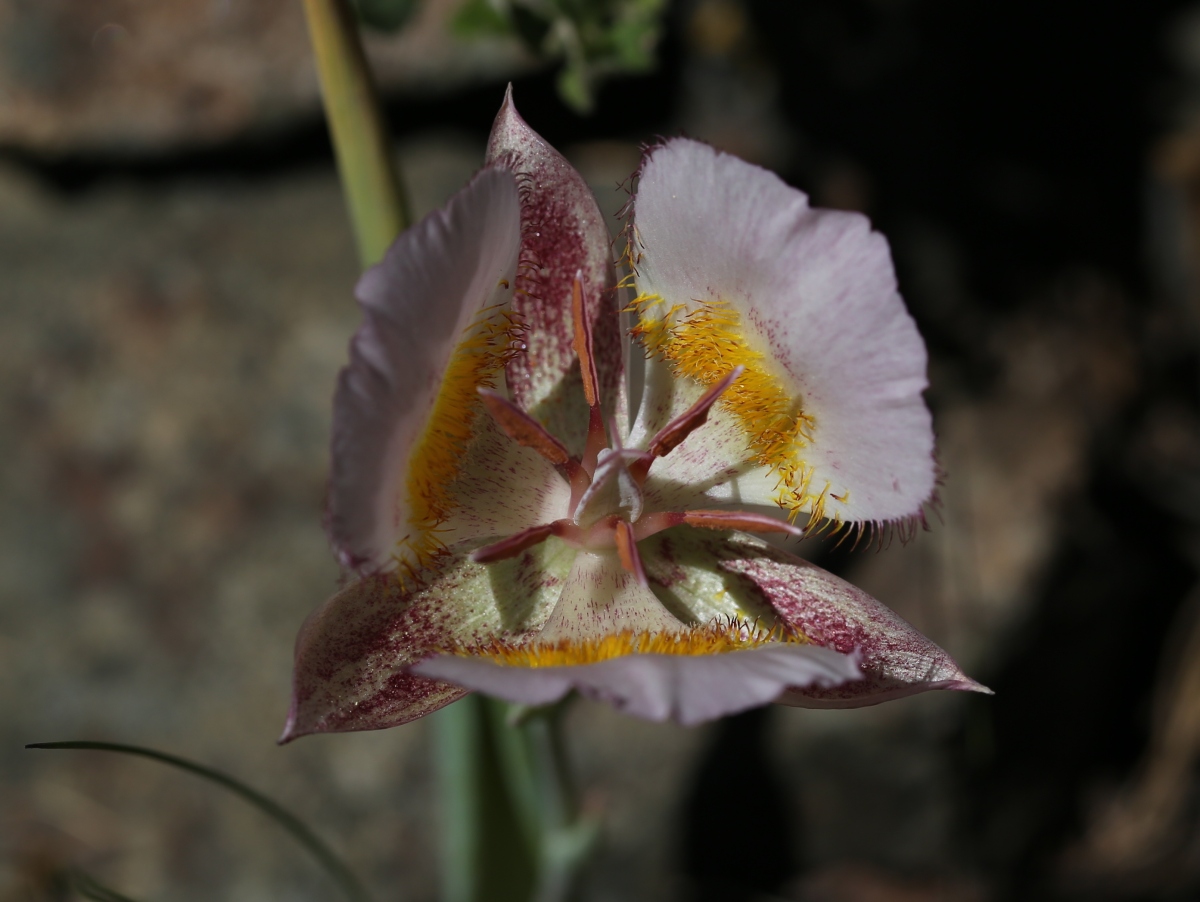
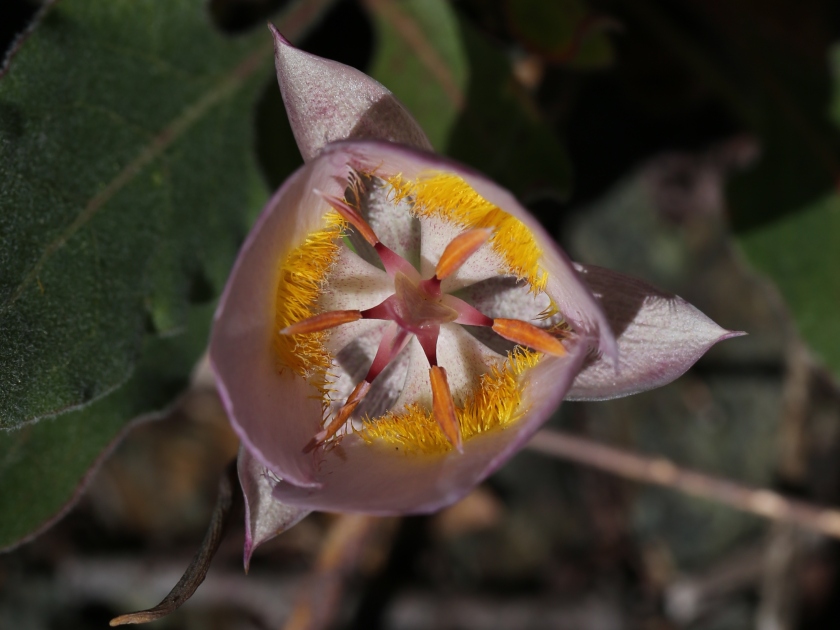
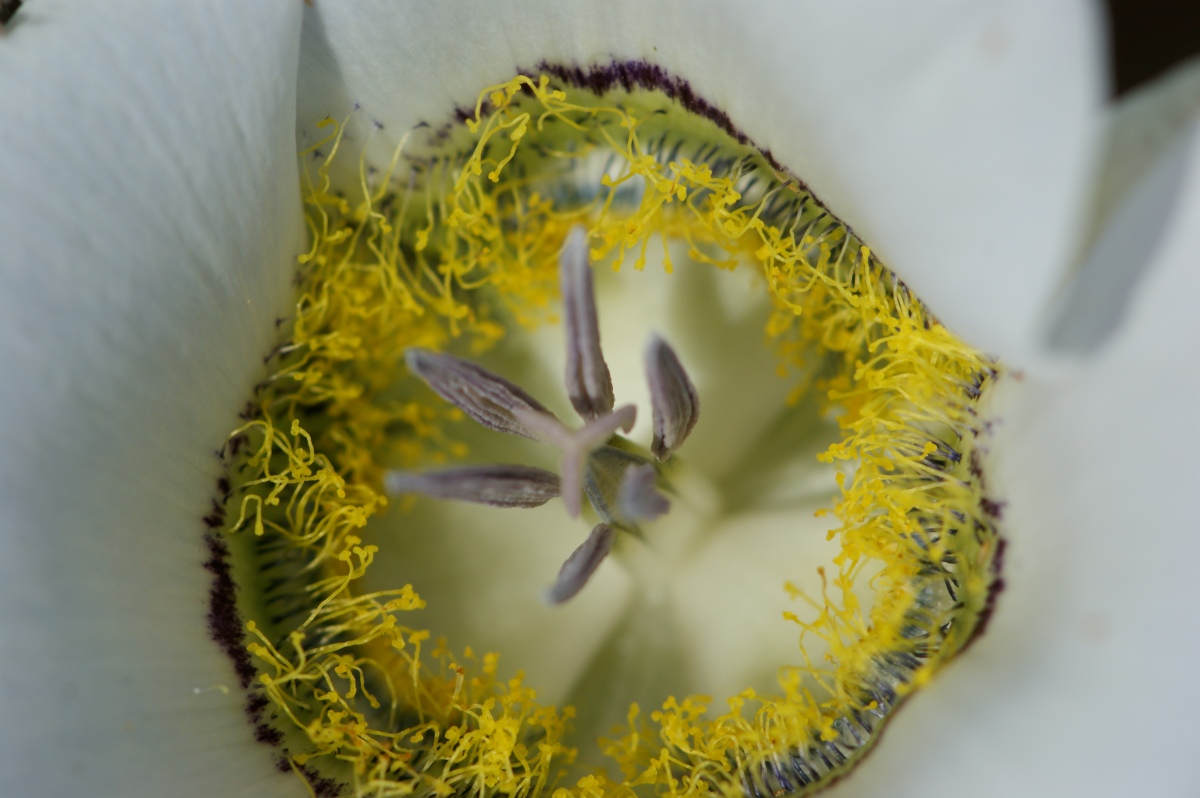
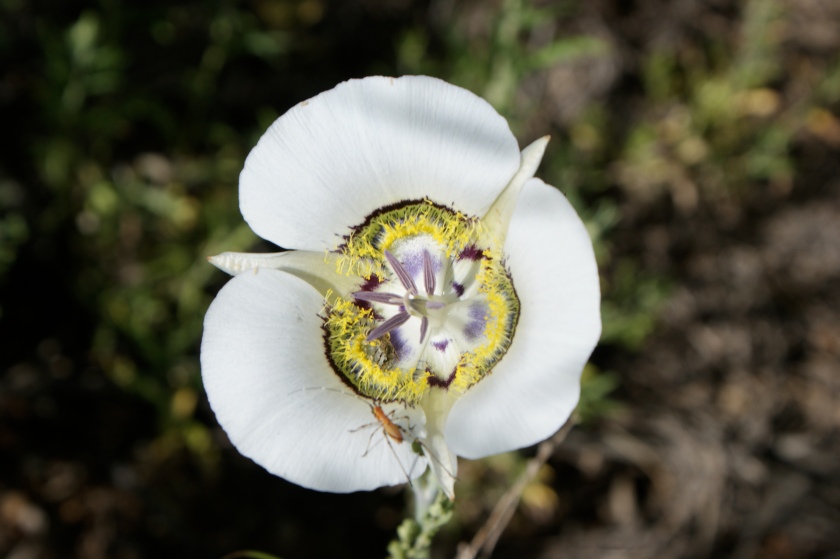
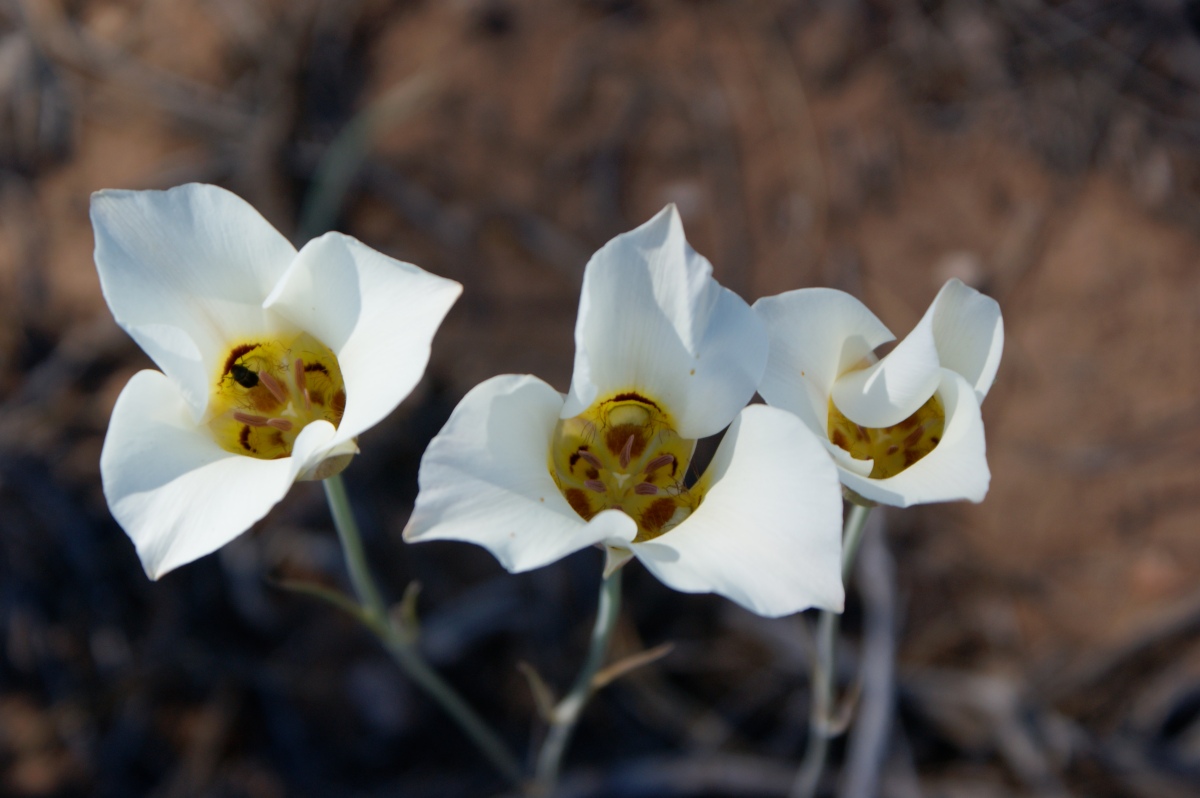
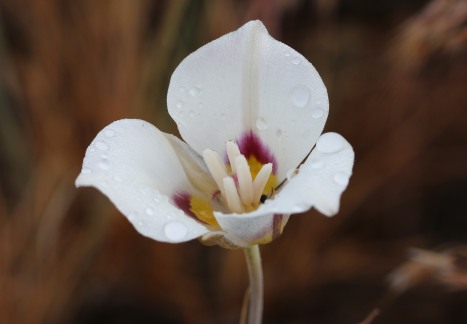
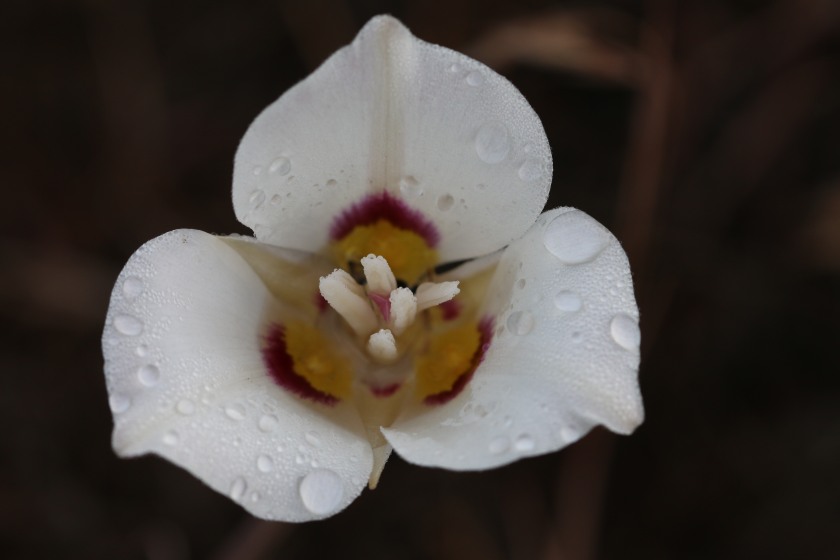
Description by P. L. Fiedler & R. K. Zebell in Flora of North America (vol. 26). Plants usually bulbose; bulb coat, when present, membranous. Stems usually not branching or twisted, straight, 1.5-4.5 dm. Leaves: blade linear, becoming involute; basal withering. Inflorescences subumbellate, 1-4-flowered; bracts congested, unequal. Flowers erect; perianth open, campanulate; sepals marked similar to petals, usually shorter, lanceolate, glabrous, apex acuminate; petals white, tinged with lilac or infrequently magenta, yellow at base, with reddish brown or purple band or blotch distal to gland, broadly obovate, cuneate, sparsely invested near gland with slender hairs, apex usually short-acuminate; glands round, depressed, surrounded by conspicuously fringed membrane, densely covered with short, unbranched or distally branching hairs; filaments ca. equaling anthers; anthers yellowish or pinkish, oblong, apex obtuse. Capsules erect, linear-lanceoloid, 3-angled, apex acuminate. Seeds flat. 2n = 16. Flowering late spring–late summer. Dry soils; 700–3300 m; Ariz., Colo., Idaho, Mont., Nebr., Nev., N.Mex., N.Dak., S.Dak., Utah, Wyo.
Reference Books. The gem of a book for all Calochortus aficionados is : “Calochortus Mariposa Lilies and their Relatives”. By Mary E. Gerritsen and Ron Parsons. 2007. Timber Press.
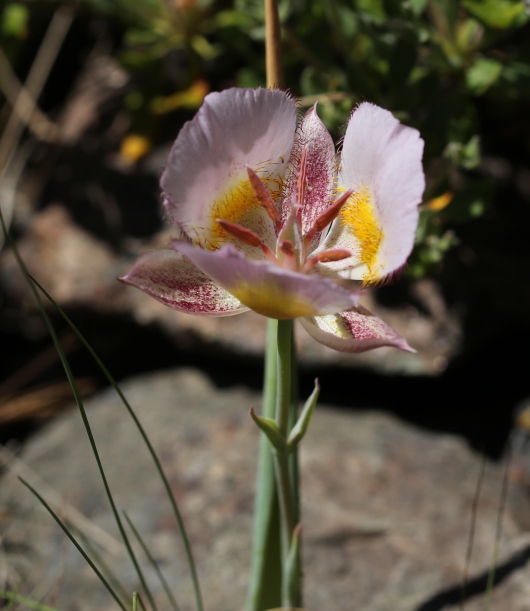
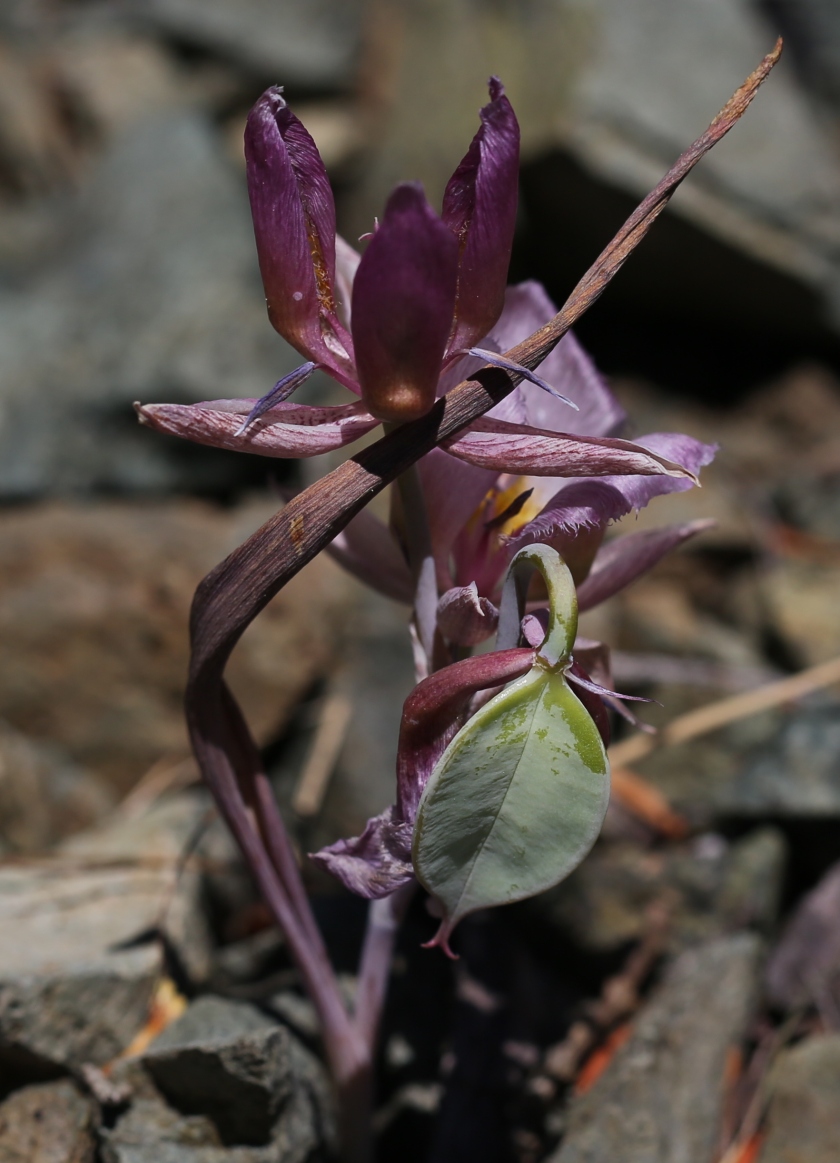
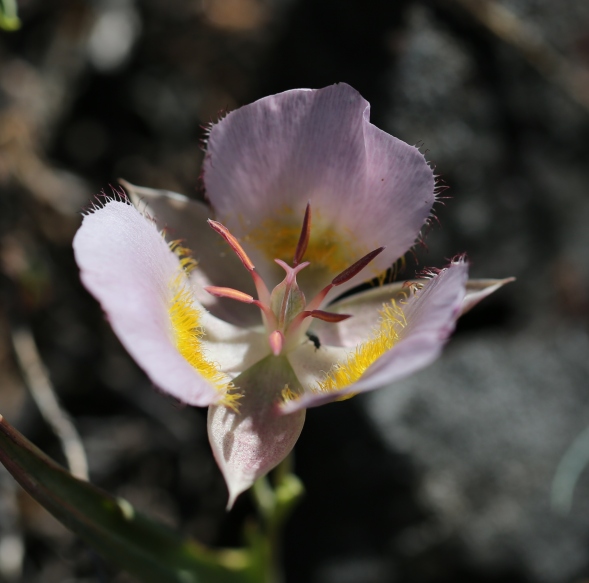
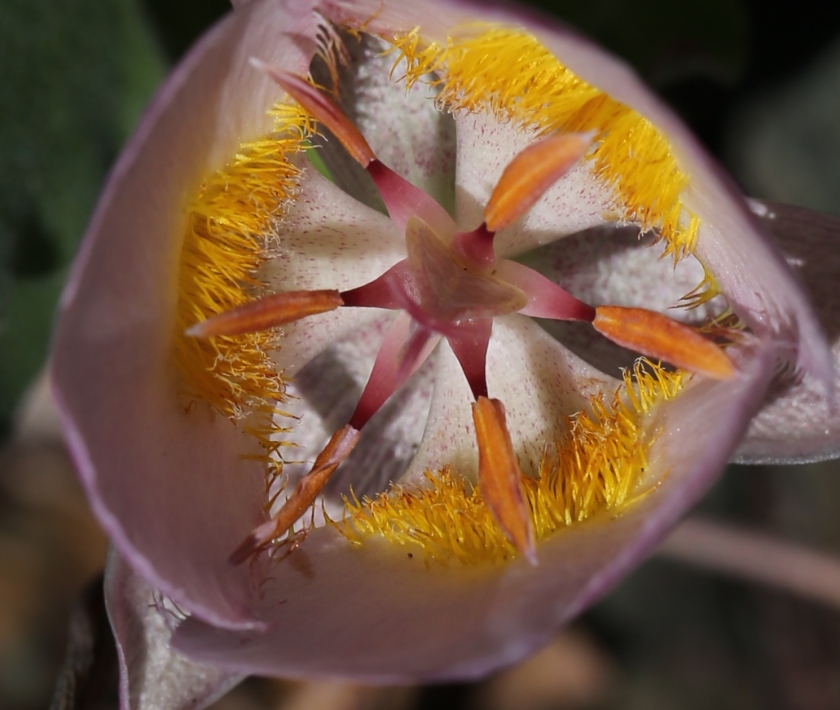
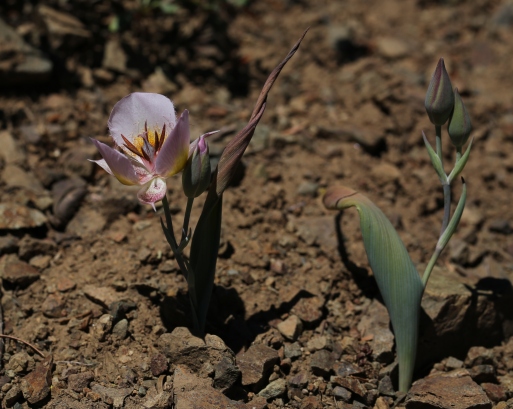
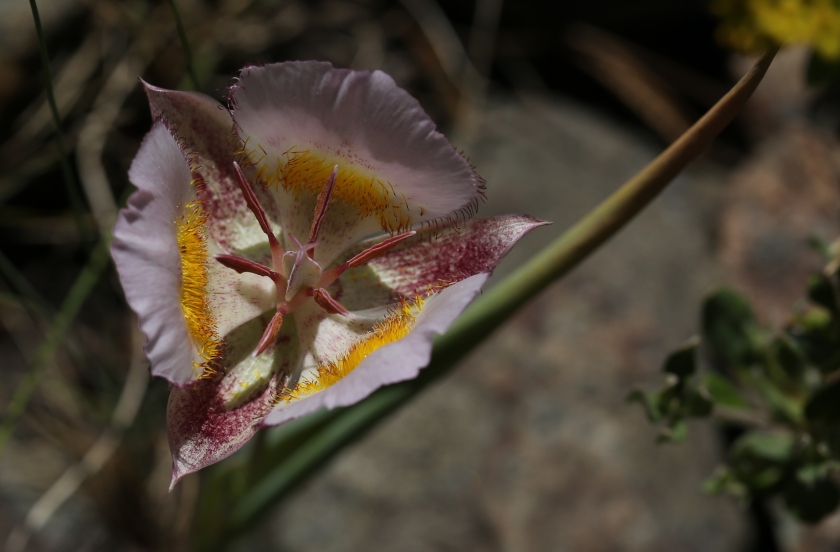
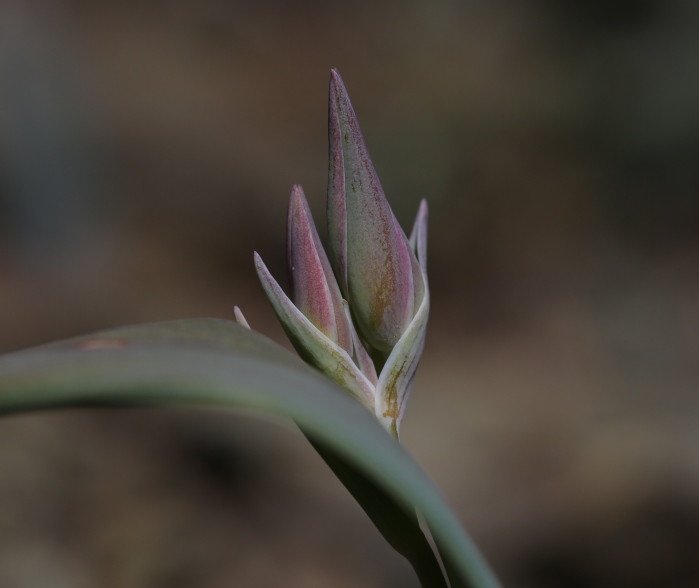
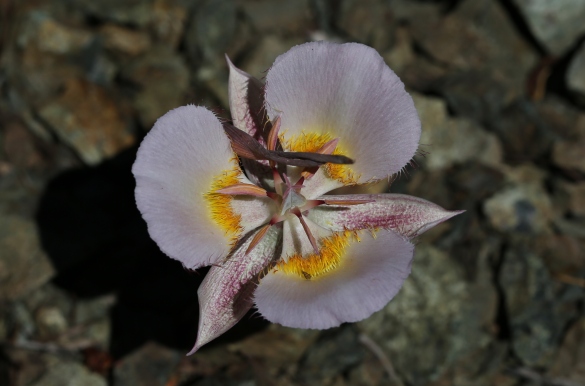
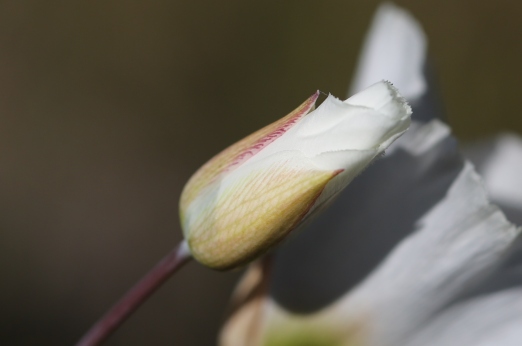
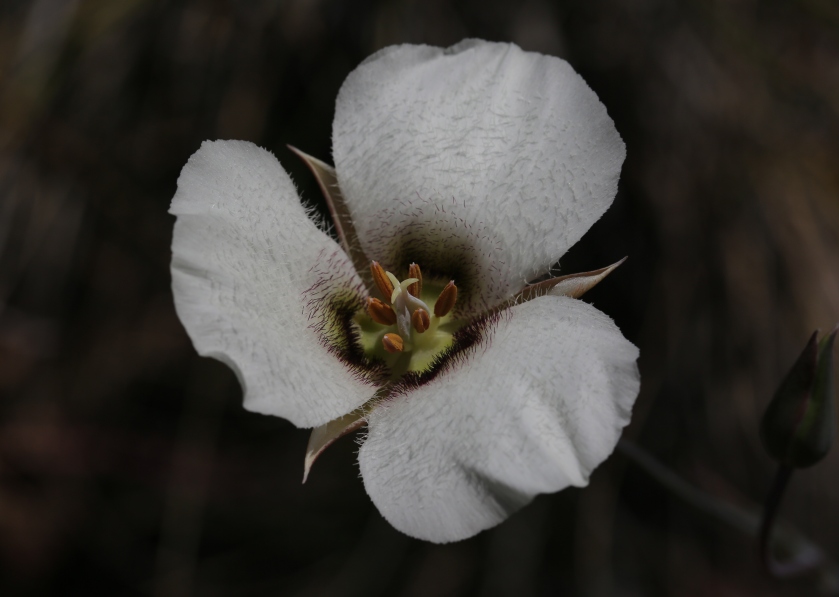
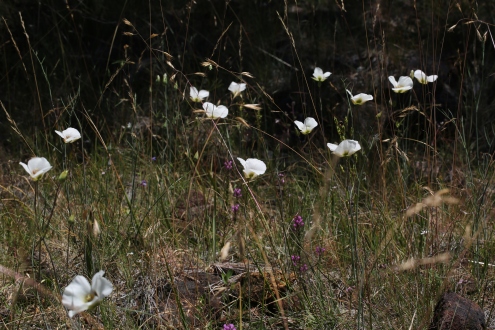
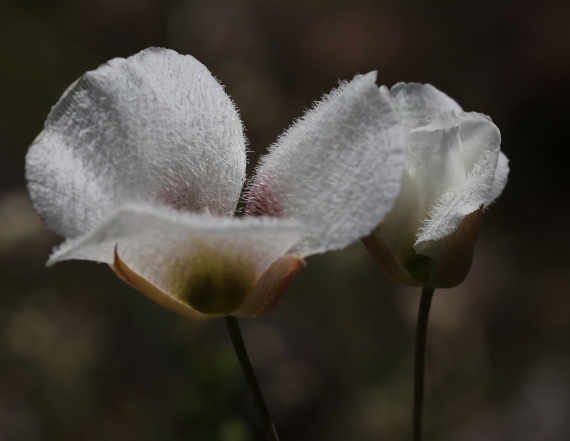
Ethnobotany. A food and a medicine for many Amerindian Peoples: the bulbs were eaten raw or roasted.
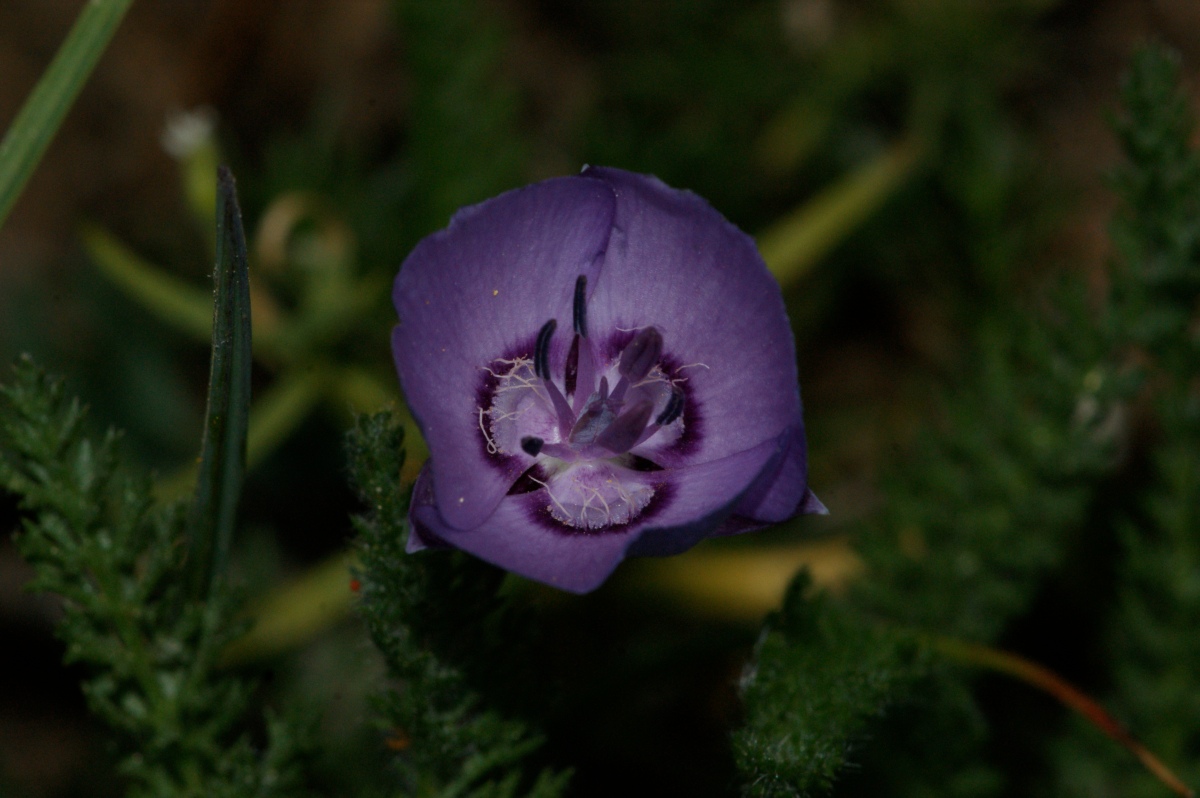
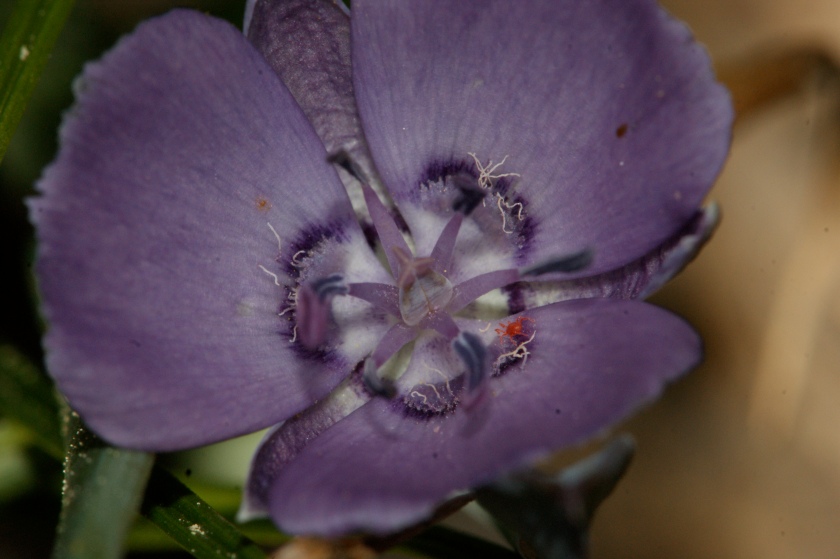
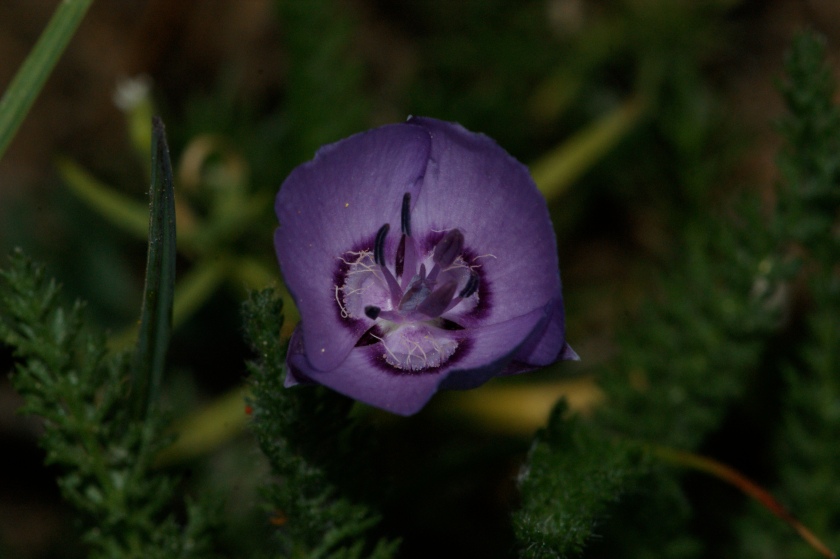
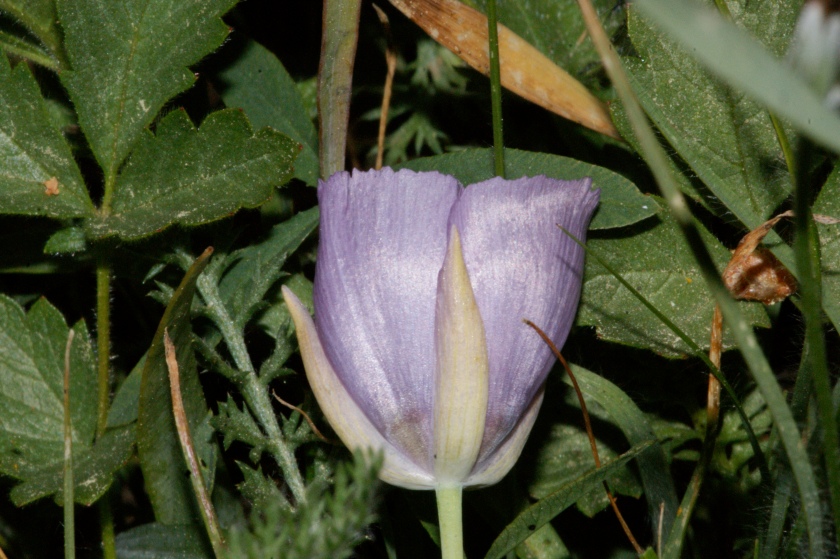
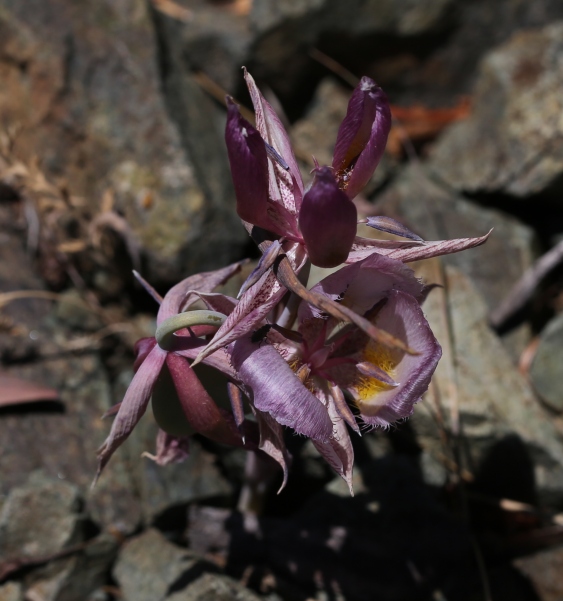
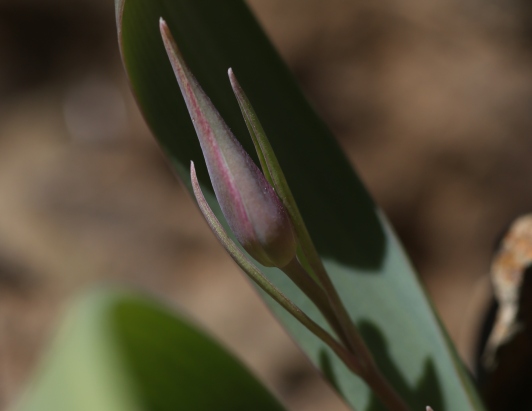
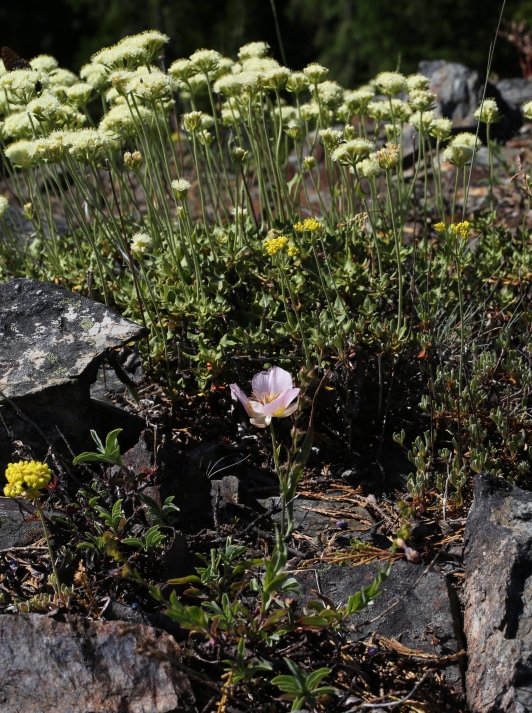
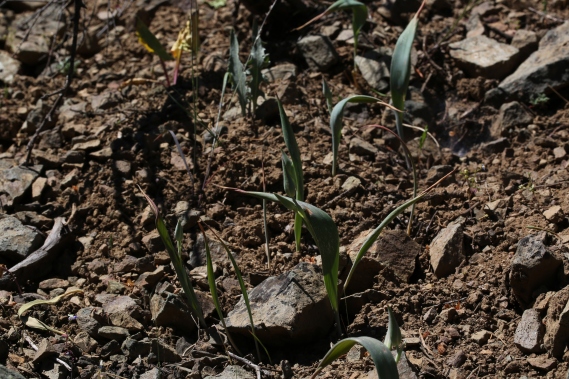
Description by the California Native Plant Society. Calochortus leichtlinii is a species of flowering plant in the lily family known by the common names Leichtlin’s mariposa, smokey mariposa, and mariposa lily. The plant is native to the Sierra Nevada and Modoc Plateau of California and adjacent parts of the Great Basin in southeastern Oregon and western Nevada. It grows in coniferous forest and chaparral habitats, including the lowest grassy hills-such as along the Sierra Nevada boundary with the Central Valley and agriculture. Calochortus leichtlinii is a perennial herb producing an erect, unbranching stem up to 60 centimeters tall. The basal leaf is 10 to 15 centimeters long and withers by flowering. The inflorescence is a loose cluster of 1 to 5 erect, bell-shaped flowers. Each flower has three petals 1 to 4 centimeters long which are white, pinkish, or dull blue in color and spotted with yellow and dark red or black and hairy at the bases. These color patterns vary widely among different regional and local populations. The fruit is a narrow capsule up to 6 centimeters long.
Reference Books. The gem of a book for all Calochortus aficionados is : “Calochortus Mariposa Lilies and their Relatives”. By Mary E. Gerritsen and Ron Parsons. 2007. Timber Press.











 Gaïan EthnoBotany