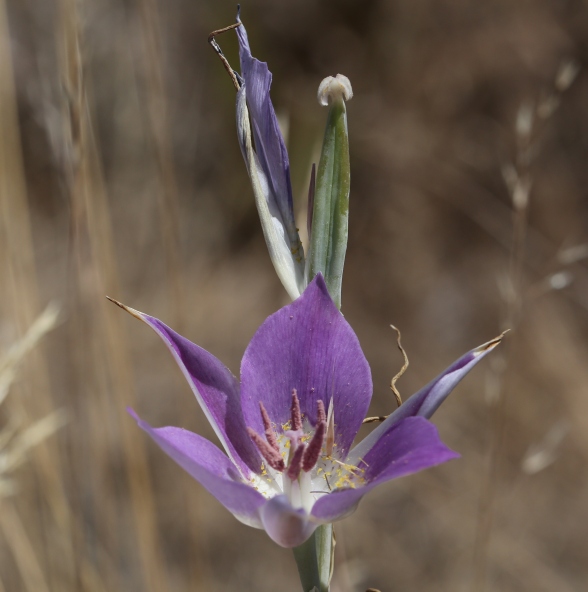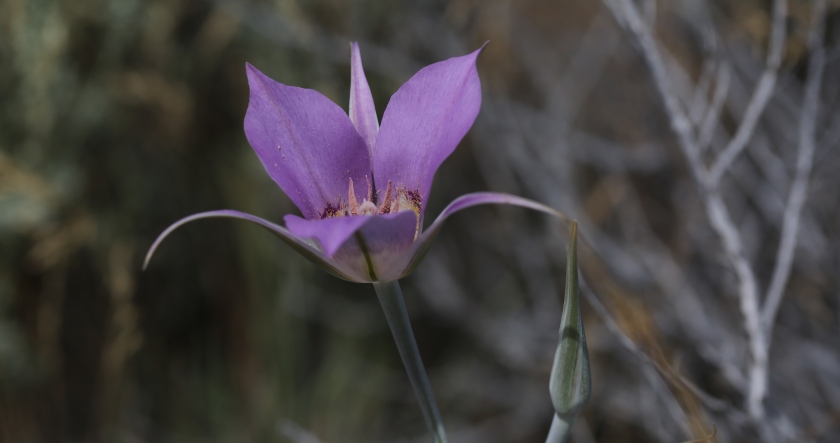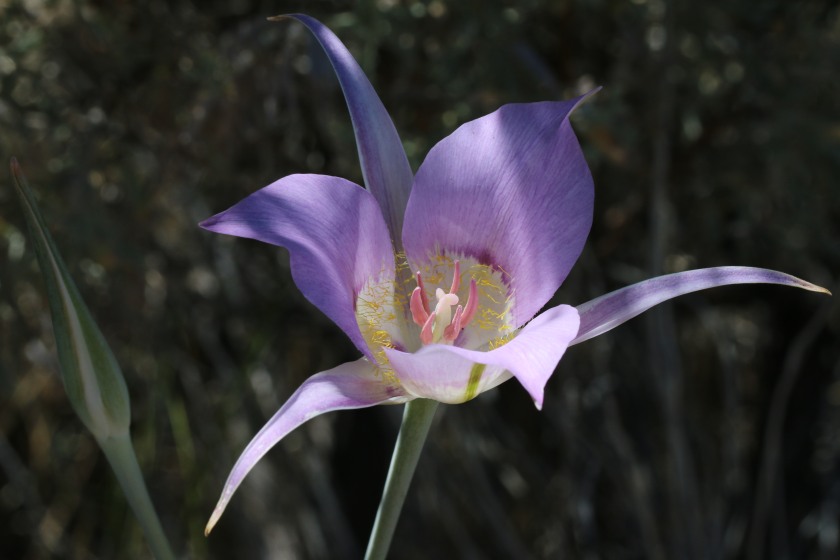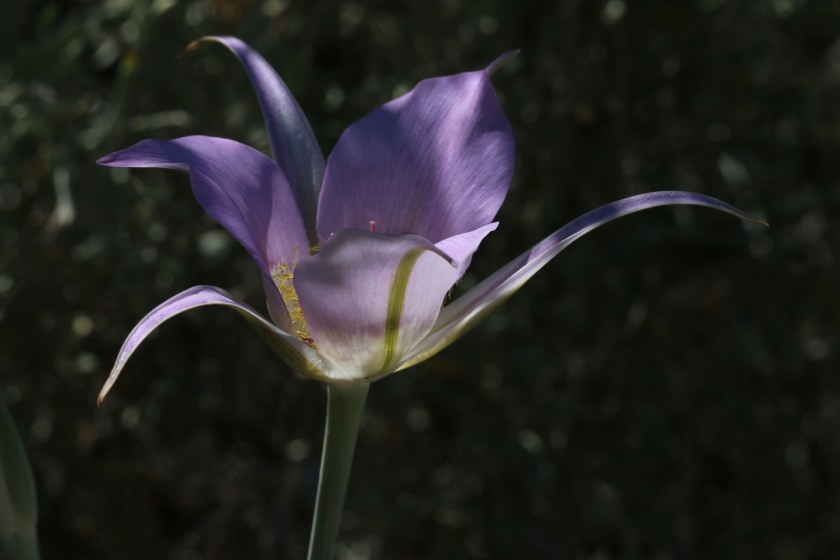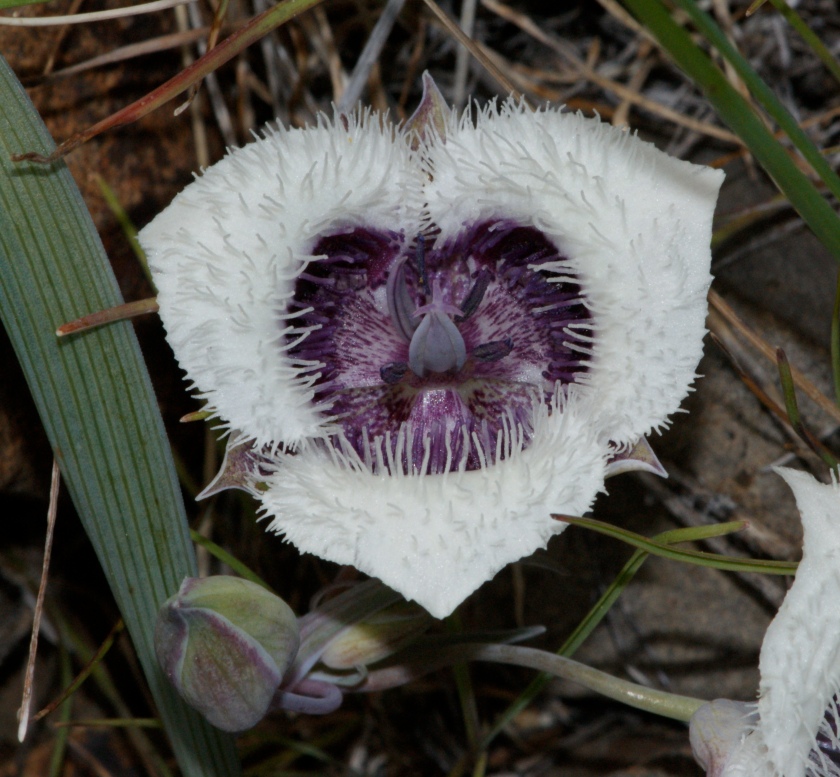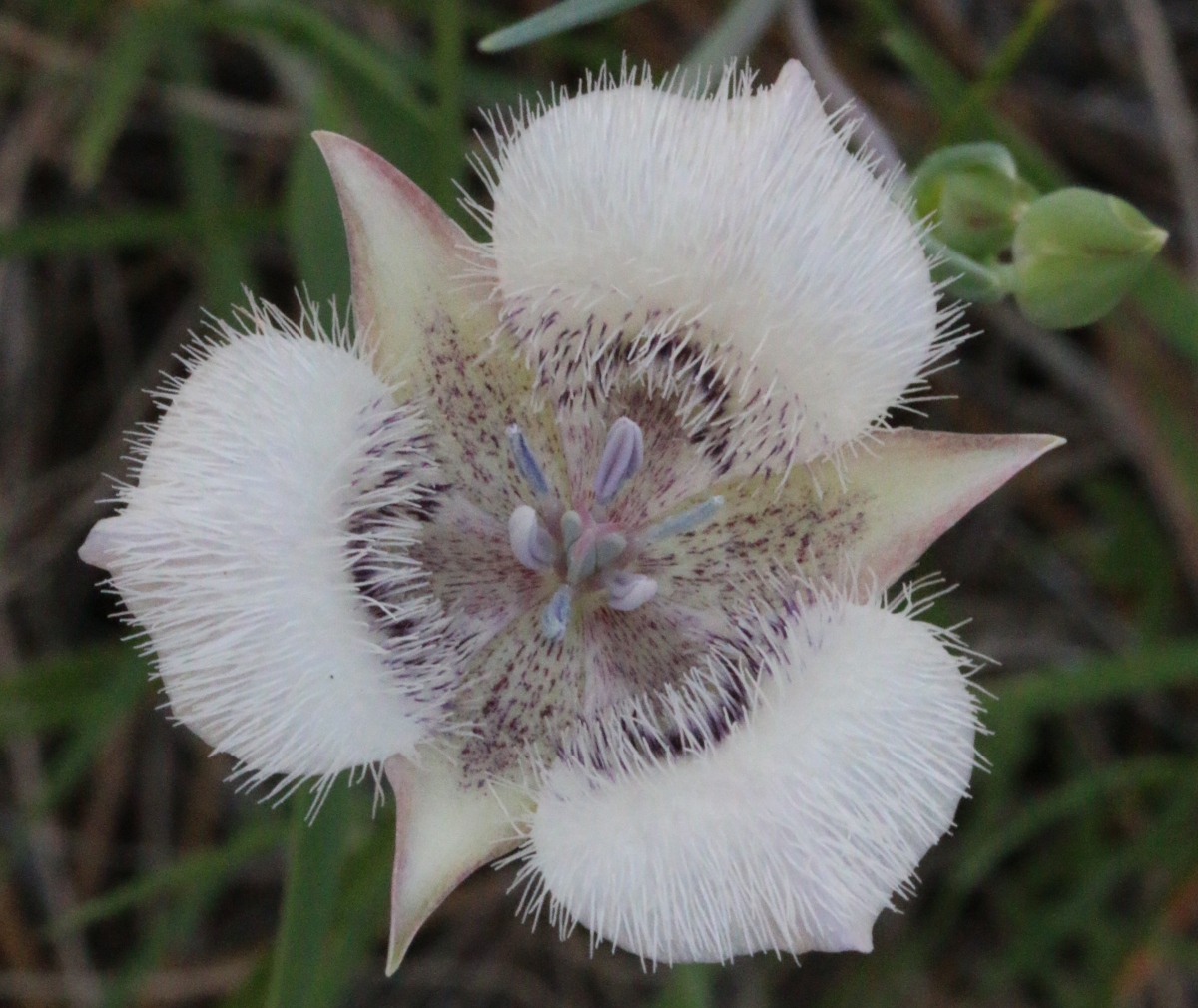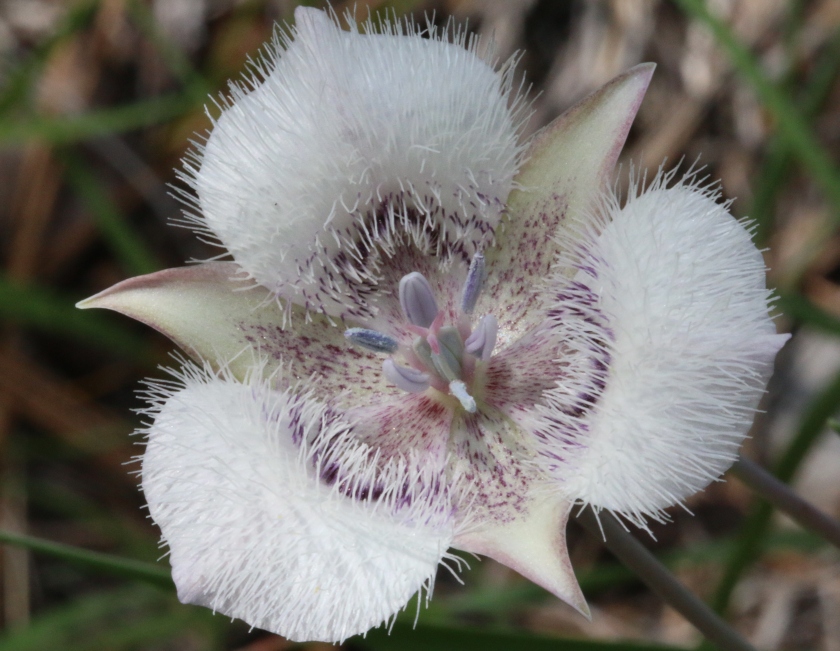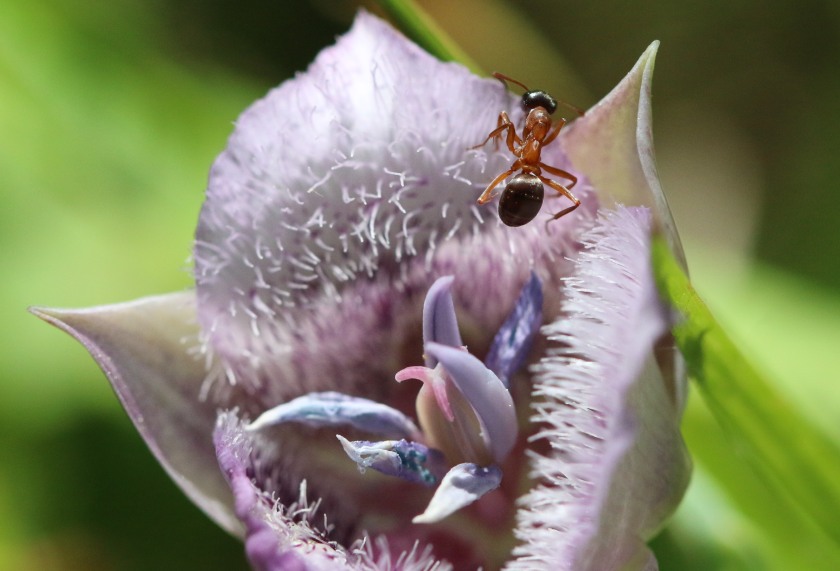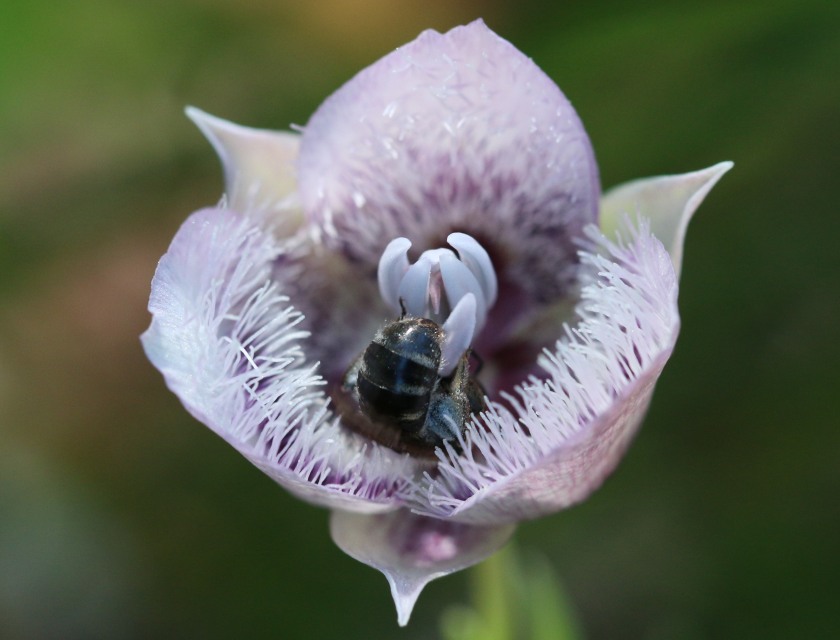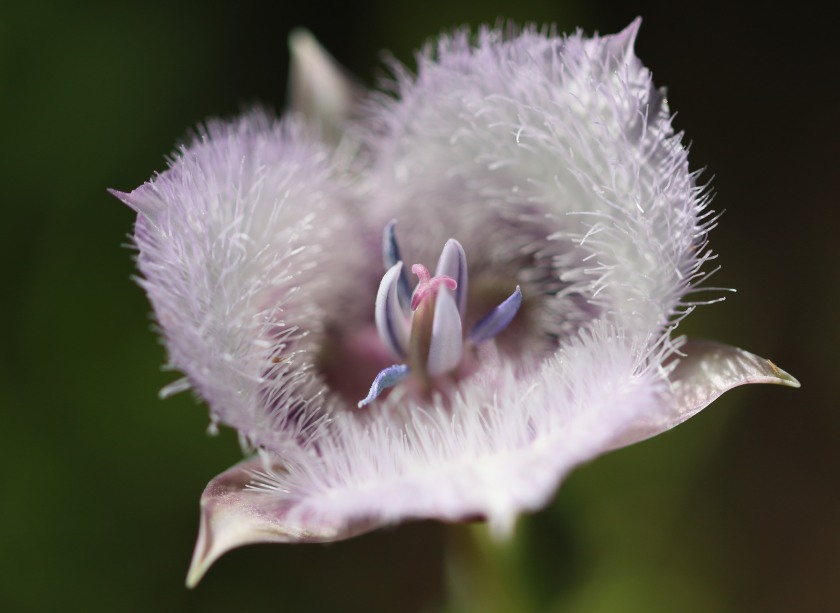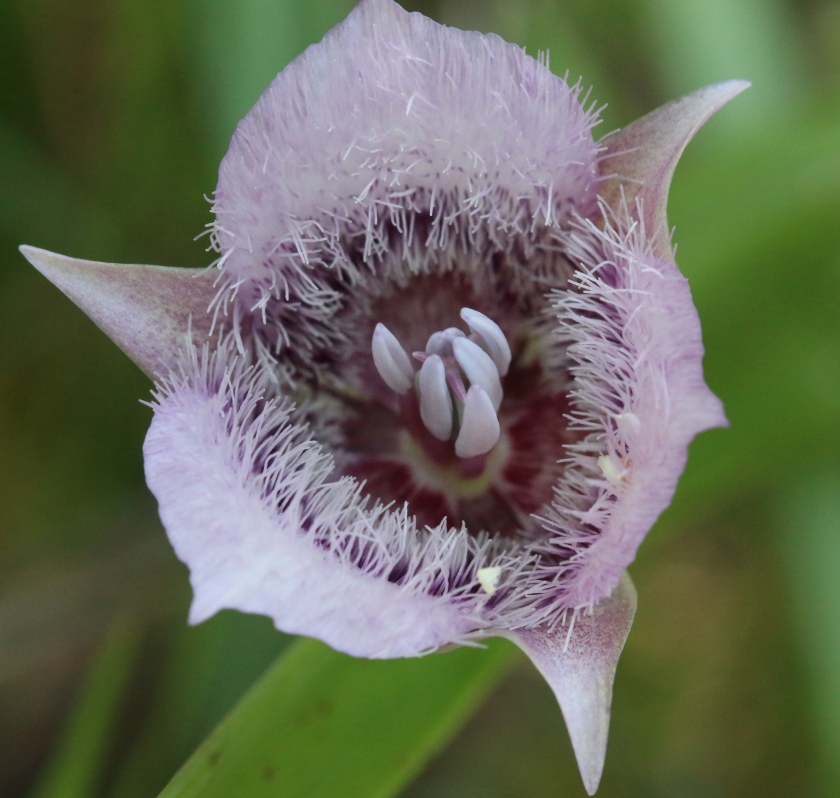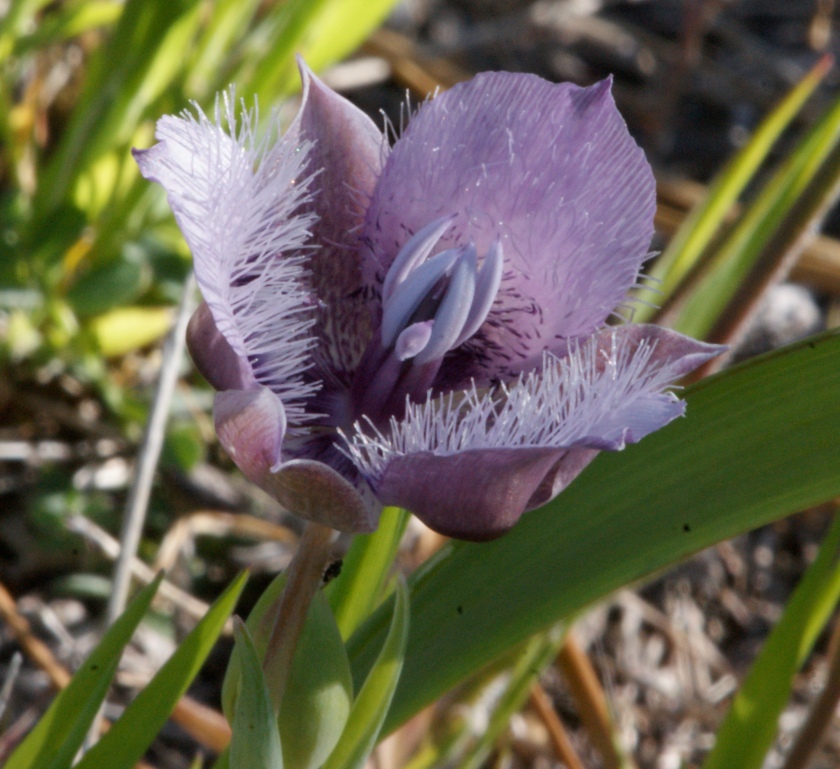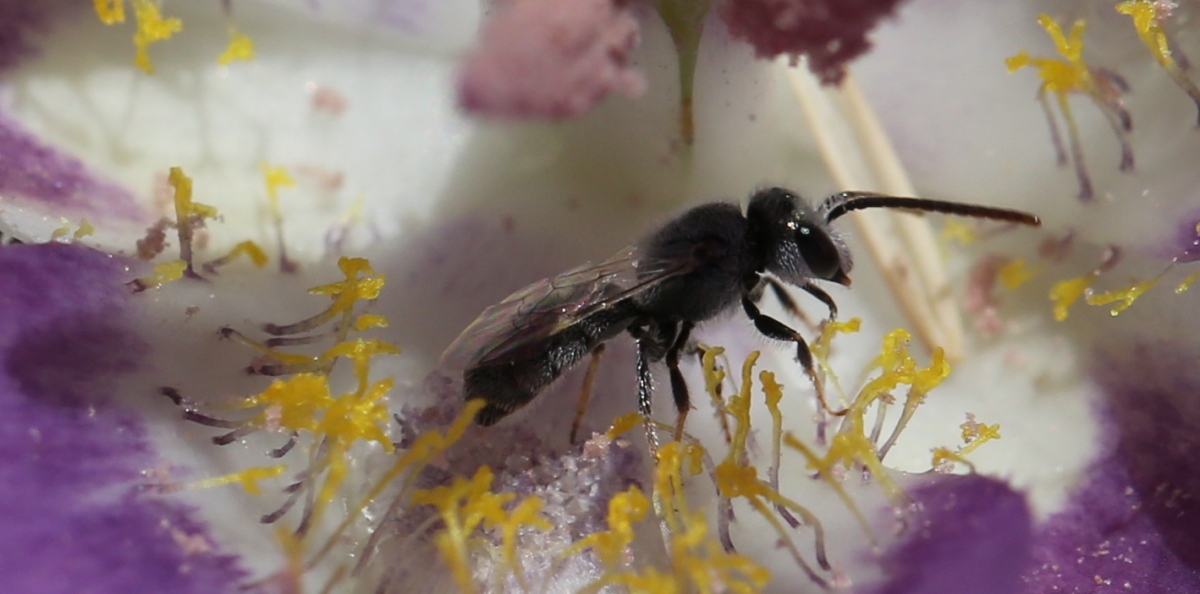
Calochortus macrocarpus

Ethnobotany. A food and a medicine for many Amerindian Peoples: the bulbs were eaten raw or roasted. 

By the Thompson People as mentioned in “The Ethnobotany of the Thompson Indians of British Columbia” (Steedman, E.V., 1928), in “Thompson Ethnobotany: Knowledge and Usage of Plants by the Thompson Indians of British Columbia, Victoria” (Turner, Nancy J., Laurence C. Thompson and M. Terry Thompson et al., 1990) and in “Ethno-Botany of the Indians in the Interior of British Columbia” (Perry, F., 1952). They were eating the bulbs raw or cooked as well as the sweet flower buds. The Thompson People were also using mashed bulbs placed in cheesecloth as an eye-medicine.

By the Shuswap People as mentioned in “Shuswap Indian Ethnobotany” (Palmer, Gary, 1975) who were feeding their cattle and sheep.

By the Paiute People as mentioned in “Ethnography of the Surprise Valley Paiute” (Kelly, Isabel T., 1932. University of California Publications in American Archaeology and Ethnology).

By the Okanagon People as  mentioned in “Ethno-Botany of the Indians in the Interior of British Columbia” (Perry, F., 1952) and in “The Salishan Tribes of the Western Plateaus” (Teit, James A., 1928).

By the Okanagon-Colville People as  mentioned in “Ethnobotany of the Okanagan-Colville Indians of British Columbia and Washington, Victoria” (Turner, Nancy J., R. Bouchard and Dorothy I.D. Kennedy, 1980). They were the bulbs raw or pit cooked with other rootsand using a poultice of mashed bulbs applied to the skin for poison ivy.

By the Klamath People as mentioned in “Notes On The Plants Used By The Klamath Indians Of Oregon” (Coville, Frederick V., 1897).

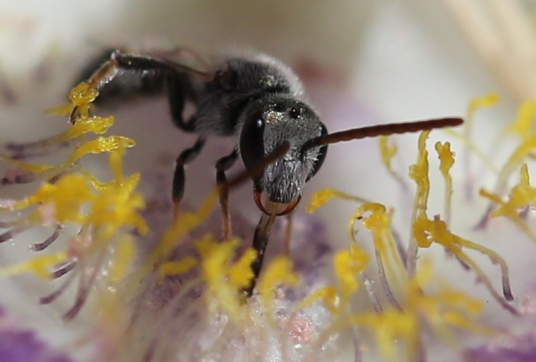
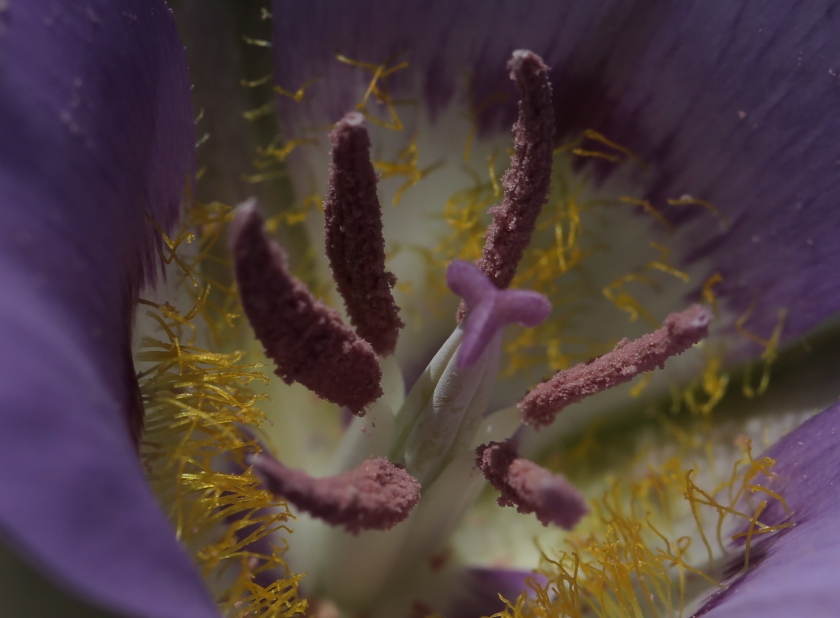
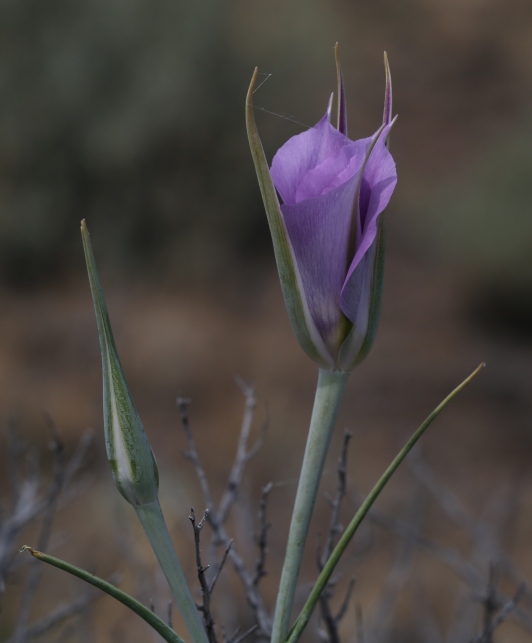
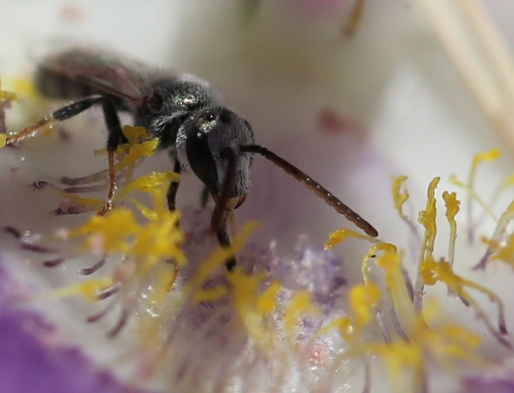
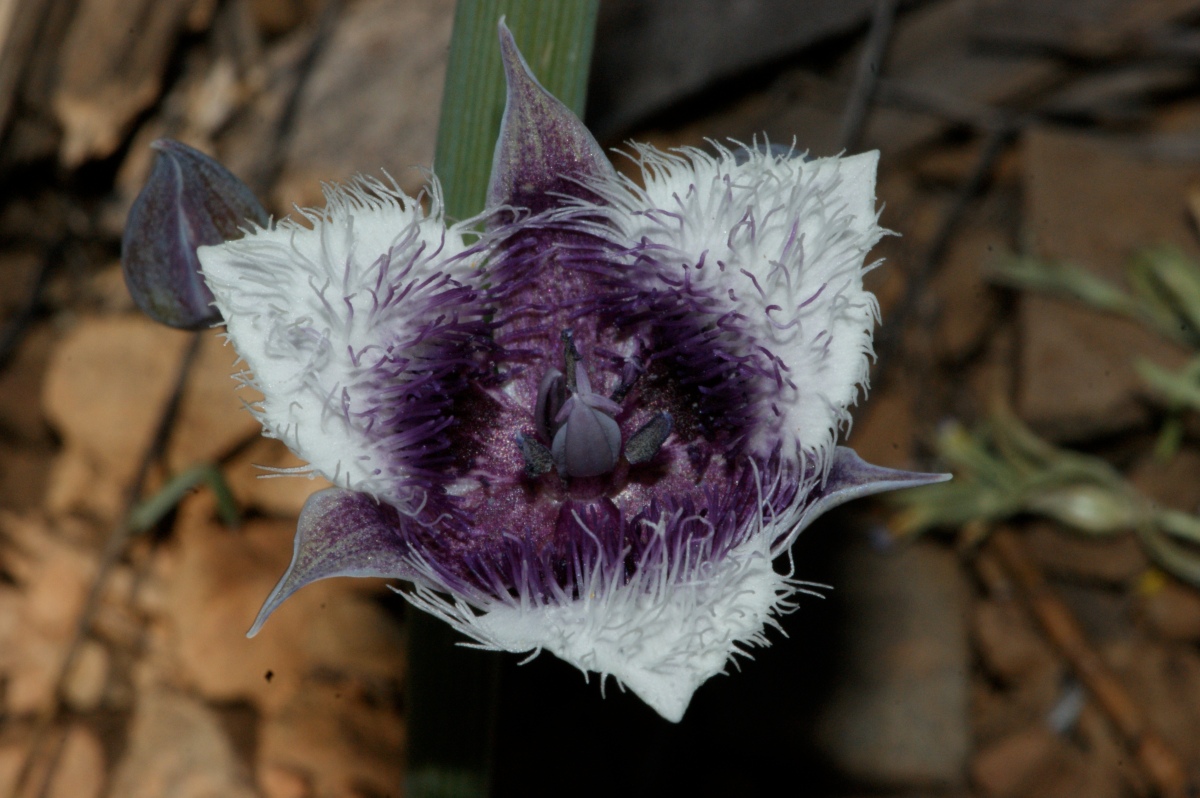
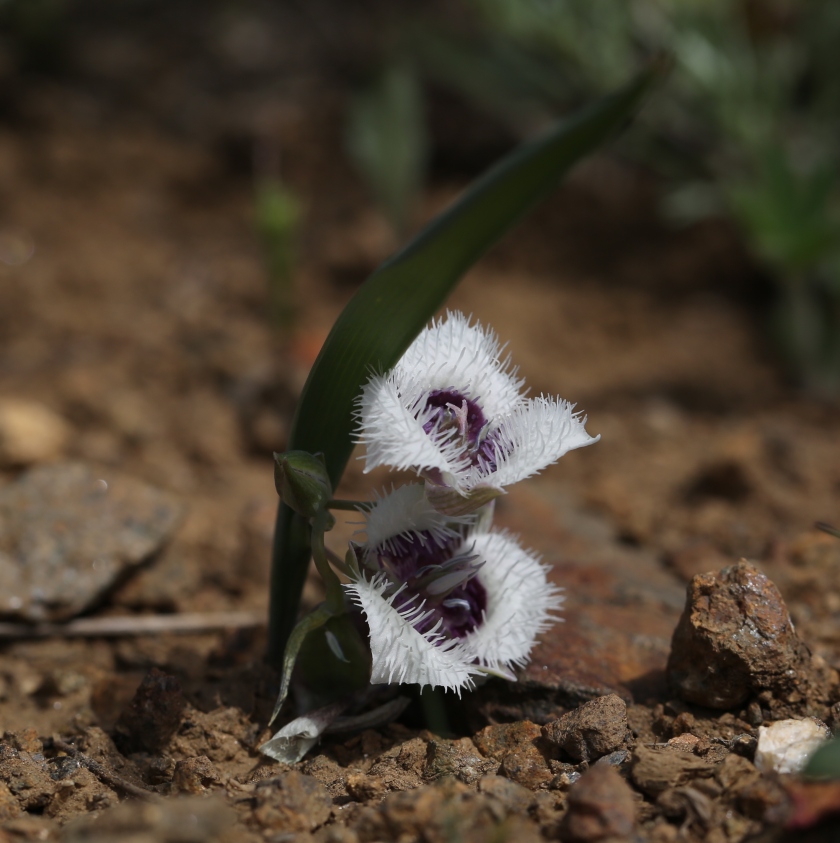
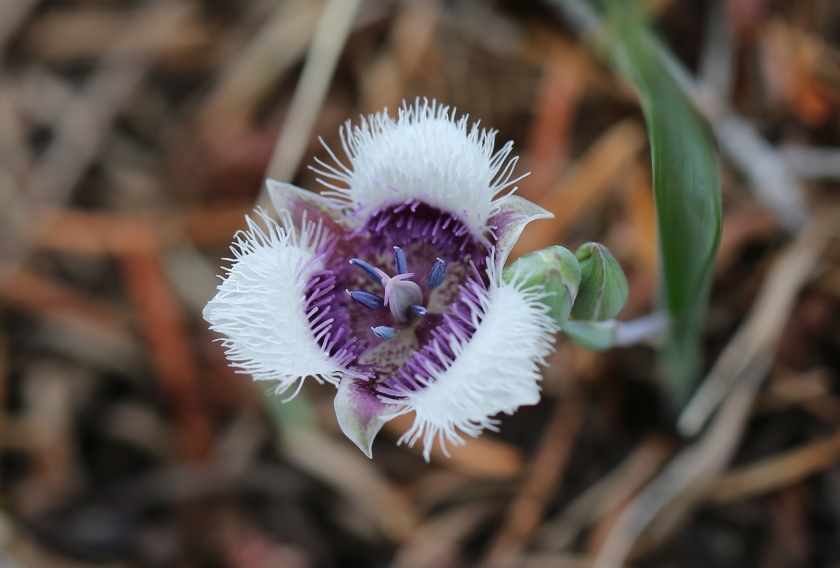
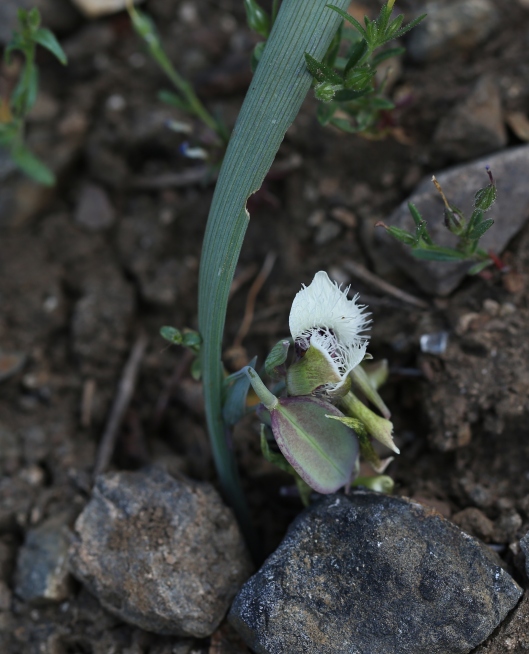
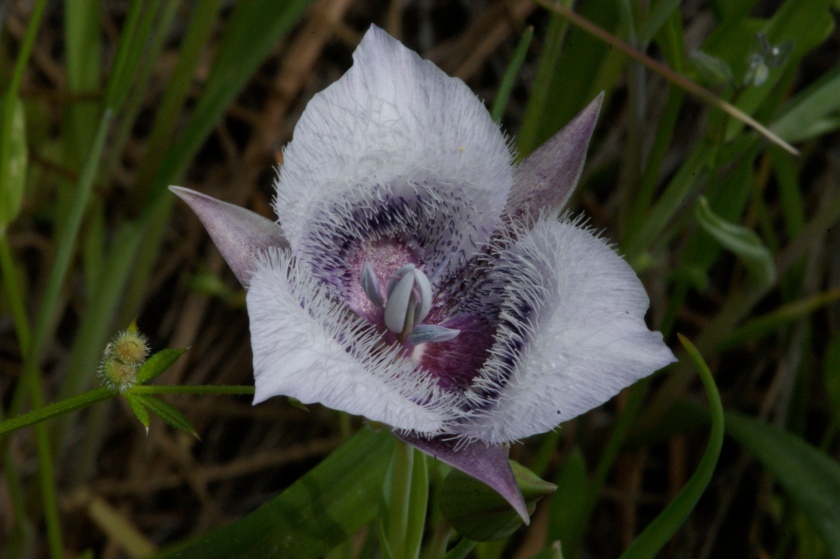
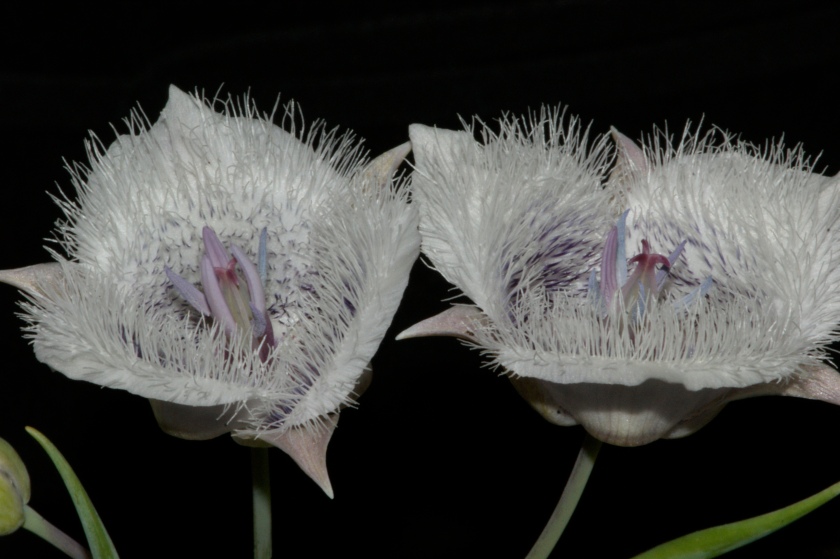
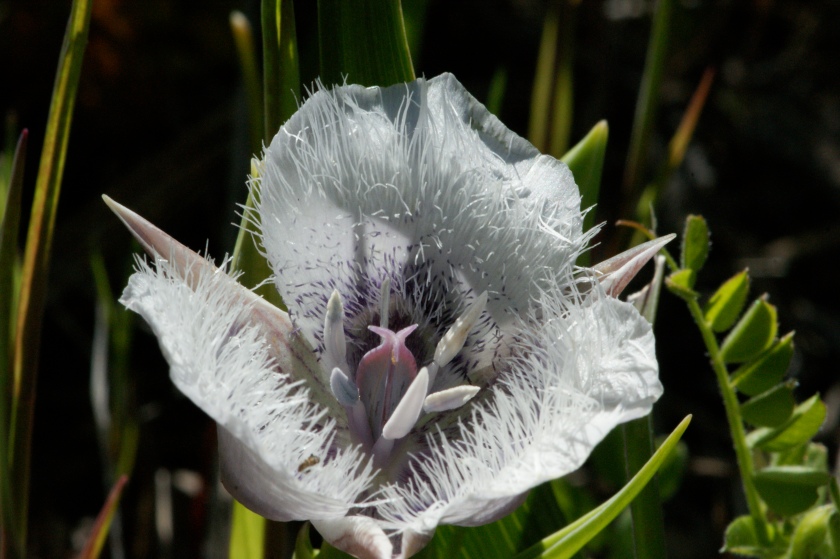
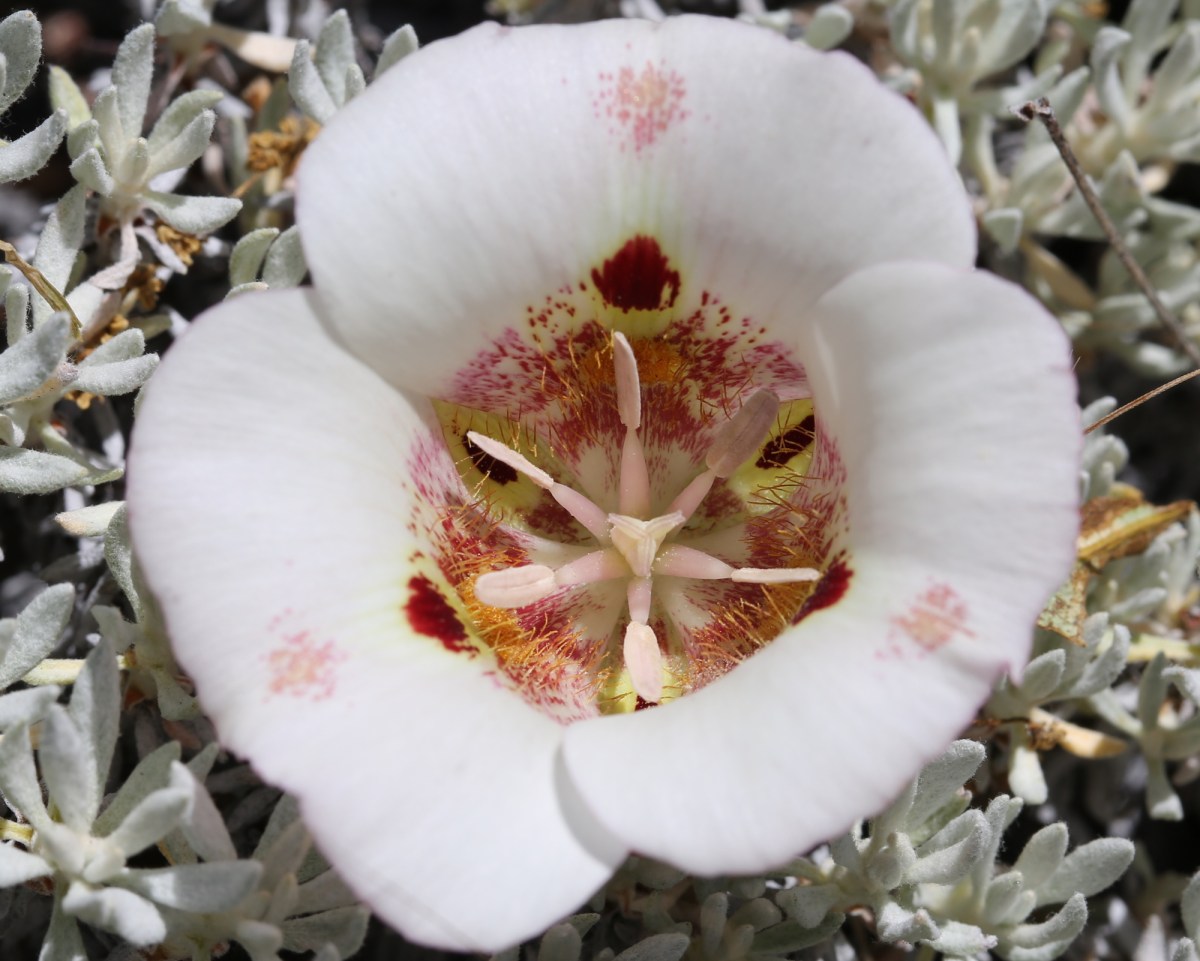
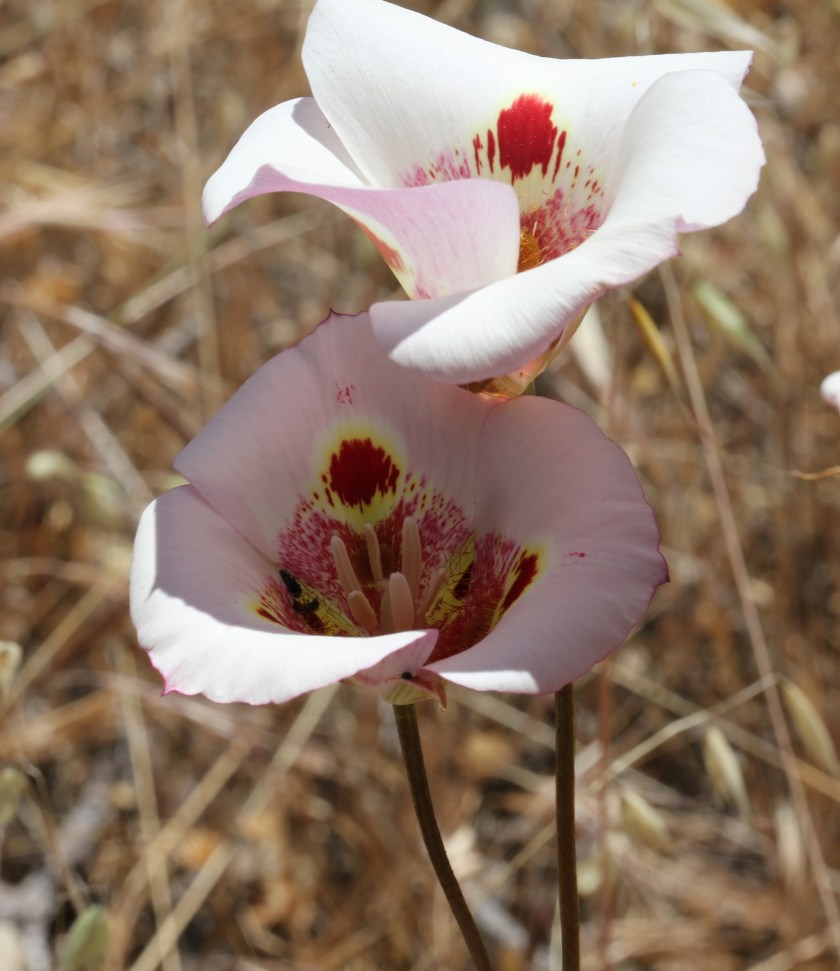
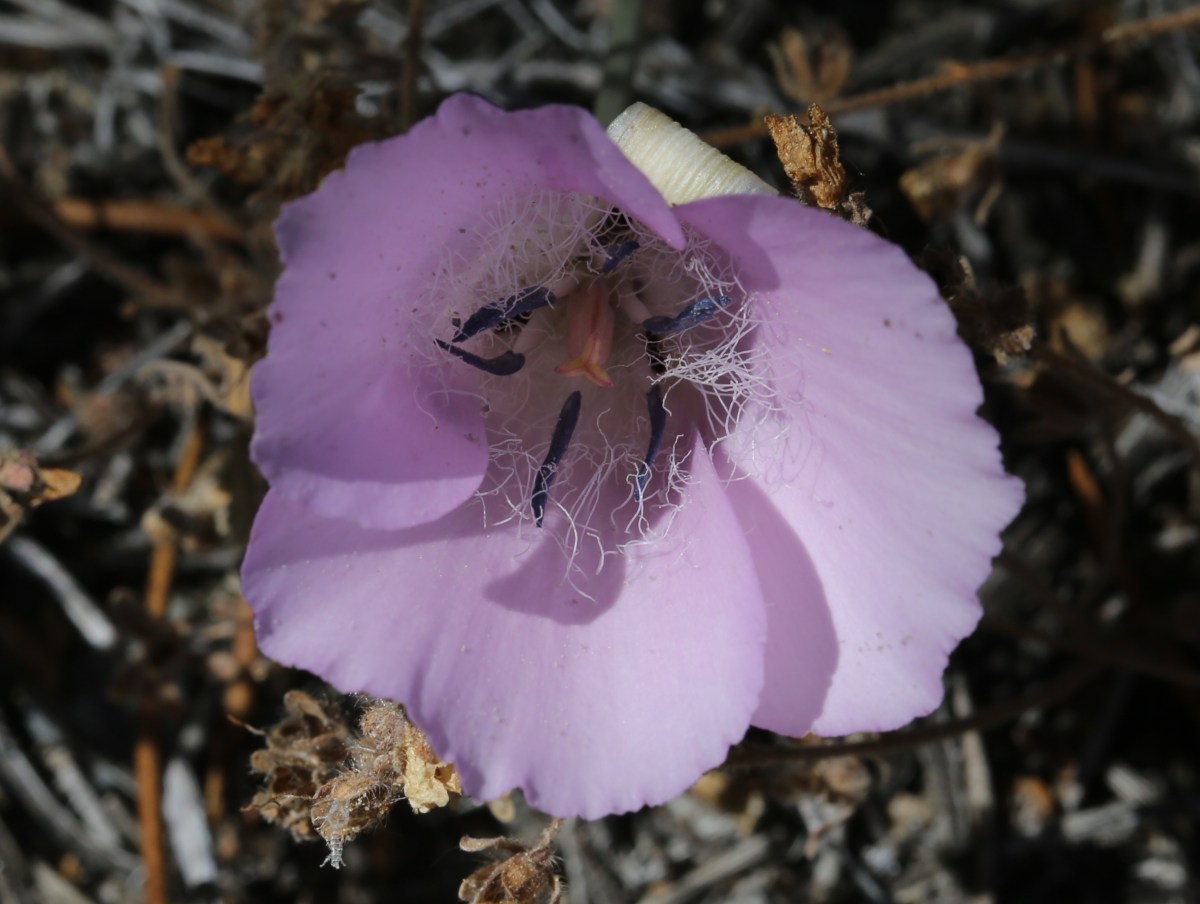
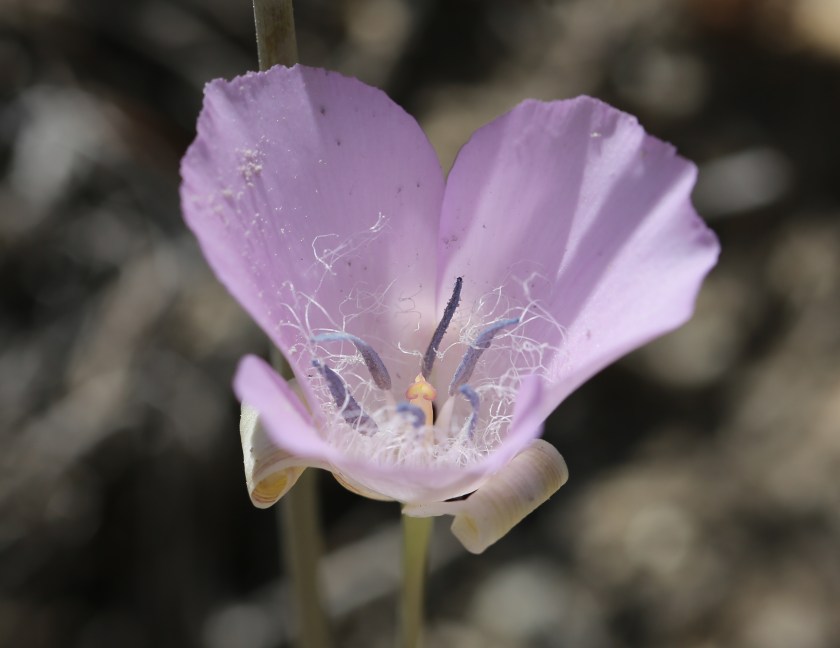
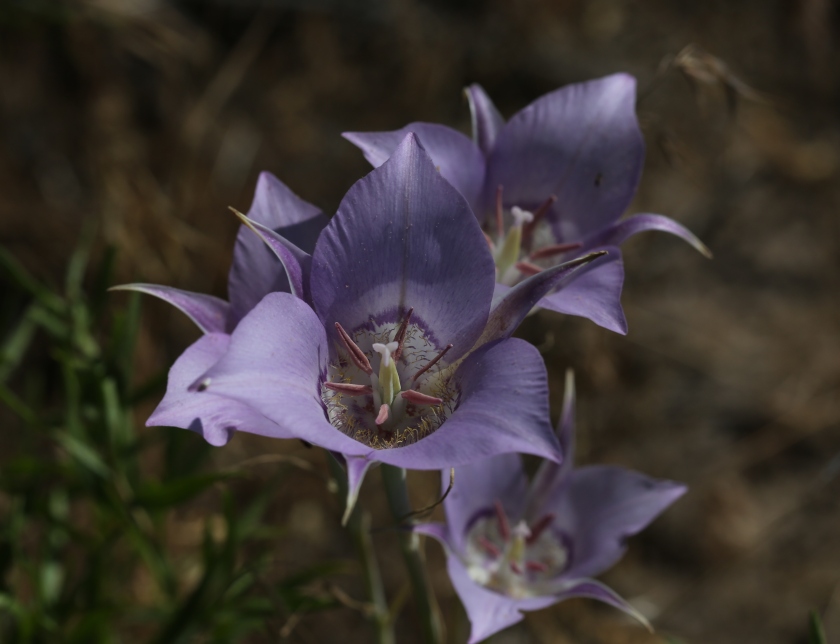
Description by the California Native Plant Society. Calochortus macrocarpa is a species also known as “Sagebrush Mariposa Lily”. It occurs in northwestern United States and a small part of southern British Columbia. The leaves are blue-green and grass-like. The flowers are large, bloom in June, are three-petaled, and are pink and purple. The bulbs are tapering, like a carrot.

Reference Books. The gem of a book for all Calochortus aficionados is : “Calochortus Mariposa Lilies and their Relatives”. By Mary E. Gerritsen and Ron Parsons. 2007. Timber Press. 
Calochortus macrocarpum 10

Calochortus macrocarpum 02

calochortus macrocarpum 56

calochortus macrocarpum 52

Calochortus macrocarpum 03

calochortus macrocarpum 53

Calochortus macrocarpum 07

calochortus macrocarpum 51

Calochortus macrocarpum 01

Calochortus macrocarpum 04

calochortus macrocarpum 50

calochortus macrocarpum 57

Calochortus macrocarpum 05

Calochortus macrocarpus 03
Calochortus macrocarpus. Lava Beds National Monument. California.
Calochortus macrocarpus 02
Calochortus macrocarpus. Lava Beds National Monument. California.

Calochortus elegans var. nanus

Ethnobotany. A food for many Amerindian Peoples of California: the bulbs were eaten raw or roasted.

By the Mendocino People as mentioned in “Plants Used by the Indians of Mendocino County, California”, (Contributions from the U.S. National Herbarium 7:295-408. Chestnut, V. K., 1902).

By the Pomo and Kashaya Peoples as mentioned in “Kashaya Pomo Plants”, (Goodrich, Jennie and Claudia Lawson. Los Angeles. American Indian Studies Center, University of California, Los Angeles. 1980).

By the Yuki People as mentioned in “Some Plants Used by the Yuki Indians of Round Valley in Northern California” (Curtin, L. S. M., The Masterkey 31:85-94. 1957).

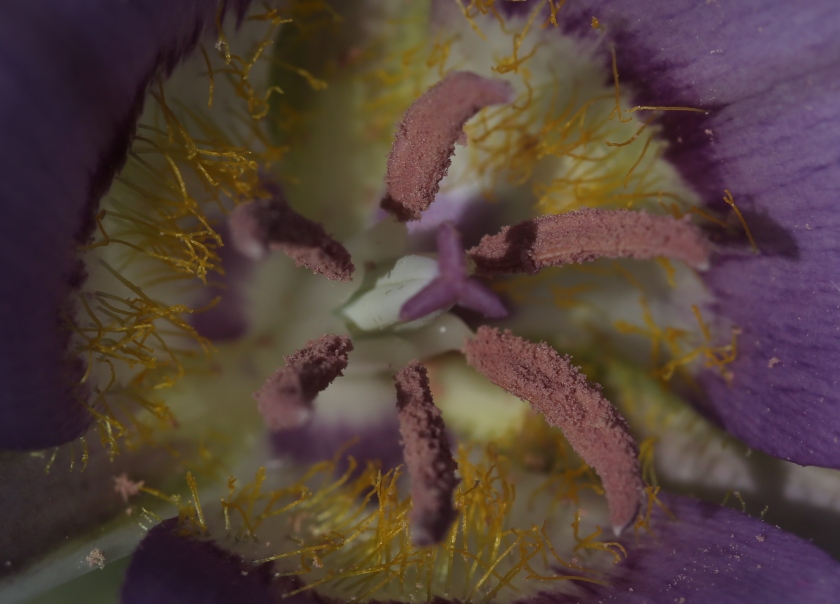
Description. Calochortus elegans var. nanus is a perennial herb producing a slender, generally unbranched stem up to 5 centimeters in height. The basal leaf is around 10 long and does not wither at flowering. The inflorescence bears a few tiny flowers. According to the botanist Frank Callahan – who wrote the chapter on Calochortus in the newly published volume 1 of the Flora of Oregon – the nectary membrane is fringed for Calochortus elegans var. elegans and has sharp or rounded teeth for Calochortus elegans var. nanus. As well, the sepals are not tinged purple at their base for Calochortus elegans var. elegans contrarily to Calochortus elegans var. nanus.

Reference Books. The gem of a book for all Calochortus afficionados is : “Calochortus Mariposa Lilies and their Relatives”. By Mary E. Gerritsen and Ron Parsons. 2007. Timber Press. 
Calochortus elegans nanus 003

Calochortus elegans nanus 000

Calochortus elegans nanus 001

SONY DSC
Calochortus elegans var. nanus

Calochortus tolmiei

Ethnobotany. A food for many Amerindian Peoples: the bulbs were eaten raw or roasted.

By the Mendocino People as mentioned in “Plants Used by the Indians of Mendocino County, California”, (Contributions from the U.S. National Herbarium 7:295-408. Chestnut, V. K., 1902).

By the Pomo and Kashaya Peoples as mentioned in “Kashaya Pomo Plants”, (Goodrich, Jennie and Claudia Lawson. Los Angeles. American Indian Studies Center, University of California, Los Angeles. 1980).

By the Yuki People as mentioned in “Some Plants Used by the Yuki Indians of Round Valley in Northern California” (Curtin, L. S. M., The Masterkey 31:85-94. 1957).

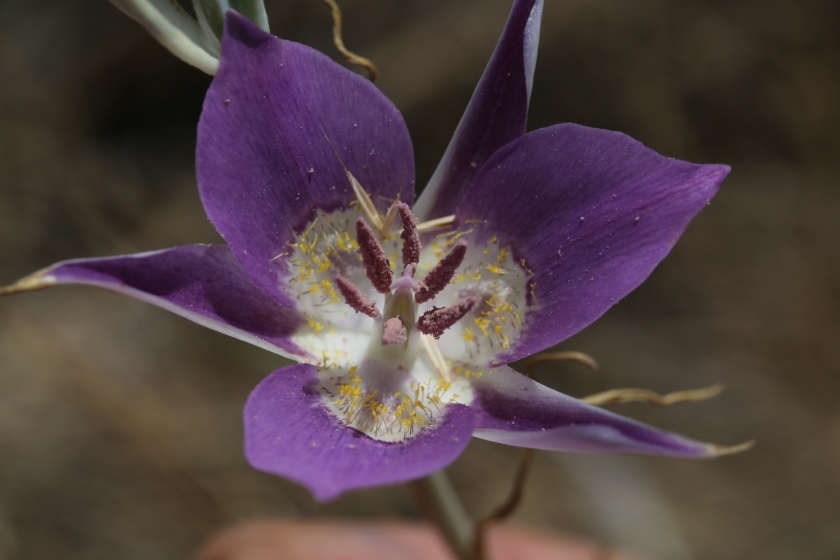
Description by the California Native Plant Society. Calochortus tolmiei is a species of flowering plant in the lily family known by the common names Tolmie star-tulip and pussy ears. It is native to the west coast of the United States from Washington to California, where it is a common member of the flora in several types of habitat. It is a perennial herb producing a slender stem, branched or unbranched, to 40 centimeters in maximum height. There is a basal leaf up to 40 centimeters long which does not wither at flowering, and generally a smaller leaf farther up the stem. The flower cluster is a solitary bloom or a cluster of bell-shaped flowers. Each has white to pale pink or purple petals, each up to 2.5 centimeters long, and three narrower sepals beneath. The petals are usually very hairy on their inner surfaces, and may be fringed with long hairs as well. The fruit is a winged capsule 2 or 3 centimeters long containing several dark brown seeds.

Reference Books. The gem of a book for all Calochortus aficionados is : “Calochortus Mariposa Lilies and their Relatives”. By Mary E. Gerritsen and Ron Parsons. 2007. Timber Press. 
Calochortus tolmei 13
Eriogonum tolmiei in southern Oregon and northern California.
Calochortus tolmiei 022
Eriogonum tolmiei in southern Oregon and northern California.
Calochortus tolmiei 021
Eriogonum tolmiei in southern Oregon and northern California.
Calochortus tolmiei 020
Eriogonum tolmiei in southern Oregon and northern California.
Calochortus tolmei 10
Eriogonum tolmiei in southern Oregon and northern California.
SONY DSC
Eriogonum tolmiei in southern Oregon and northern California.
SONY DSC
Eriogonum tolmiei in southern Oregon and northern California.
SONY DSC
Eriogonum tolmiei in southern Oregon and northern California.
SONY DSC
Eriogonum tolmiei in southern Oregon and northern California.

Calochortus argillosus

Ethnobotany. A food for many Amerindian Peoples of California: the bulbs were eaten raw or roasted.

Description by the California Native Plant Society. Calochortus argillosus is a species of flowering plant in the lily family which is known by the common name “Clay Mariposa Lily”. It is endemic to coastal central California, where it grows in hard clay soils in the local mountains. This is a perennial herb producing an unbranching stem to heights between 40 and 60 centimeters. The leaf at the base of the stem is narrow in shape, reaching up to 30 centimeters long withering away at flowering. The flower cluster bears 1 to 4 erect bell-shaped flowers. Each flower has three sepals and three petals up to 4 centimeters long. The petals are rounded in shape and white to pink in base color with a central spot or streaking of red, purple, and yellow. The fruit is a narrow capsule up to 6 centimeters long.

Reference Books. The gem of a book for all Calochortus aficionados is : “Calochortus Mariposa Lilies and their Relatives”. By Mary E. Gerritsen and Ron Parsons. 2007. Timber Press. 
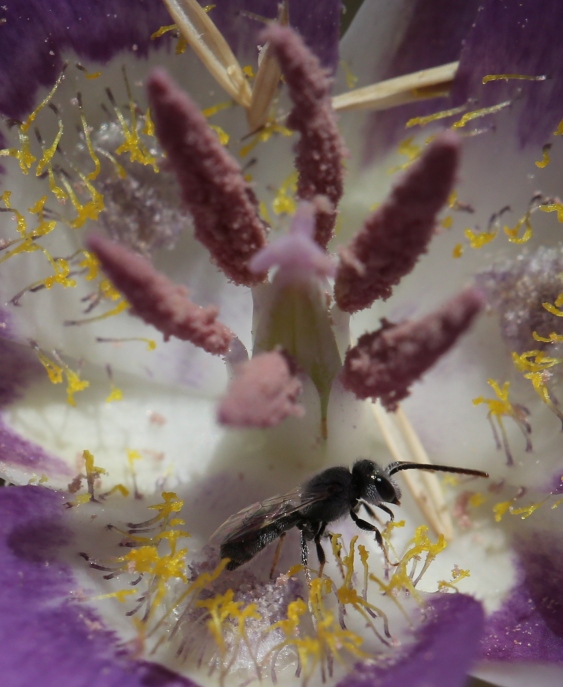
Calochortus venustus 01
Calochortus argillosus from the Mt Hamilton region in California.
Calochortus venustus 03
Calochortus argillosus from the Mt Hamilton region in California.

Calochortus luteus

Ethnobotany. A food for many Amerindian Peoples of California: the bulbs were eaten raw or roasted. It was specified for the Miwok People by Barrett, S. A. and E. W. Gifford in “Miwok Material Culture” (Bulletin of the Public Museum of the City of Milwaukee. 1933).  Among the Navajo Peoples, the bulbs were gathered in early spring, peeled and eaten raw  – according to the book “Ethnobotany of the Navajo” by Elmore, Francis H. (Sante Fe, NM. School of American Research 1944).

According to the Report of the Commissioner  of Agriculture of 1871, «The Utahs call it Sago. The root is the size of a walnut, very palatable and nutritious. The Indian children of California, Utah and Arizona prize it as the children of the Whites to do confectionary. The Mormons, during their first years in Utah, consumed this root extensively.» 

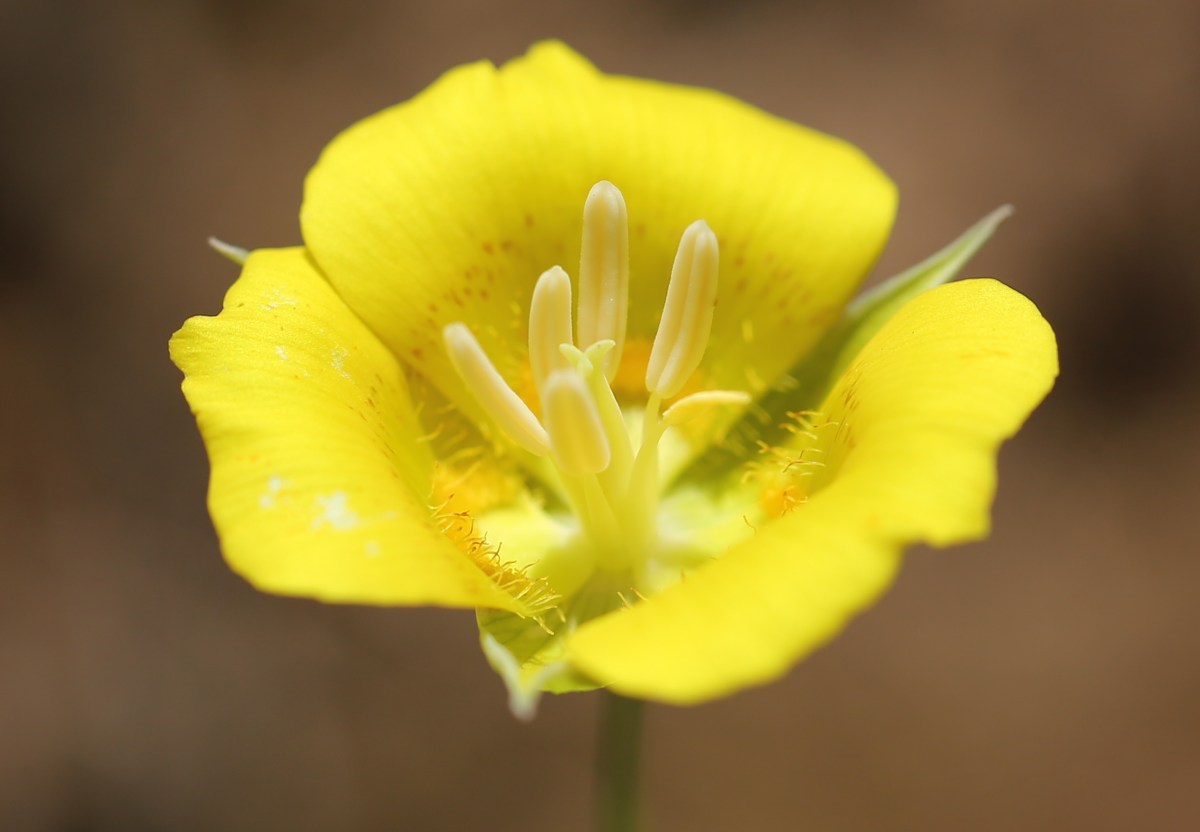
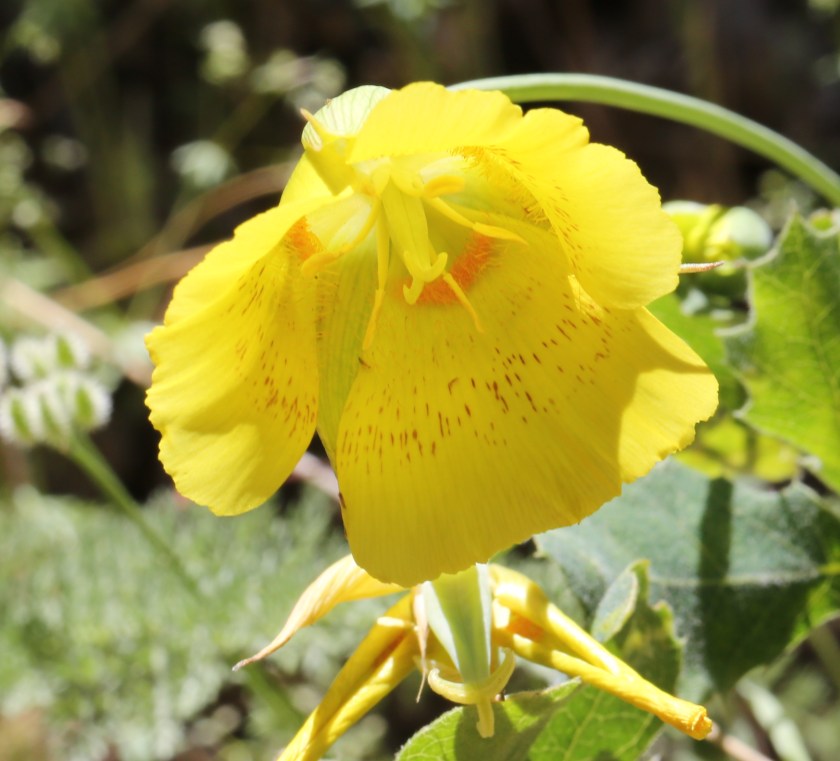
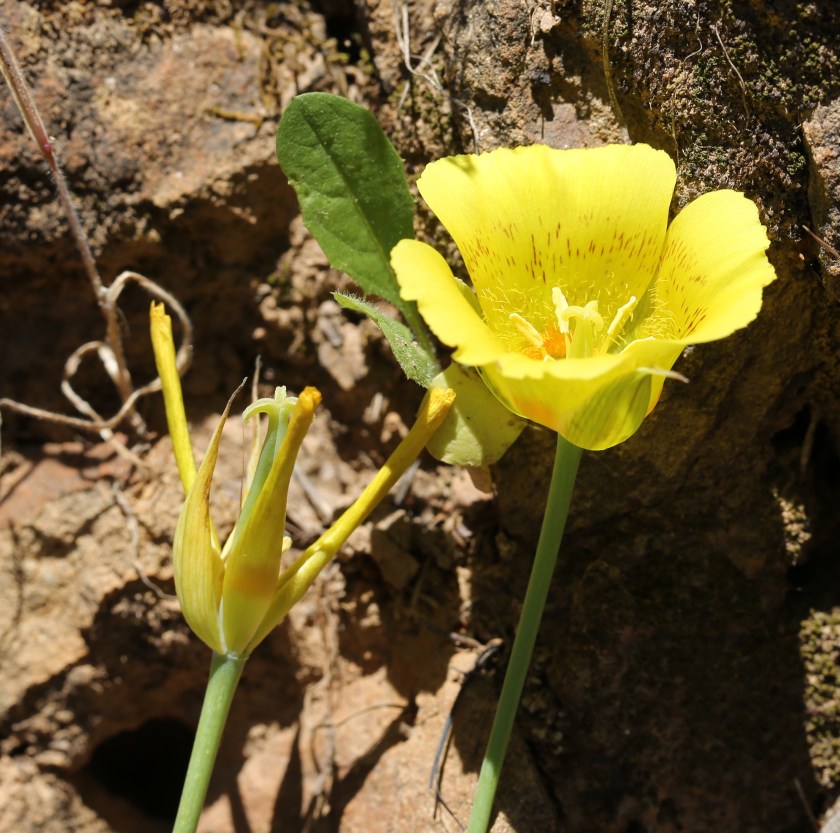
Description by the California Native Plant Society. Calochortus luteus, or “Yellow Mariposa Lily”, is a species of the Liliaceae endemic to California. This species is found on coastal prairie, grasslands and some open forest floors primarily in the central Coast Ranges and Sierra foothills. Like other Mariposa Lilies it grows from a bulb, with most of its growth occurring in winter, followed by spring flowering and summer dormancy. It grows to a maximum of 50 cm in height and 20 cm in width. It requires good drainage and must be kept mostly dry in summer. The leaves arising directly from the bulbare strap-like and long. The flower is 3-5 centimeter across and primarily bright yellow, with sparse hair inside and often red-brown streaks or blotches. It is reported to be one of the easiest Mariposa Lilies to grow in the garden.

Reference Books. The gem of a book for all Calochortus aficionados is : “Calochortus Mariposa Lilies and their Relatives”. By Mary E. Gerritsen and Ron Parsons. 2007. Timber Press. 
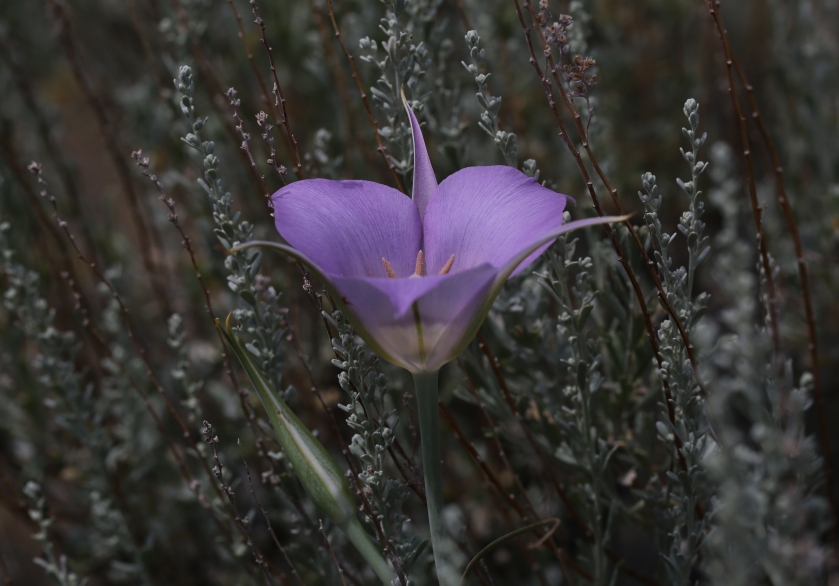
Calochortus luteus 05
Calochortus luteus from the Mt Hamilton region in California.
Calochortus luteus 04
Calochortus luteus from the Mt Hamilton region in California.
Calochortus luteus 03
Calochortus luteus from the Mt Hamilton region in California.

Calochortus splendens

Ethnobotany. A food for many Amerindian Peoples of California: the bulbs were eaten raw or roasted. 

Description by the California Native Plant Society. Calochortus splendens is a species in the Liliaceae Family known by the common name “Splendid Mariposa Lily”. It is native to California and Baja California where it is found primarily near the coast, in foothills and valleys and on the west slope of the mountains. Growing from a bulb, it is usually found coming up among dense, low shrubs, herbs or grasses. It grows to a maximum of 60 cm in height and 15 cm in width. It is a thin-stemmed lily with few leaves (thin, strap-like, arising from the base) and bearing flowers singly or in flower clusters of up to four. Each flower is ringed with smaller, ribbonlike, curling leaves. The bowl-shaped flowers are of varying shades of blue, pink, purple, or lavender, with a spot of darker purple at the base of each petal. The flower may have numerous white hairs in the center and bright purple pollen. In the wild it blooms profusely following fire and then may not bloom again for years. In the garden do not expect it to bloom every year as flowering requires considerable expenditure of stored energy from the bulb.

Reference Books. The gem of a book for all Calochortus aficionados is : “Calochortus Mariposa Lilies and their Relatives”. By Mary E. Gerritsen and Ron Parsons. 2007. Timber Press. 
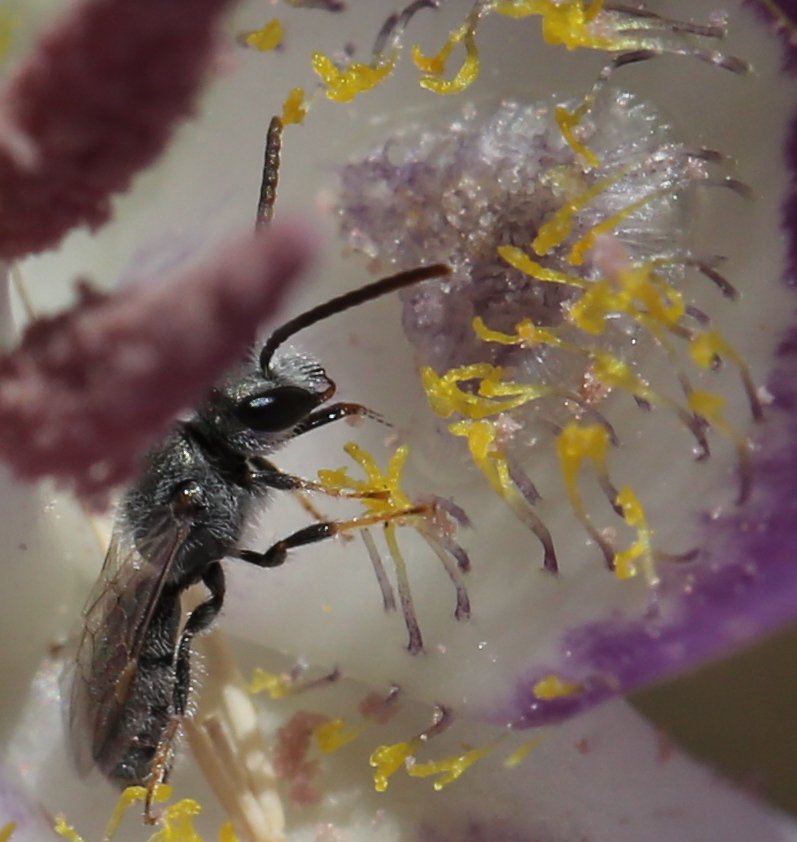
Calochortus splendens 03
Calochortus splendens from the Lockwood Valley in California.
Calochortus splendens 02
Calochortus splendens from the Lockwood Valley in California.

Calochortus venustus

Ethnobotany. A food for many Amerindian Peoples of California: the bulbs were eaten raw or roasted. It was specified for the Miwok People by Barrett, S. A. and E. W. Gifford in “Miwok Material Culture” (Bulletin of the Public Museum of the City of Milwaukee. 1933).

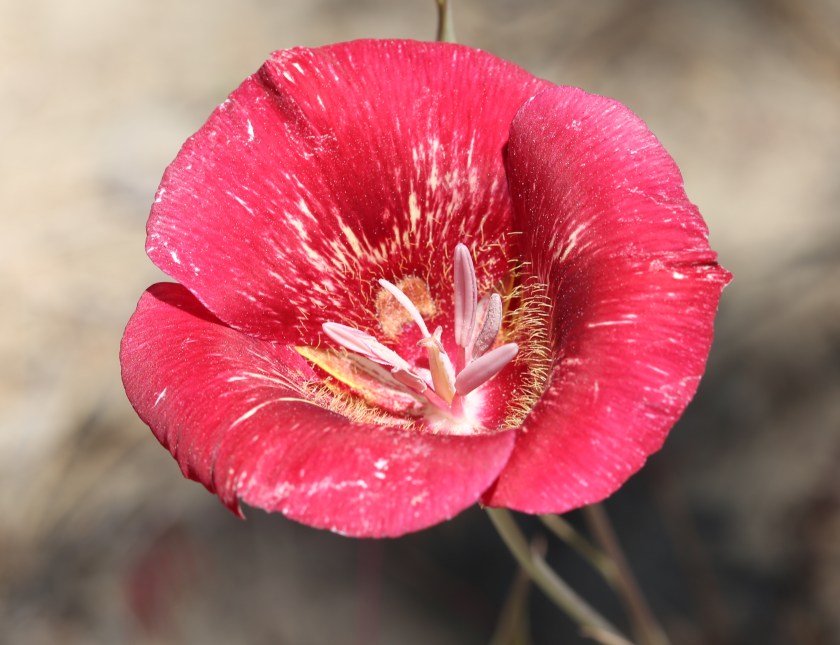
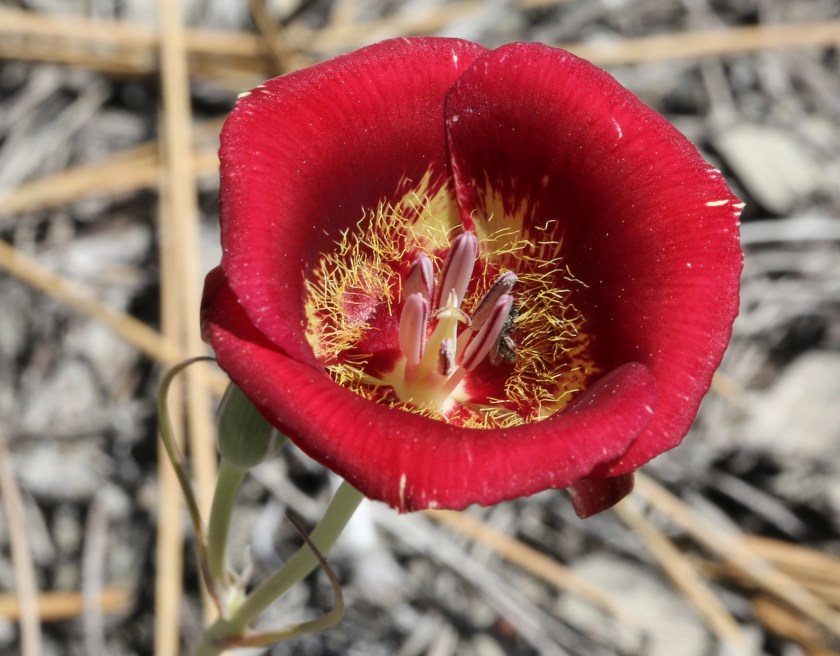
Description by the California Native Plant Society. Calochortus venustus is a species of flowering plant in the lily family known by the common name Butterfly Mariposa Lily. It is endemic to California, where it can be found in the sandy soils of a number of habitats in the mountains and foothills in the central part of the state. It is a perennial herb producing a branching stem 10 to 60 centimeters tall. There is a basal leaf up to 20 centimeters long which withers by the time the plant blooms. The flower cluster is a loose cluster of 1 to 6 erect, bell-shaped flowers. The flowers are variable in size and color pattern (cream, lavender, orange, pink, purple, red and white) though white is the most common color. They are often showy and intricately patterned. They generally have three curving sepals 2 or 3 centimeters long and three oval-shaped, clawed petals up to 5 centimeters long. The petals may be a variety of colors from white to pale pink or purple to bright red or orange, and sport a large dark central blotch and a smaller, paler blotch above. The fruit is an angled capsule 5 or 6 centimeters long. Although they tend to grow singly in the wild, they have more visual impact when massed in the garden. This plant needs summer dormancy, so withhold water after it has finished blooming. It grows naturally in the sandy (often granitic) soil in grassy places, typically hilly areas of the Coast Ranges and Sierra foothills.

Reference Books. The gem of a book for all Calochortus aficionados is : “Calochortus Mariposa Lilies and their Relatives”. By Mary E. Gerritsen and Ron Parsons. 2007. Timber Press. 
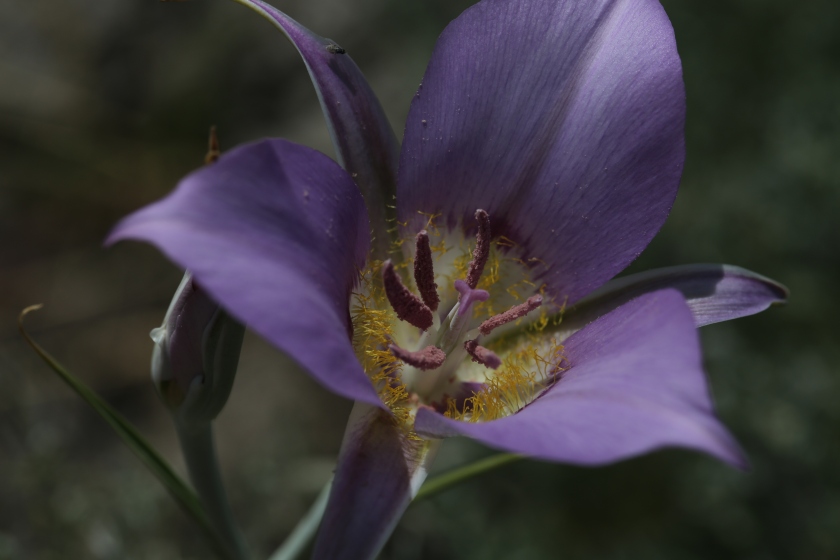
Calochortus venustus 05
Variety of Calochortus venustus from the Mt Pinos region in California.
Calochortus venustus 04
Variety of Calochortus venustus from the Mt Pinos region in California.
Calochortus venustus 06
Variety of Calochortus venustus from the Mt Pinos region in California.