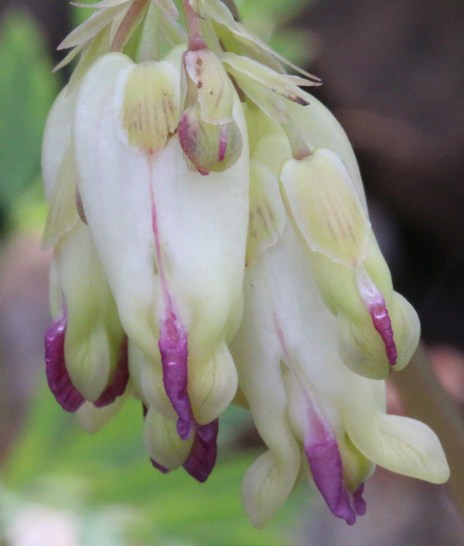
Dicentra formosa var. oregana

Ethnobotany. The Shakit People used it as an anthelmintic making a worm medicine with a decoction of pounded roots. They also used the fresh roots for abcessed teeth and an infusion of crushed plants as a tonic/wash for the hair. Gunther, Erna, 1973, Ethnobotany of Western Washington, Seattle. University of Washington Press.  Recent paleoethnobotanical studies have demonstrated that Dicentra formosa was present on archeological sites of British Columbia in Canada. 

Pharmacon. According to Michael Moore in “Medicinal Plants of the Pacific West”. 1995.

  • Herb Tincture [1:5, 50% alcohol, 25-50 drops, all to 3X a day.] 
  • Fresh Root Tincture [1:2, 10-20 drops or applied topically.]
  • Dry Root Tincture [1:5, 50% alcohol. 15-30 drops.]

Materia Medica. In 1905, Fred Petersen in “Materia Medica and Clinical Therapeutics” writes: «An alterative of great value where indicated. Increases the vitality and influences metabolism. Especially indicated in all glandular derangements with general depraved condition of the system, where the nutritive forces are impaired. It increases waste and improves nutrition. More especially indicated in above conditions where there is an enlarged abdomen, the result of atony, or where there is a persistently coated tongue and fetid breath. In diarrhea and dysentery, where tongue is coated, breath fetid and digestion poor, it is a good remedy. In amenorrhea and dysmenorrhea and leucorrhea, where there is relaxed condition of the uterine supports, it is a valuable adjunct to other indicated remedies. In eczema and other skin diseases with relaxed conditions, it is curative. It is an antisyphilitic and can be used in all stages of syphilis, strumous conditions, nodular swelling, enlarged glands, with good results »

William Cook, M.D., wrote in 1869 in “The Physiomedical Dispensatory”: «As long ago as 1828, before Eclecticism had an existence, Prof. C. S. Rafinesque pointed it out in his Medical Flora, and described its stimulant and alterant properties, under its then best known Linnean name of fumaria cucullaria; and my father-in-law, the late Dr. John Masseker, of New York, used it largely from 1835 to 1844 thus beginning its professional employment seven years before Eclecticism got its first life-breath by appropriating to itself the petition of a million names that the old Thomsonians  of New York presented to the State Legislature against the odious Allopathic laws … The root (small tubers) varies from a yellowish-white to a dusky color externally, and a lighter yellow internally.  It has a faint smell;  and a bitterish, pungent, and rather persistent taste.   Water extracts its virtues very well; but it contains a  resinous substance that is best acted on by alcohol. Properties and Uses:  The roots are stimulating and moderately relaxing, acting slowly but persistently, and influencing the  secretory organs especially the kidneys and skin.   It slowly elevates the circulation, and gives vigorous action to the entire system; and it is probably by this action upon the capillaries that it proves alterant.   It does not increase perspiration so as to make it sensible, though evidently aiding in the elimination of  both saline and sebaceous excreta; but the amount of urine is perceptibly increased after its use, and the solid elements of this excretion augmented.  It stimulates the salivary glands, fauces, and stomach; and gives a feeling of warmth and excitement to the stomach and whole system. Yet these impressions are made rather slowly; and are not so positive as (though much more of the secernent character than) those made by guaiacum.  It is suitable for languid and insensitive conditions; and is among the most valuable agents of its class for secondary syphilis, where it is most generally prized;  and is an excellent combining agent to give intensity to relaxants in the treatment of scrofula and scrofulous ulcers, white swellings, herpetic eruptions, and chronic rheumatism.  Thus used, it is even more valuable in the latter forms of disease than it is in syphilis.   It leaves behind a good tonic influence, mainly through its influence upon the capillary circulation:  but it is quite  an  error to pronounce  it equally tonic with gentiana and frasera.   From its decidedly stimulating character, it should not be used in sensitive and irritable conditions of the system; and is, at any time, best when combined with relaxing alteratives in excess.  It is seldom used in any other form than infusion or other pharmaceutical preparation.   Half an ounce of the crushed bulb infused for an hour in a pint of hot water, forms a preparation of which one to two fluid ounces may be given three times a day».

In the system of the Eclectic School of Medicine, another Dicentra species, Dicentra canadensis, enters in the composition of the Scudder’s Alterative Compound – an herbal tincture formula which has been used, for a long time,  in the treatment of patients with lymphatic and other cancers. This compound is made of equal parts of the following species: Dicentra canadensis; Alnus serrulata; Podophyllum peltatum; Scrophularia nodosa; Rumex crispus.

As a general caution, pregnant or nursing mothers, people with overt neuropathies or with prescription medications or with liver pathologies should avoid to use Dicentra formosa internally. Any part of the plant may also cause skin irritation on contact. This species may also induce a false positive in urine testing for opiates according to Michael Moore. 
Dicentra formosa 05

Recent researches. Dicentra formosa contains – among diverse isoquinoline alkaloids – protopine, bulbocapnine, corydine, isocorydine and dicentrine. Choi and Cui, (Choi and al., 2007; Cui an al., 2006), have demonstrated that several of these alkaloids have shown cytotoxic and chemoprotective abilities.  

Aggarwal wrote in 2009: «A large number of physiologically active isoquinoline alkaloids have been isolated from the tubers of many species of Dicentra and are classified according to their structures as aporphines, protoberberines, protopines and cularines alkaloids. Protopine has been found to possess a range of pharmacological properties: anti-acetylcholinesterase, anti-amnesic, phospholipase and thromboxane synthetase inhibitory, weak spasmolytic, weak anti tumor, smooth muscle stimulate, bactericidal and sedative.»

Species of Dicentra on other continents.

« Dicentra paucinervia is distributed in North- Eastern states, Arunachal Pradesh, Sikkim, West Bengal, Meghalaya, Nagaland, of India, is a highly potent ethno medicinal herb. The tuberous roots are perennial in nature and tuber is the planting material for the plant. The tubers have been used for years by section of Naga ethnic tribal communities living in eastern Nagaland and adjoining Manipur state in the treatment against various diseases like diabetics, malaria, typhoid and other common fevers, pneumonia, diarrhoea, dysentery, carminatives/ flatulence, stomach disorders, cut/ injury etc. The plant is cultivated on small scale by these communities for their medicinal uses. Yield of the tubers is estimated to be about 4800 Kg/acre/ annum ». Aggarwal 2009. 

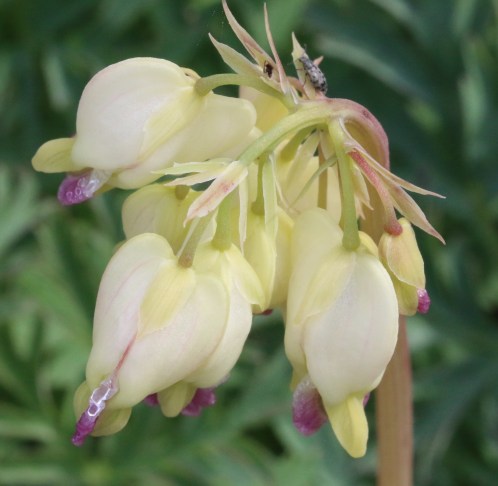
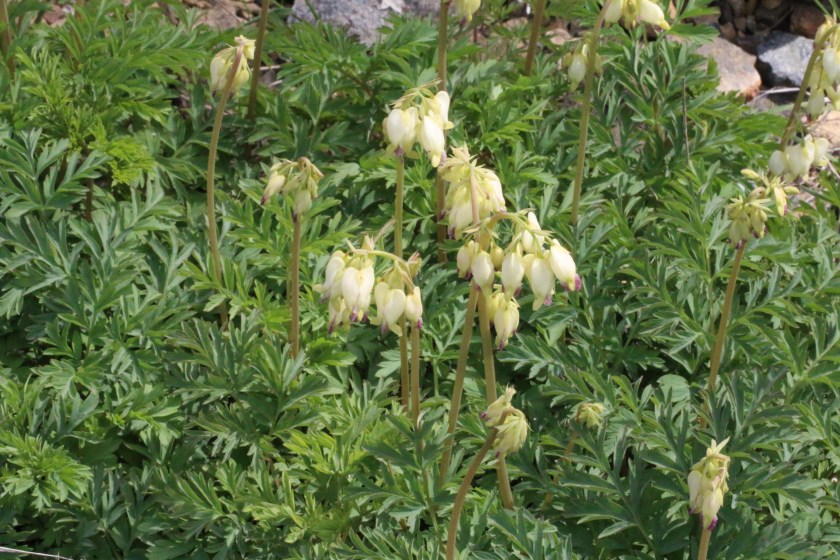
Description. Dicentra formosa is called “Pacific bleeding-heart”. It is a perennial herbaceous plant with fern-like leaves – three to four times divided. The plant grows, from a brittle rhizome at the base of the plant, to 45 cm tall by 60 cm wide. The flowers are normally pink, red, or white and heart-shaped and bloom in clusters of 5 to 15 at the top of leafless, fleshy stems above the leaves from mid-spring to autumn, with peak flowering during the spring. As to Dicentra formosa var. oregana, its leaves are glaucous above and beneath, its flowers are cream or pale yellow. It grows in a small area of northwestern California and southwestern Oregon.
Dicentra formosa 03

Dicentra formosa 02

Dicentra formosa 06

Dicentra formosa 04

Calochortus macrocarpus

Ethnobotany. A food and a medicine for many Amerindian Peoples: the bulbs were eaten raw or roasted. 

By the Thompson People as mentioned in “The Ethnobotany of the Thompson Indians of British Columbia” (Steedman, E.V., 1928), in “Thompson Ethnobotany: Knowledge and Usage of Plants by the Thompson Indians of British Columbia, Victoria” (Turner, Nancy J., Laurence C. Thompson and M. Terry Thompson et al., 1990) and in “Ethno-Botany of the Indians in the Interior of British Columbia” (Perry, F., 1952). They were eating the bulbs raw or cooked as well as the sweet flower buds. The Thompson People were also using mashed bulbs placed in cheesecloth as an eye-medicine.

By the Shuswap People as mentioned in “Shuswap Indian Ethnobotany” (Palmer, Gary, 1975) who were feeding their cattle and sheep.

By the Paiute People as mentioned in “Ethnography of the Surprise Valley Paiute” (Kelly, Isabel T., 1932. University of California Publications in American Archaeology and Ethnology).

By the Okanagon People as  mentioned in “Ethno-Botany of the Indians in the Interior of British Columbia” (Perry, F., 1952) and in “The Salishan Tribes of the Western Plateaus” (Teit, James A., 1928).

By the Okanagon-Colville People as  mentioned in “Ethnobotany of the Okanagan-Colville Indians of British Columbia and Washington, Victoria” (Turner, Nancy J., R. Bouchard and Dorothy I.D. Kennedy, 1980). They were the bulbs raw or pit cooked with other rootsand using a poultice of mashed bulbs applied to the skin for poison ivy.

By the Klamath People as mentioned in “Notes On The Plants Used By The Klamath Indians Of Oregon” (Coville, Frederick V., 1897).

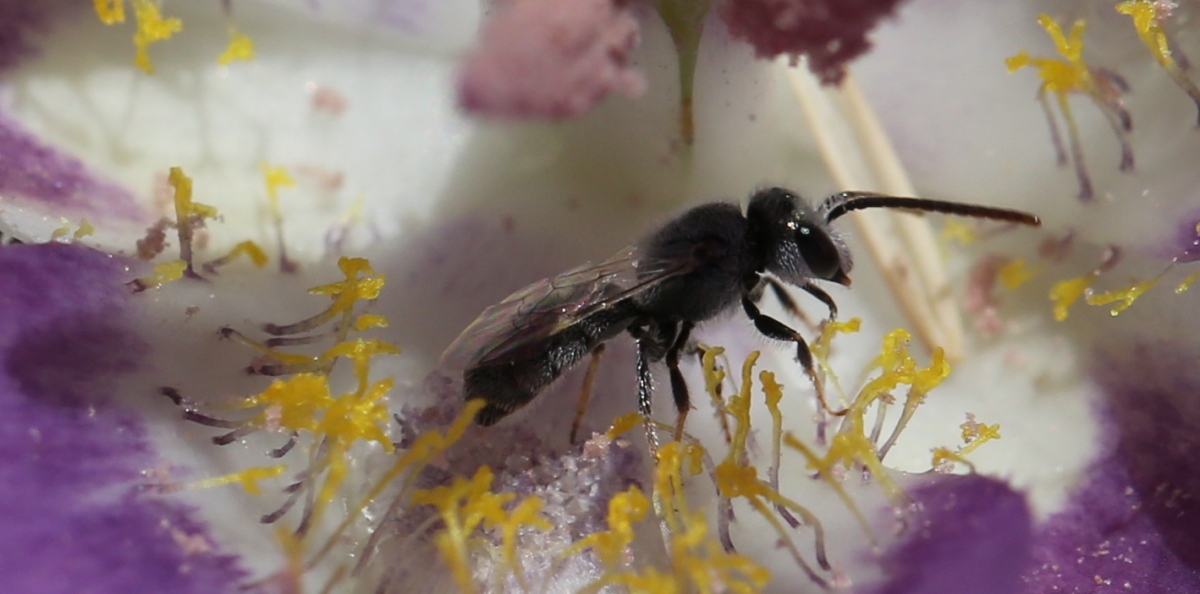
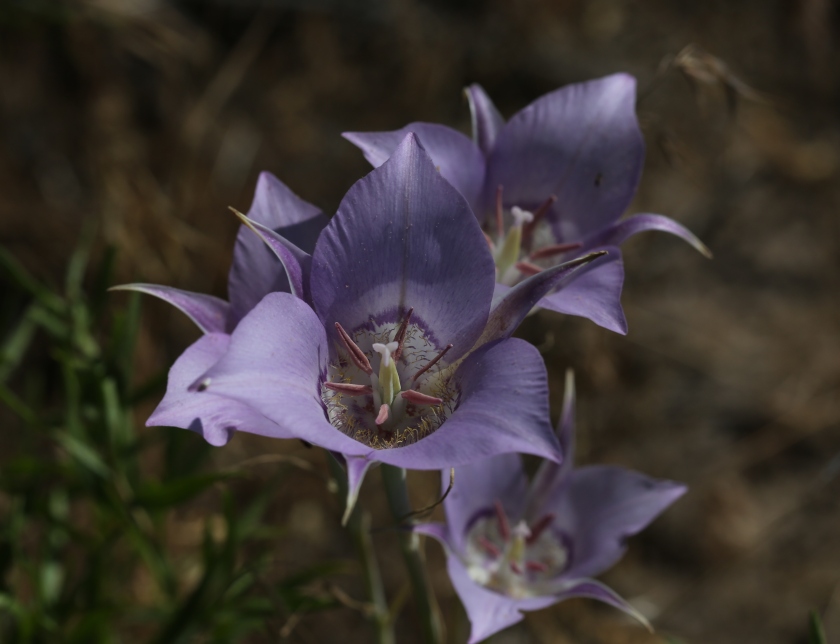
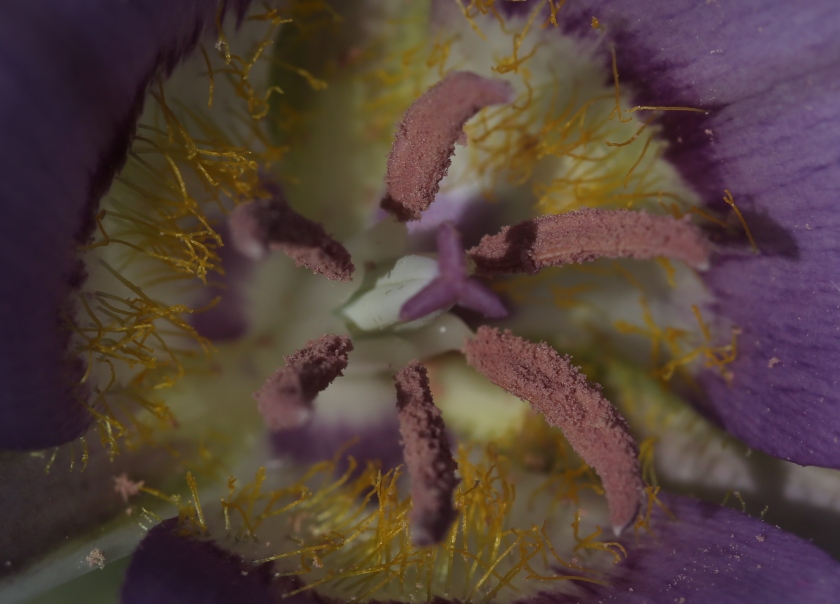
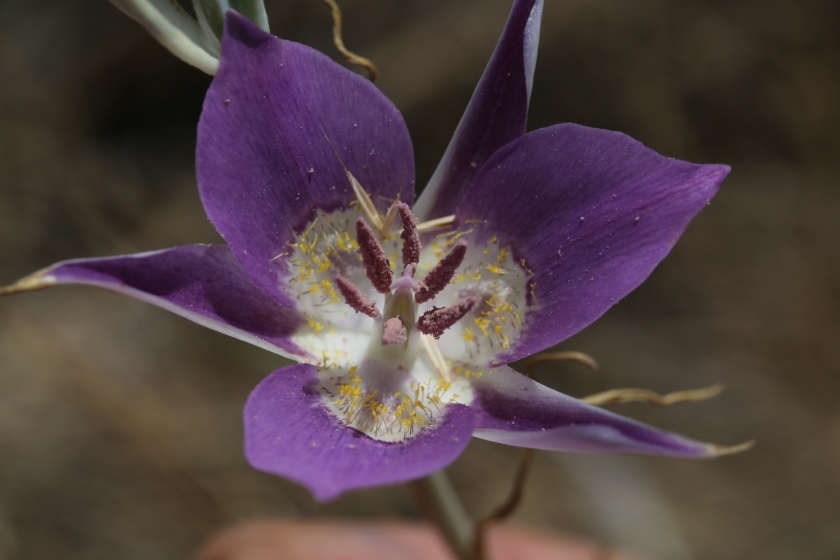
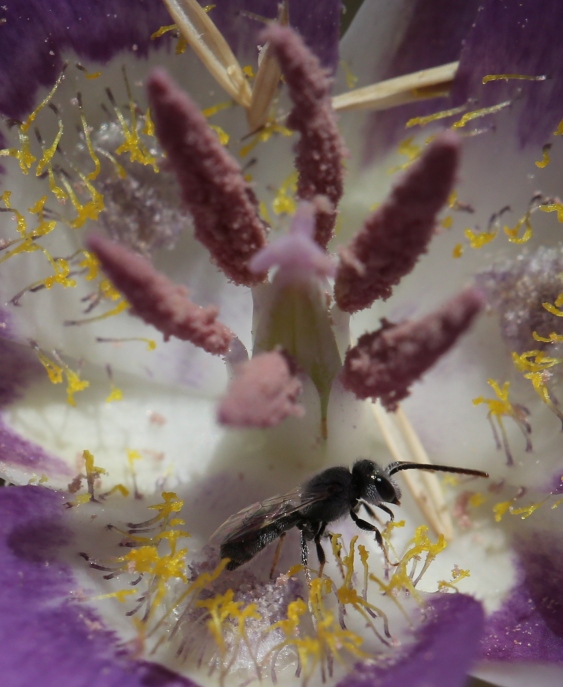
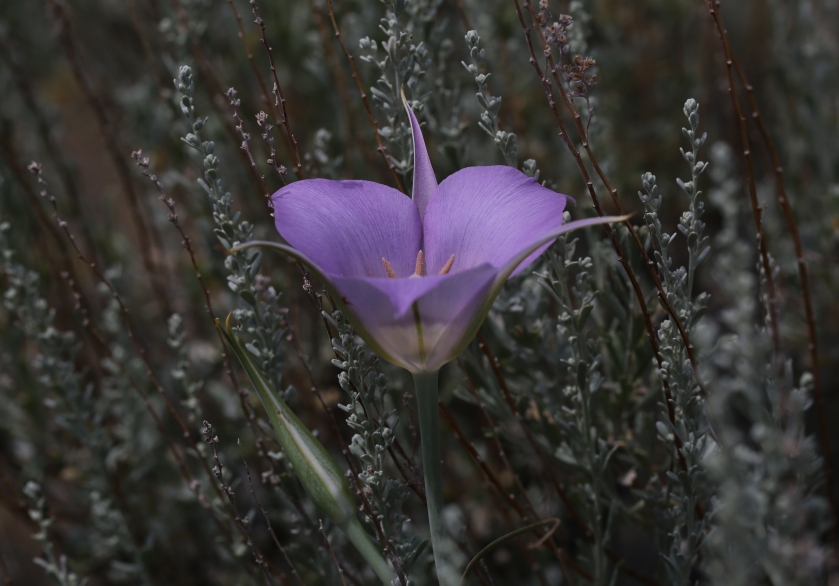
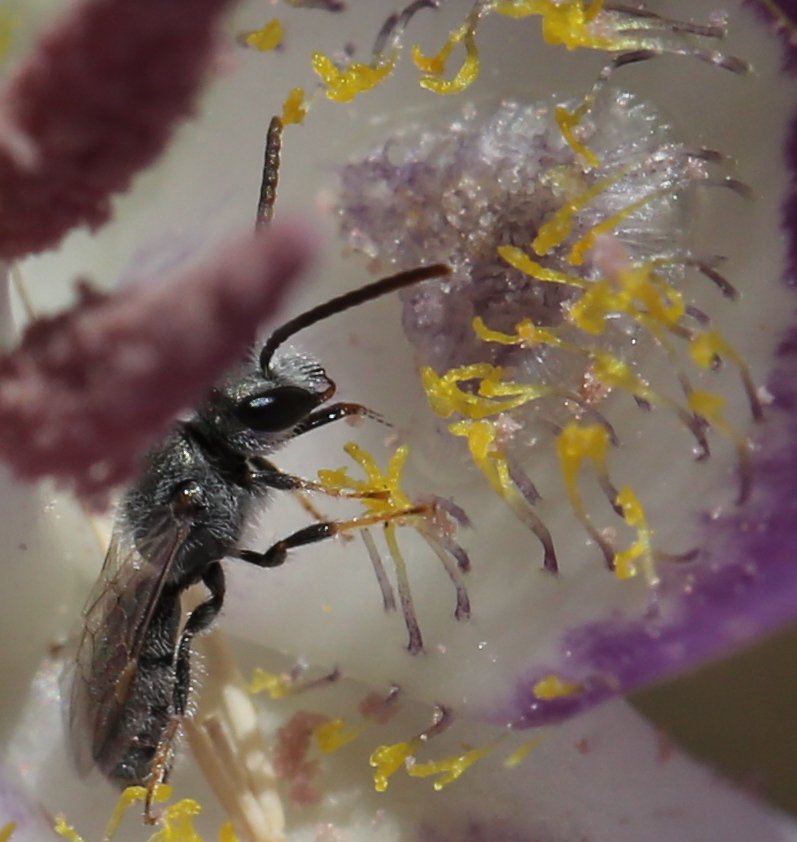
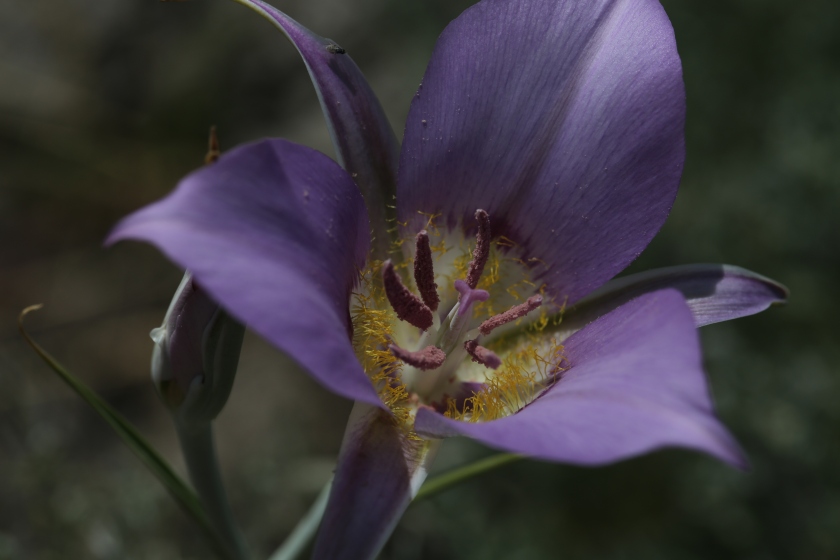
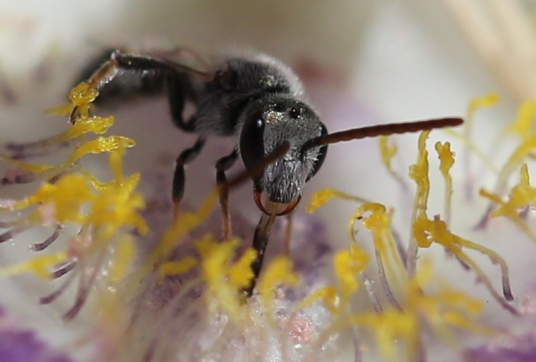
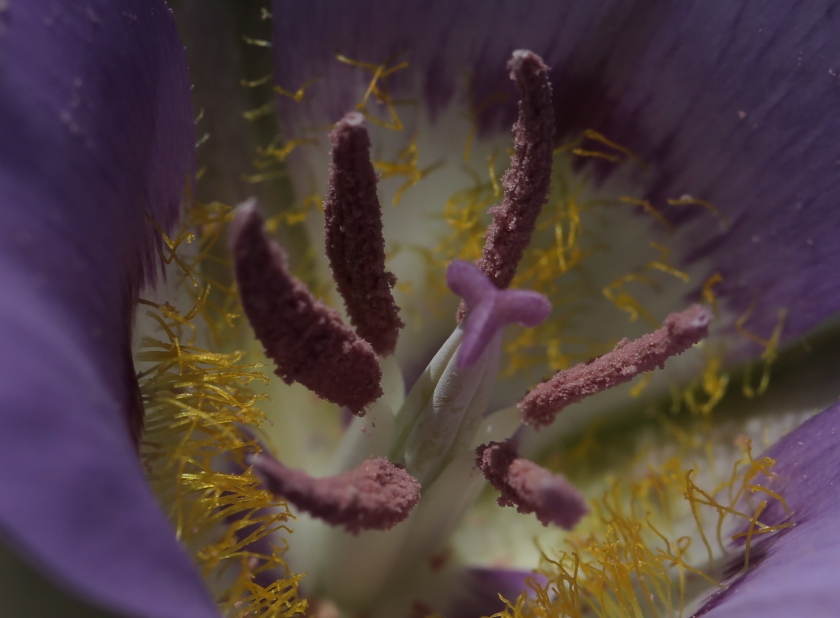
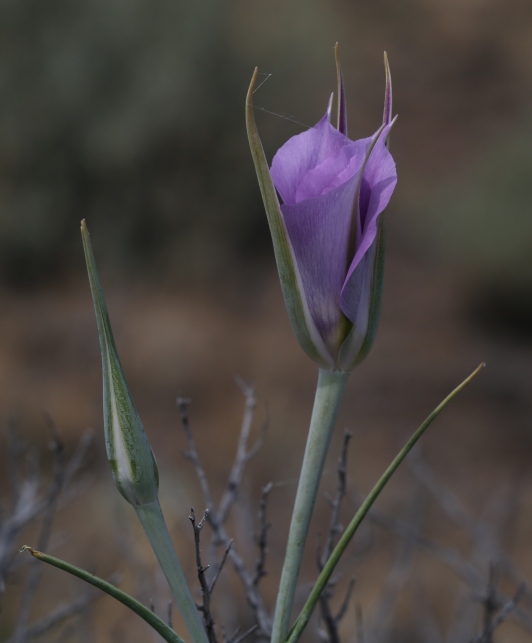
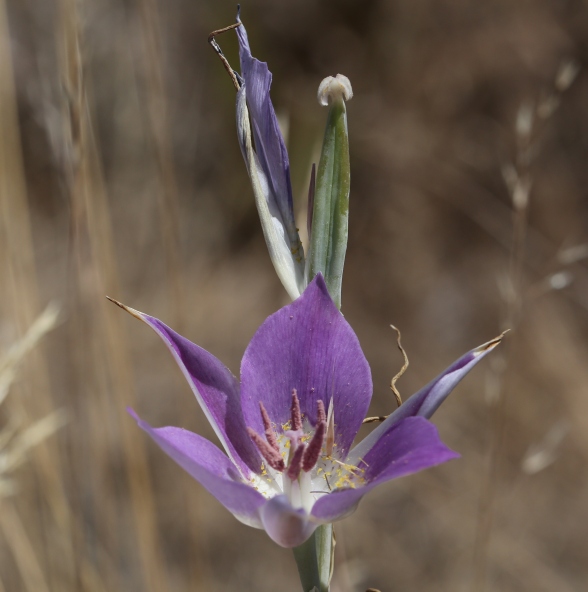
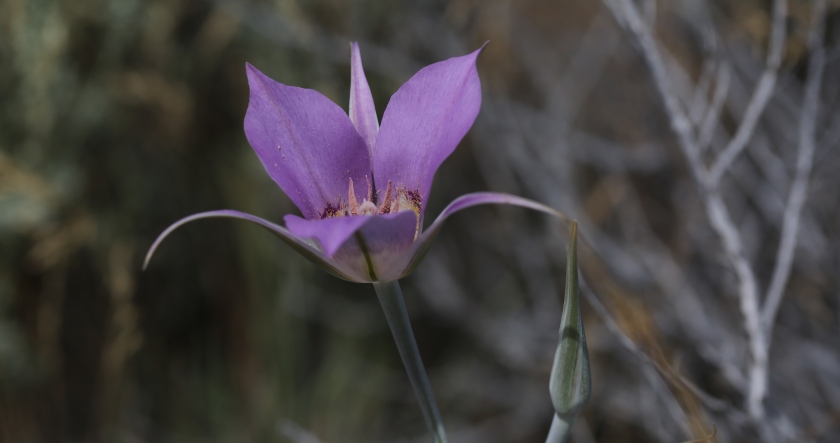
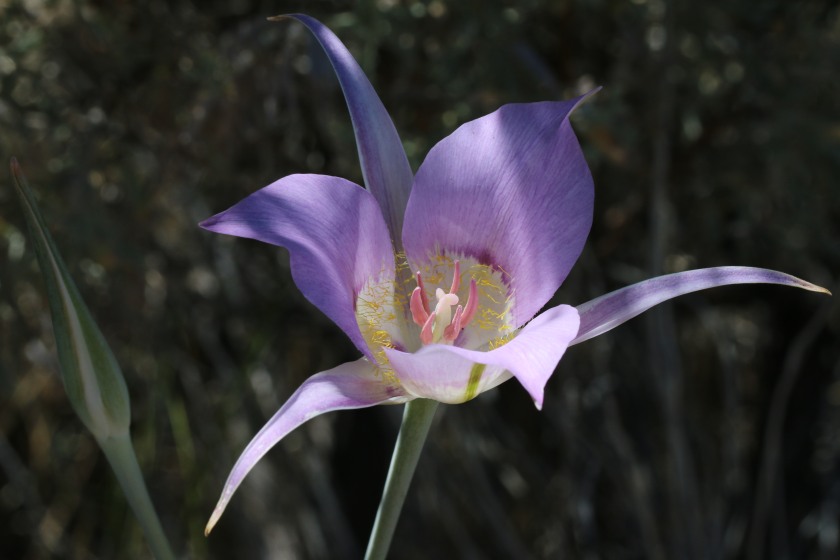
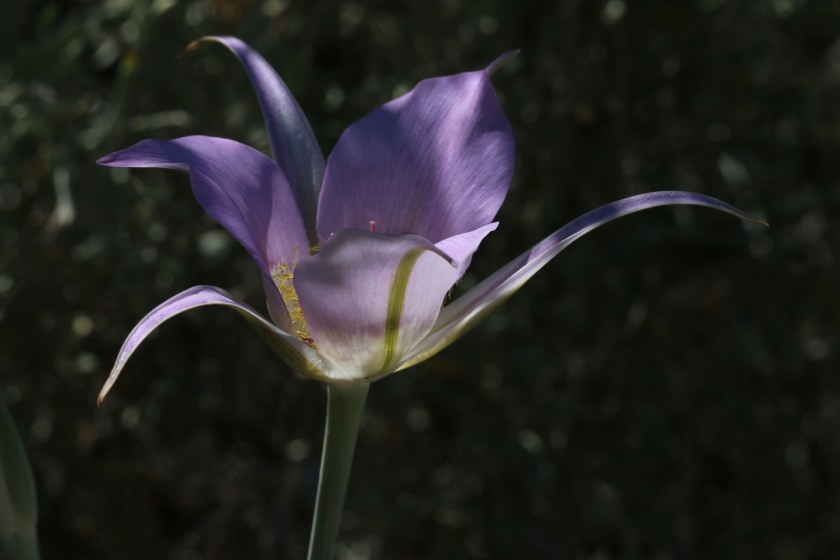
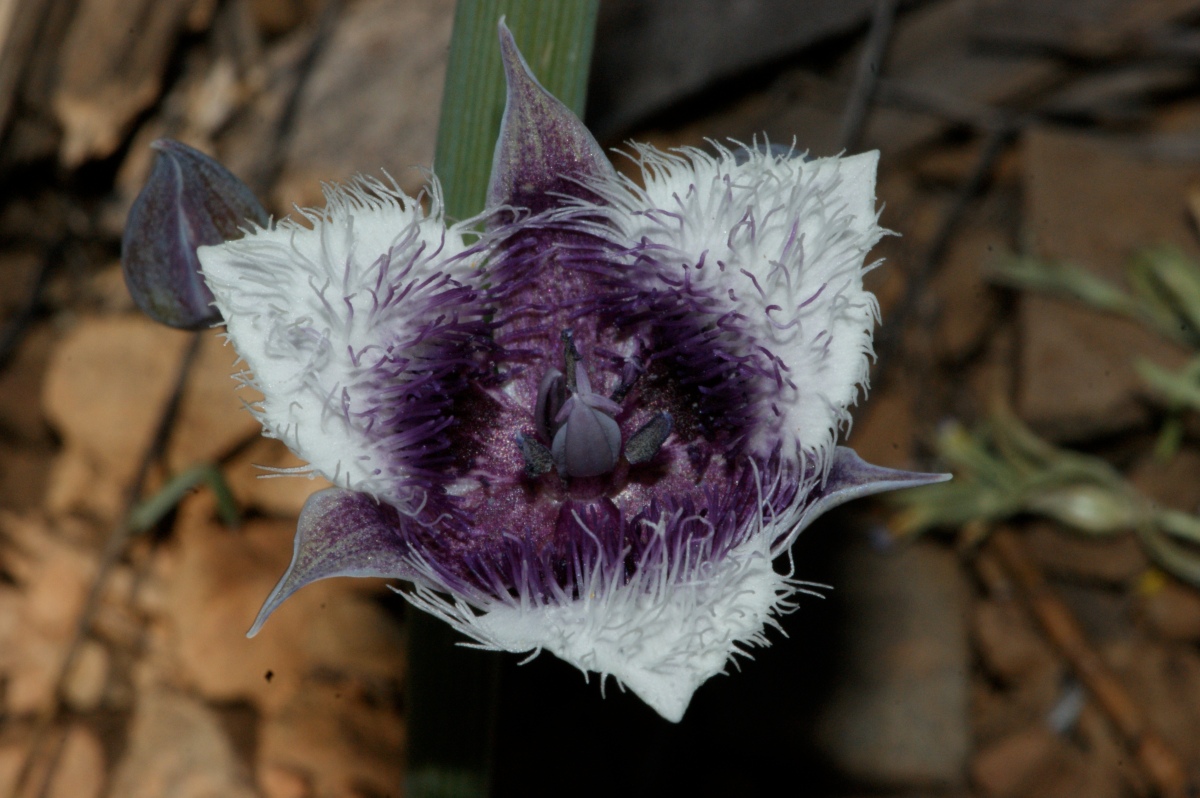
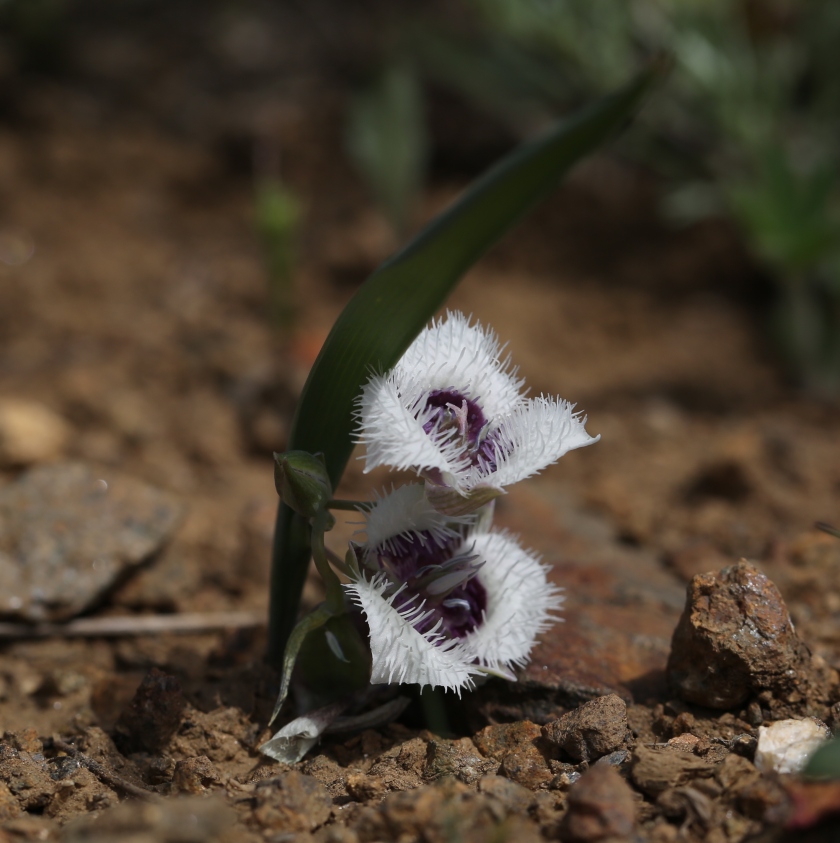
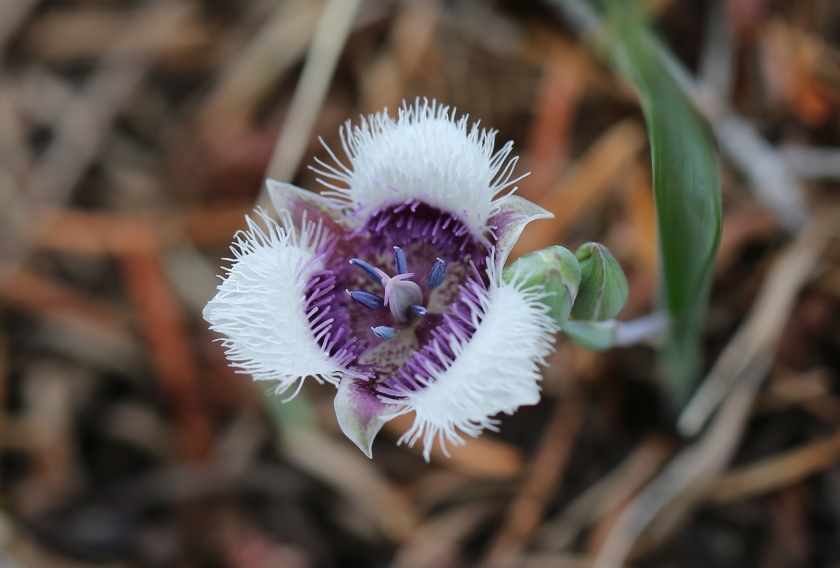
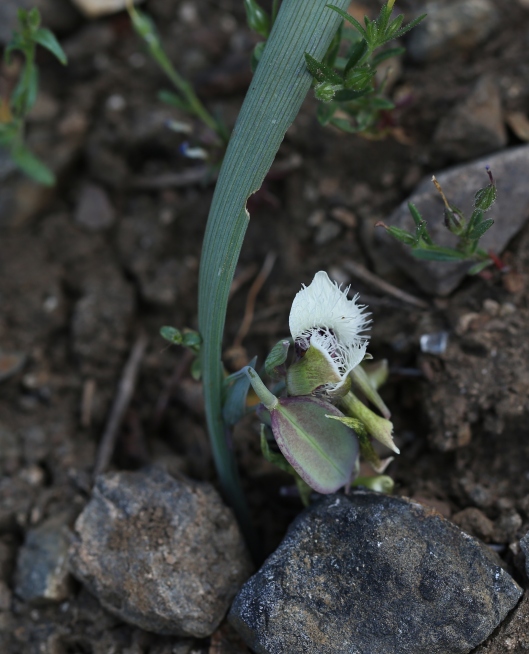
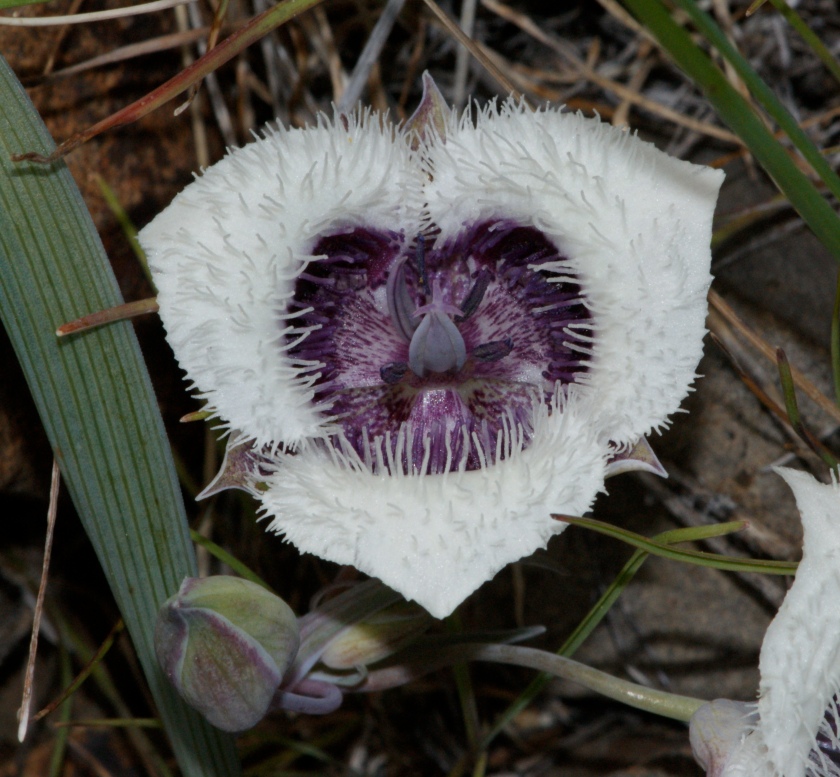
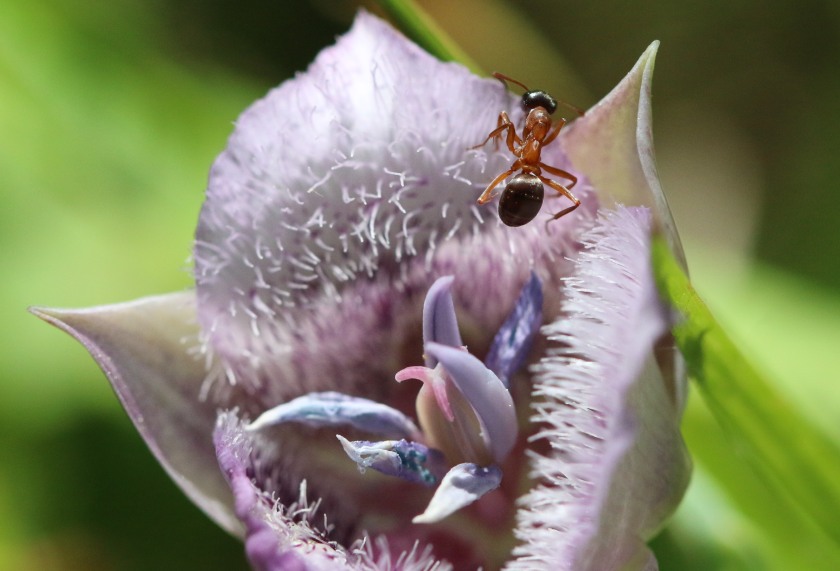
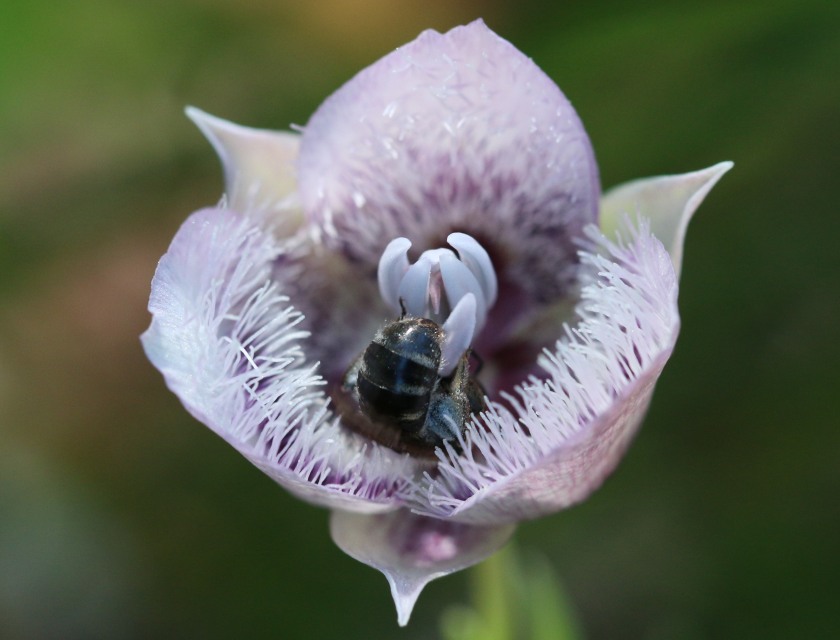
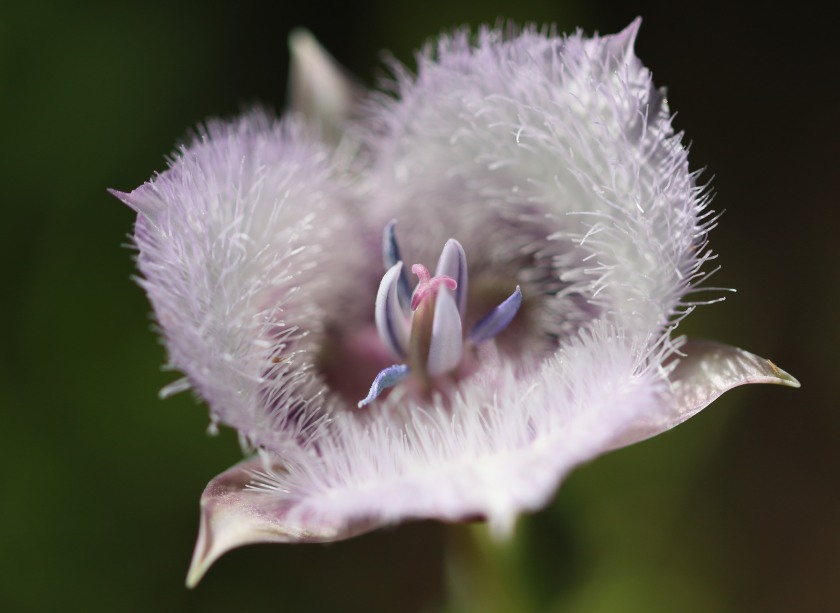
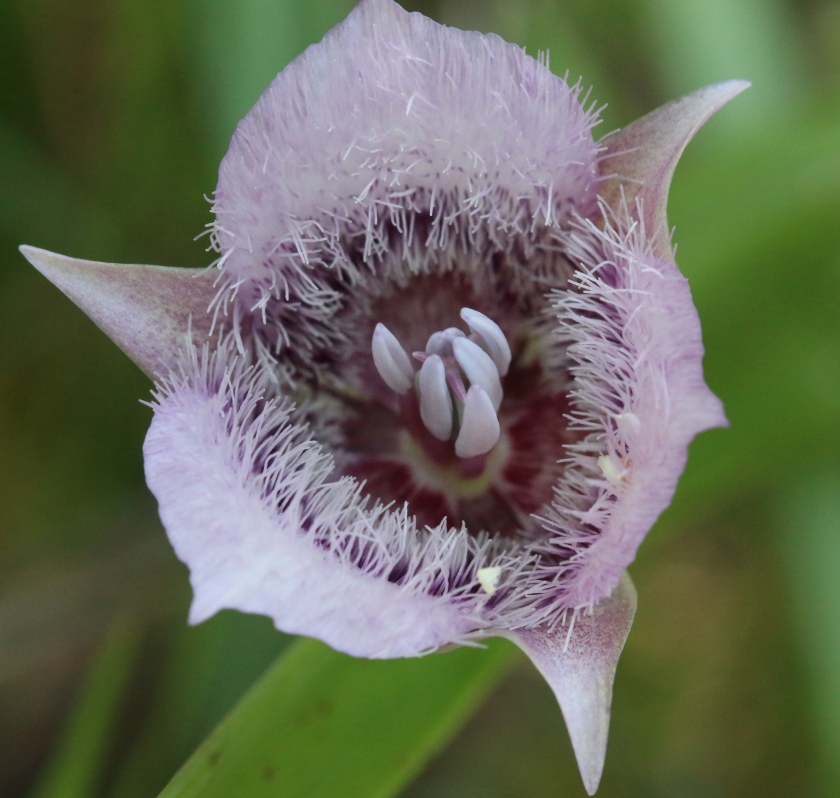
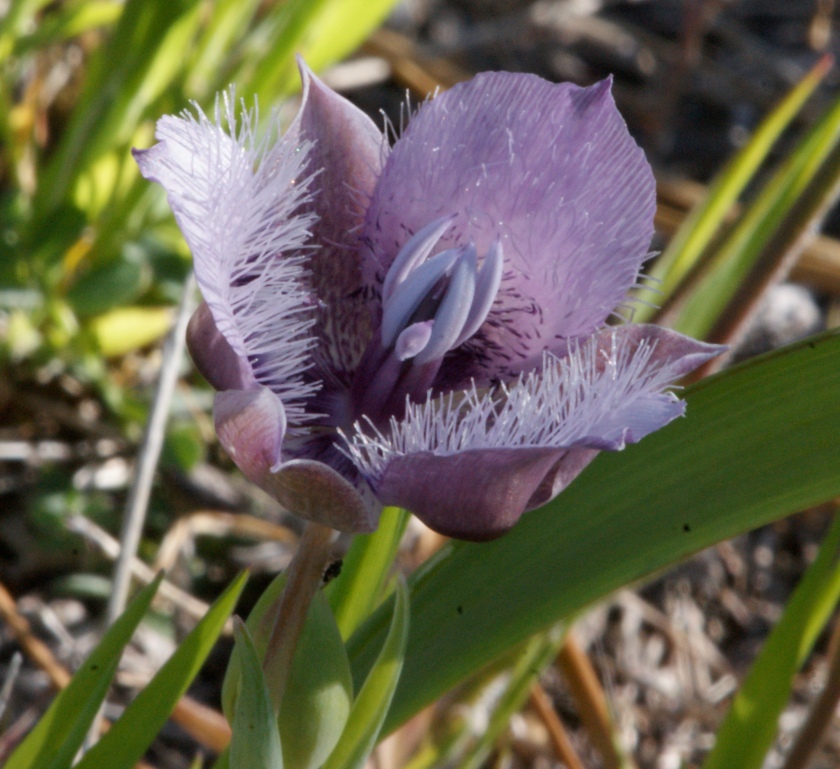
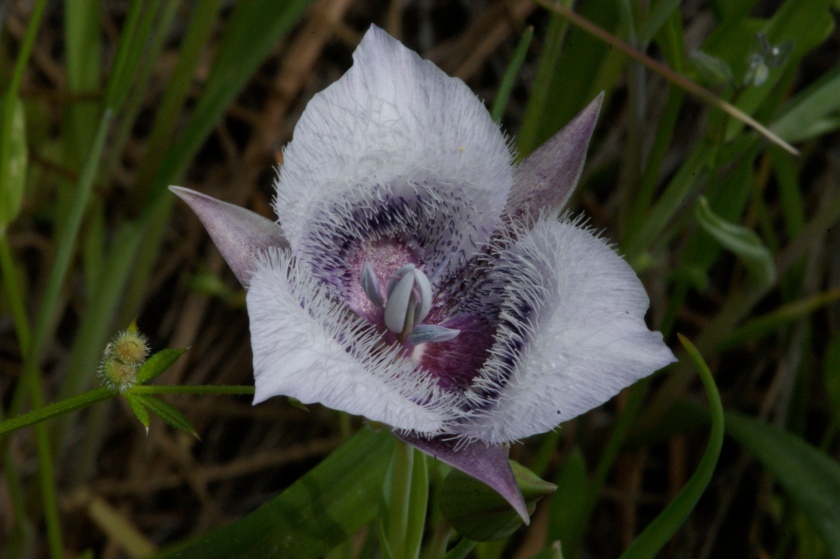
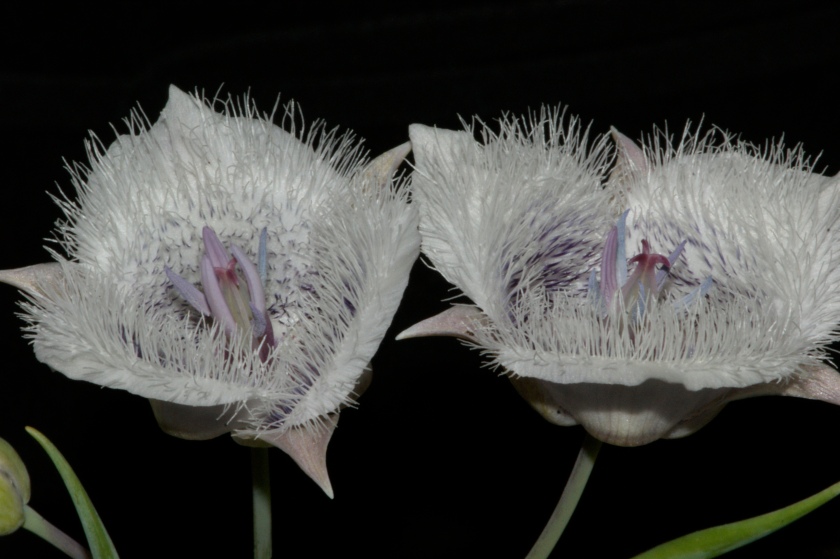
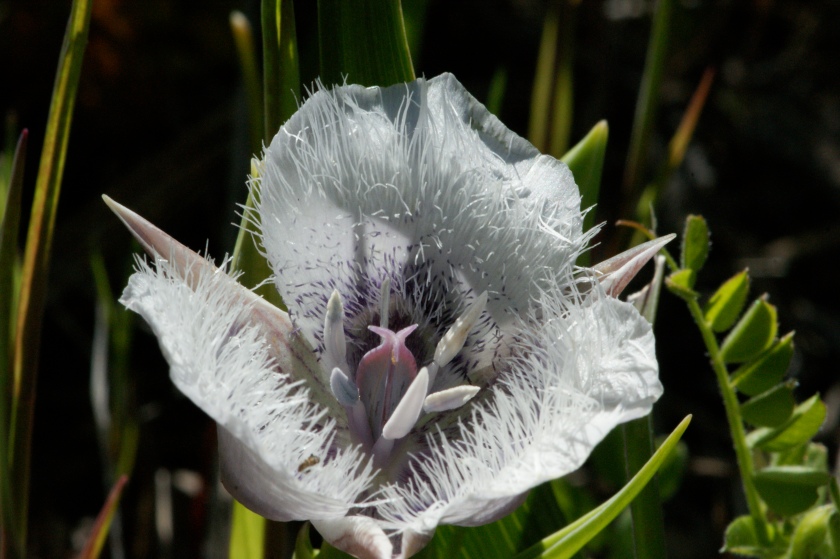
Description by the California Native Plant Society. Calochortus macrocarpa is a species also known as “Sagebrush Mariposa Lily”. It occurs in northwestern United States and a small part of southern British Columbia. The leaves are blue-green and grass-like. The flowers are large, bloom in June, are three-petaled, and are pink and purple. The bulbs are tapering, like a carrot.

Reference Books. The gem of a book for all Calochortus aficionados is : “Calochortus Mariposa Lilies and their Relatives”. By Mary E. Gerritsen and Ron Parsons. 2007. Timber Press. 

Calochortus macrocarpum 10

Calochortus macrocarpum 02

calochortus macrocarpum 56

calochortus macrocarpum 52

Calochortus macrocarpum 03

calochortus macrocarpum 53

Calochortus macrocarpum 07

calochortus macrocarpum 51

Calochortus macrocarpum 01

Calochortus macrocarpum 04

calochortus macrocarpum 50

calochortus macrocarpum 57

Calochortus macrocarpum 05

Calochortus macrocarpus 03
Calochortus macrocarpus. Lava Beds National Monument. California.
Calochortus macrocarpus 02
Calochortus macrocarpus. Lava Beds National Monument. California.

Calochortus elegans var. nanus

Ethnobotany. A food for many Amerindian Peoples of California: the bulbs were eaten raw or roasted.

By the Mendocino People as mentioned in “Plants Used by the Indians of Mendocino County, California”, (Contributions from the U.S. National Herbarium 7:295-408. Chestnut, V. K., 1902).

By the Pomo and Kashaya Peoples as mentioned in “Kashaya Pomo Plants”, (Goodrich, Jennie and Claudia Lawson. Los Angeles. American Indian Studies Center, University of California, Los Angeles. 1980).

By the Yuki People as mentioned in “Some Plants Used by the Yuki Indians of Round Valley in Northern California” (Curtin, L. S. M., The Masterkey 31:85-94. 1957).

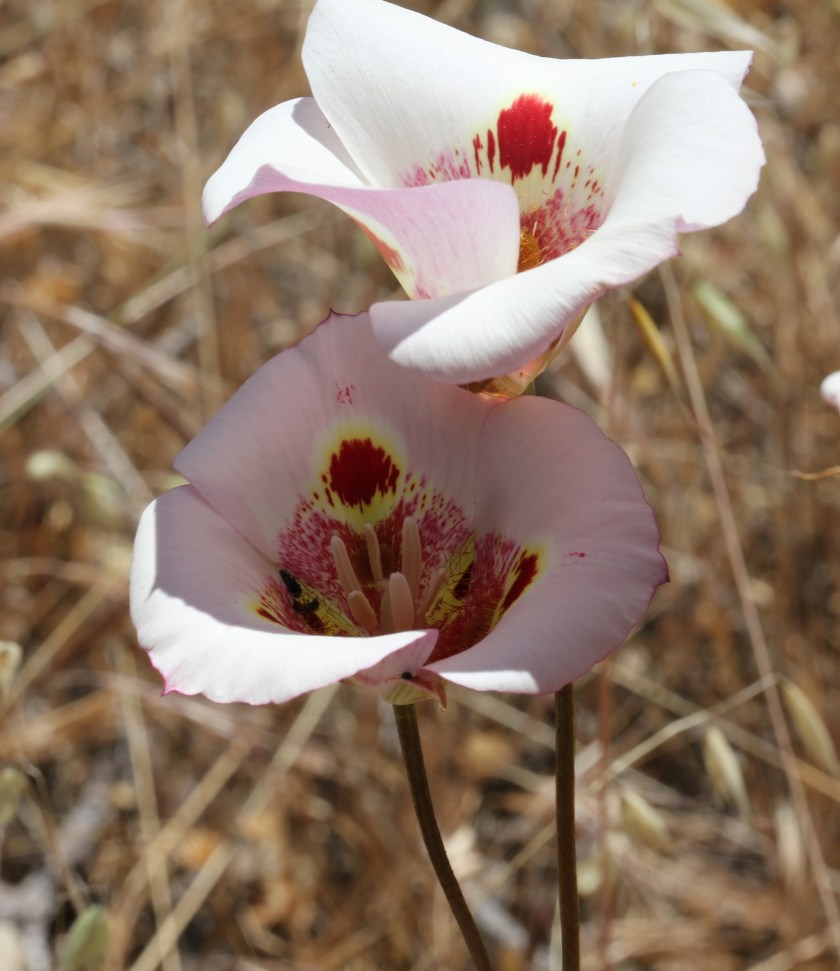
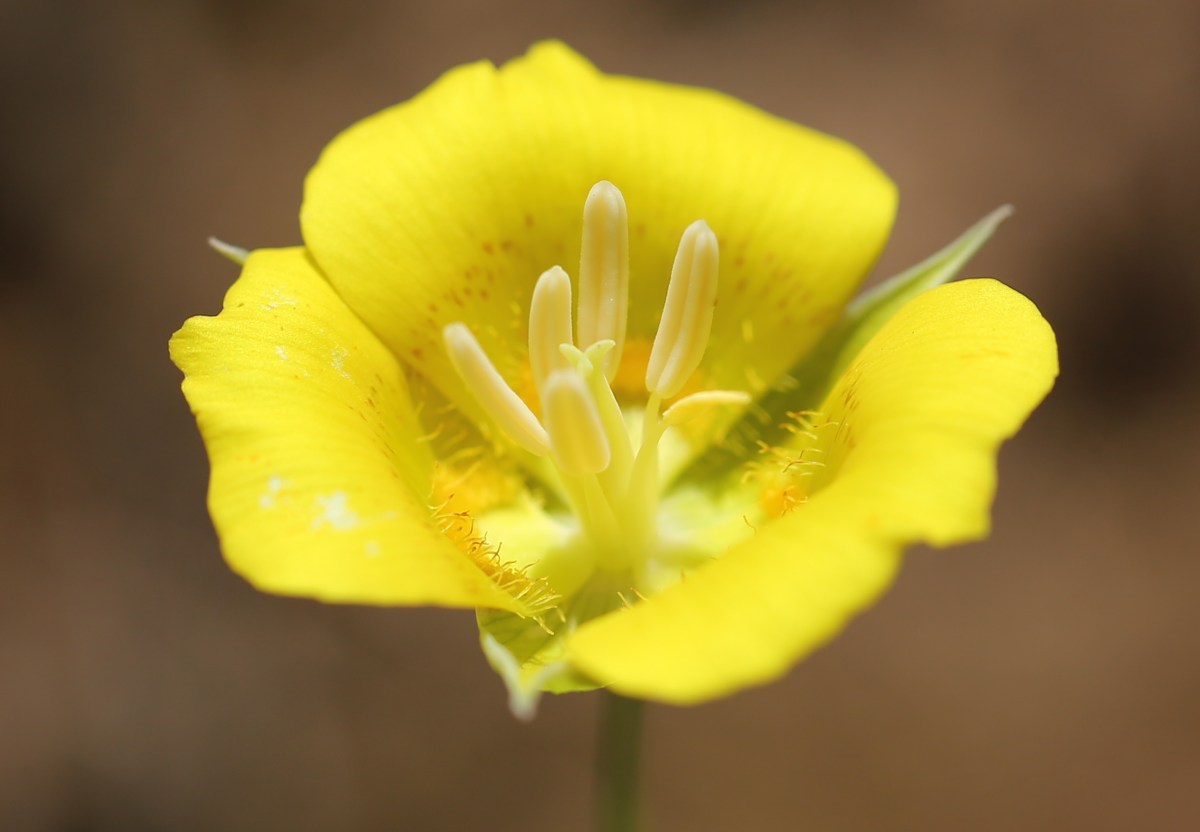
Description. Calochortus elegans var. nanus is a perennial herb producing a slender, generally unbranched stem up to 5 centimeters in height. The basal leaf is around 10 long and does not wither at flowering. The inflorescence bears a few tiny flowers. According to the botanist Frank Callahan – who wrote the chapter on Calochortus in the newly published volume 1 of the Flora of Oregon – the nectary membrane is fringed for Calochortus elegans var. elegans and has sharp or rounded teeth for Calochortus elegans var. nanus. As well, the sepals are not tinged purple at their base for Calochortus elegans var. elegans contrarily to Calochortus elegans var. nanus.
Reference Books. The gem of a book for all Calochortus afficionados is : “Calochortus Mariposa Lilies and their Relatives”. By Mary E. Gerritsen and Ron Parsons. 2007. Timber Press. 

Calochortus elegans nanus 003

Calochortus elegans nanus 000

Calochortus elegans nanus 001

SONY DSC
Calochortus elegans var. nanus

Calochortus tolmiei

Ethnobotany. A food for many Amerindian Peoples: the bulbs were eaten raw or roasted.

By the Mendocino People as mentioned in “Plants Used by the Indians of Mendocino County, California”, (Contributions from the U.S. National Herbarium 7:295-408. Chestnut, V. K., 1902).

By the Pomo and Kashaya Peoples as mentioned in “Kashaya Pomo Plants”, (Goodrich, Jennie and Claudia Lawson. Los Angeles. American Indian Studies Center, University of California, Los Angeles. 1980).

By the Yuki People as mentioned in “Some Plants Used by the Yuki Indians of Round Valley in Northern California” (Curtin, L. S. M., The Masterkey 31:85-94. 1957).

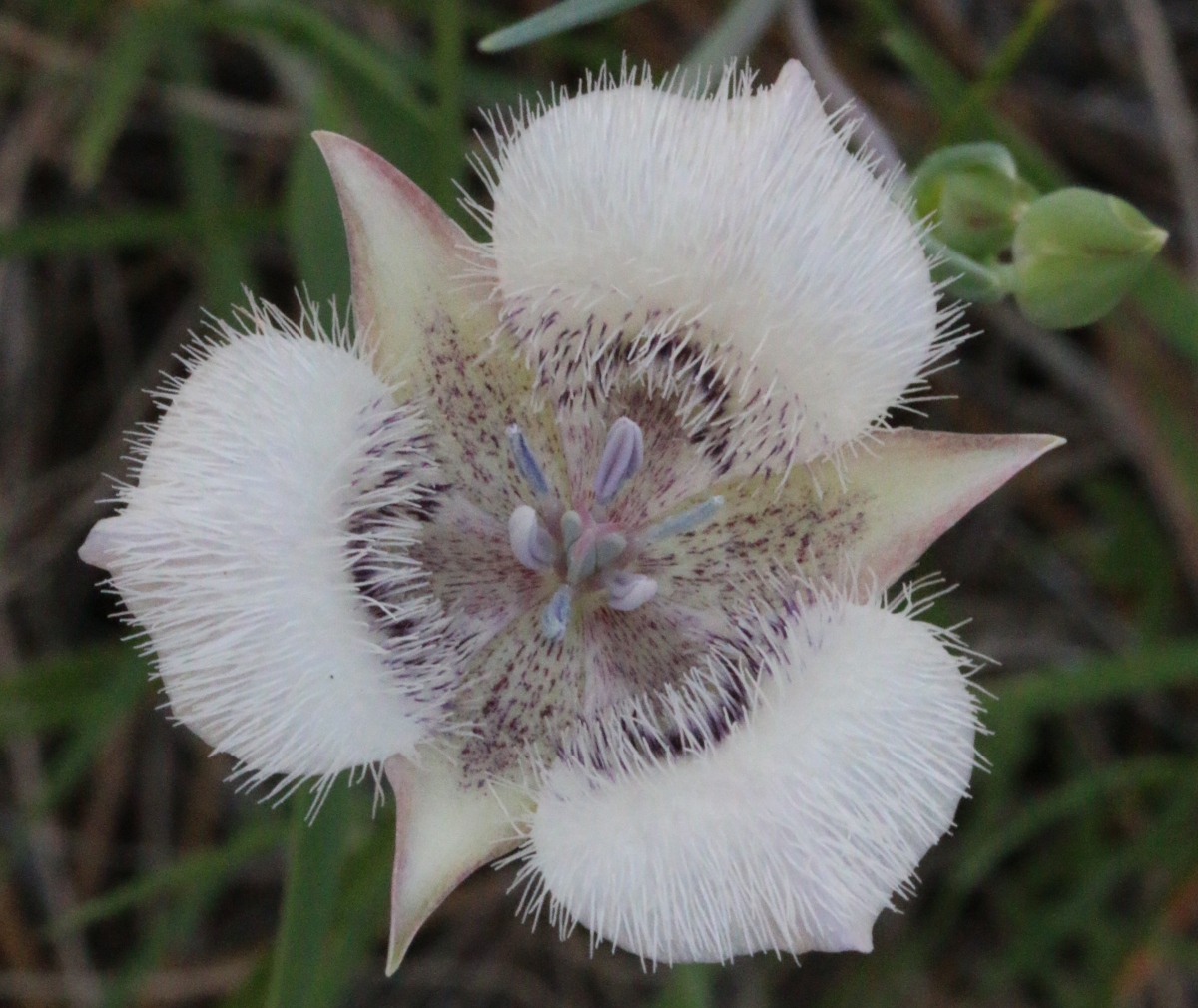
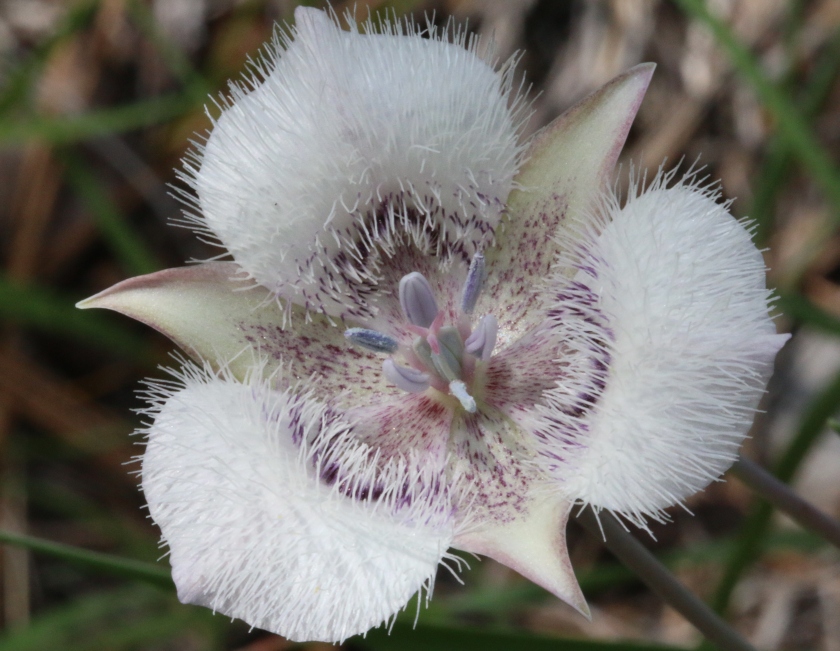
Description by the California Native Plant Society. Calochortus tolmiei is a species of flowering plant in the lily family known by the common names Tolmie star-tulip and pussy ears. It is native to the west coast of the United States from Washington to California, where it is a common member of the flora in several types of habitat. It is a perennial herb producing a slender stem, branched or unbranched, to 40 centimeters in maximum height. There is a basal leaf up to 40 centimeters long which does not wither at flowering, and generally a smaller leaf farther up the stem. The flower cluster is a solitary bloom or a cluster of bell-shaped flowers. Each has white to pale pink or purple petals, each up to 2.5 centimeters long, and three narrower sepals beneath. The petals are usually very hairy on their inner surfaces, and may be fringed with long hairs as well. The fruit is a winged capsule 2 or 3 centimeters long containing several dark brown seeds.

Reference Books. The gem of a book for all Calochortus aficionados is : “Calochortus Mariposa Lilies and their Relatives”. By Mary E. Gerritsen and Ron Parsons. 2007. Timber Press. 

Calochortus tolmei 13
Eriogonum tolmiei in southern Oregon and northern California.
Calochortus tolmiei 022
Eriogonum tolmiei in southern Oregon and northern California.
Calochortus tolmiei 021
Eriogonum tolmiei in southern Oregon and northern California.
Calochortus tolmiei 020
Eriogonum tolmiei in southern Oregon and northern California.
Calochortus tolmei 10
Eriogonum tolmiei in southern Oregon and northern California.
SONY DSC
Eriogonum tolmiei in southern Oregon and northern California.
SONY DSC
Eriogonum tolmiei in southern Oregon and northern California.
SONY DSC
Eriogonum tolmiei in southern Oregon and northern California.
SONY DSC
Eriogonum tolmiei in southern Oregon and northern California.

Calochortus argillosus

Ethnobotany. A food for many Amerindian Peoples of California: the bulbs were eaten raw or roasted.

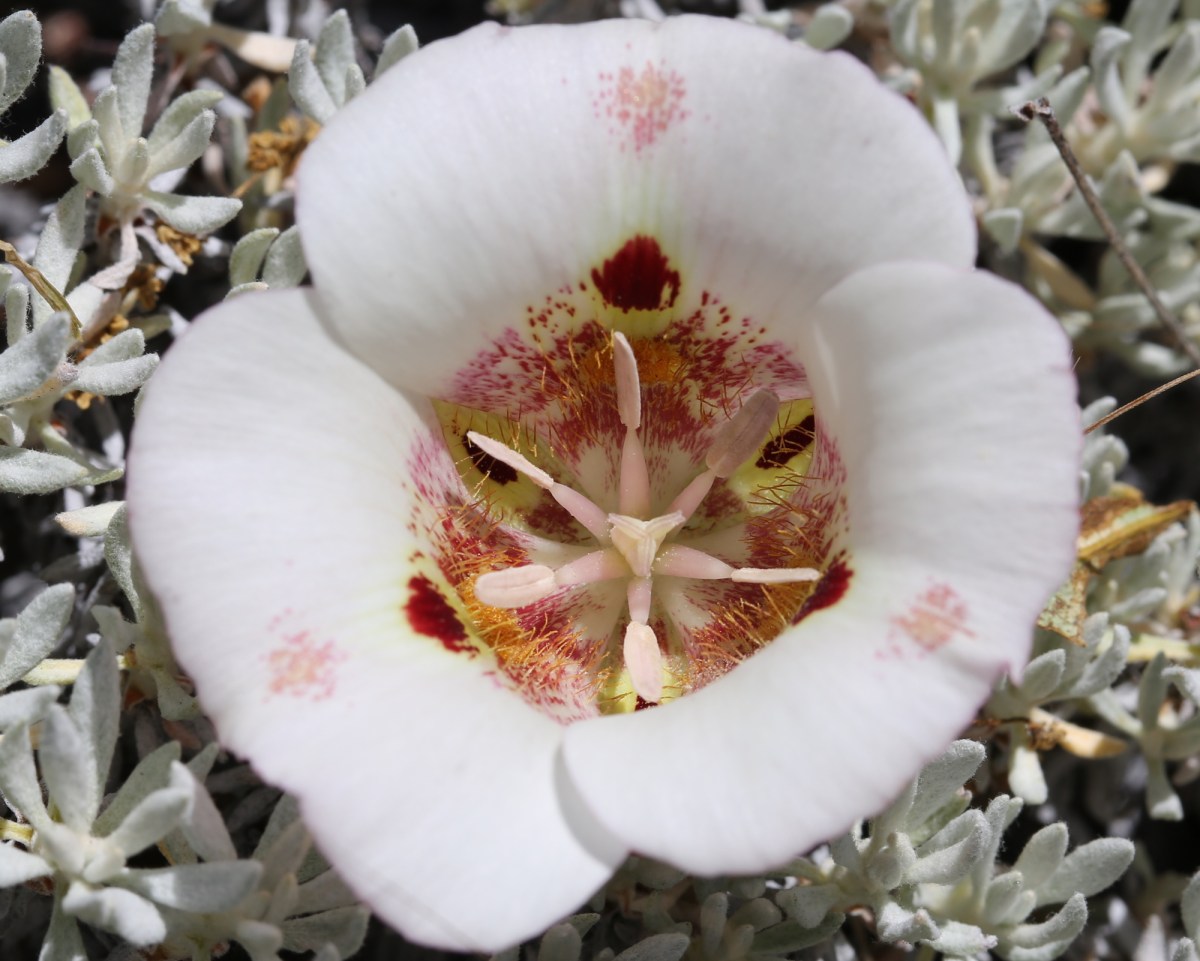
Description by the California Native Plant Society. Calochortus argillosus is a species of flowering plant in the lily family which is known by the common name “Clay Mariposa Lily”. It is endemic to coastal central California, where it grows in hard clay soils in the local mountains. This is a perennial herb producing an unbranching stem to heights between 40 and 60 centimeters. The leaf at the base of the stem is narrow in shape, reaching up to 30 centimeters long withering away at flowering. The flower cluster bears 1 to 4 erect bell-shaped flowers. Each flower has three sepals and three petals up to 4 centimeters long. The petals are rounded in shape and white to pink in base color with a central spot or streaking of red, purple, and yellow. The fruit is a narrow capsule up to 6 centimeters long.

Reference Books. The gem of a book for all Calochortus aficionados is : “Calochortus Mariposa Lilies and their Relatives”. By Mary E. Gerritsen and Ron Parsons. 2007. Timber Press. 

Calochortus venustus 01
Calochortus argillosus from the Mt Hamilton region in California.
Calochortus venustus 03
Calochortus argillosus from the Mt Hamilton region in California.

Calochortus luteus

Ethnobotany. A food for many Amerindian Peoples of California: the bulbs were eaten raw or roasted. It was specified for the Miwok People by Barrett, S. A. and E. W. Gifford in “Miwok Material Culture” (Bulletin of the Public Museum of the City of Milwaukee. 1933).  Among the Navajo Peoples, the bulbs were gathered in early spring, peeled and eaten raw  – according to the book “Ethnobotany of the Navajo” by Elmore, Francis H. (Sante Fe, NM. School of American Research 1944).

According to the Report of the Commissioner  of Agriculture of 1871, «The Utahs call it Sago. The root is the size of a walnut, very palatable and nutritious. The Indian children of California, Utah and Arizona prize it as the children of the Whites to do confectionary. The Mormons, during their first years in Utah, consumed this root extensively.» 

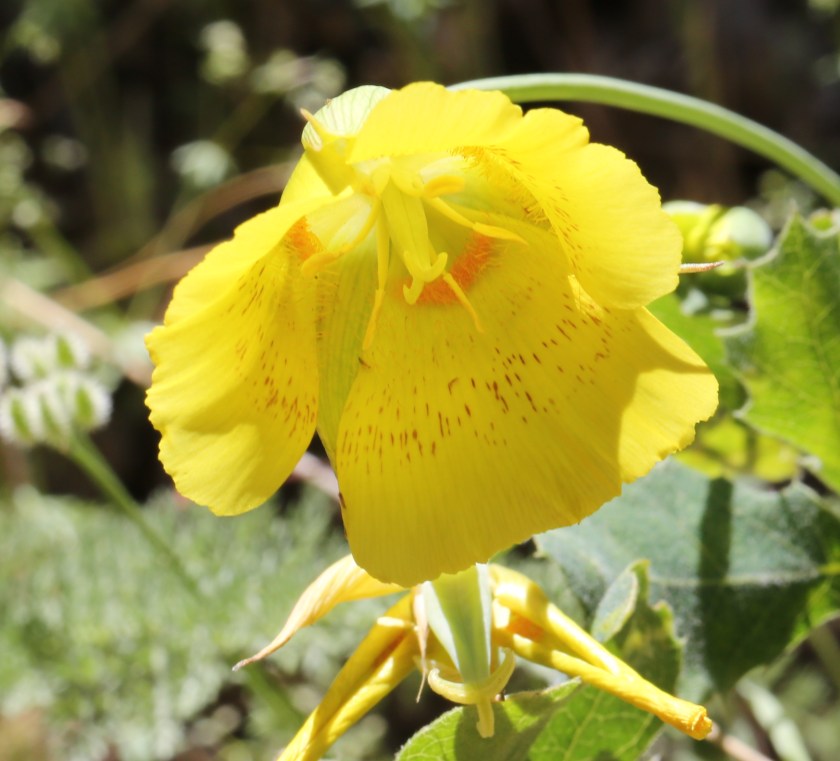
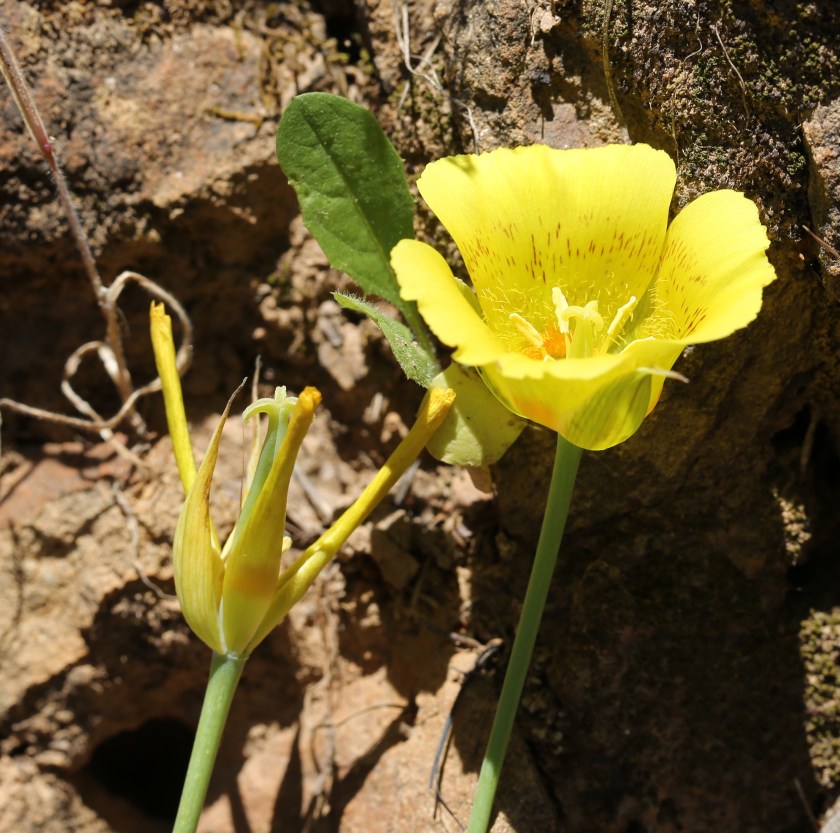
Description by the California Native Plant Society. Calochortus luteus, or “Yellow Mariposa Lily”, is a species of the Liliaceae endemic to California. This species is found on coastal prairie, grasslands and some open forest floors primarily in the central Coast Ranges and Sierra foothills. Like other Mariposa Lilies it grows from a bulb, with most of its growth occurring in winter, followed by spring flowering and summer dormancy. It grows to a maximum of 50 cm in height and 20 cm in width. It requires good drainage and must be kept mostly dry in summer. The leaves arising directly from the bulbare strap-like and long. The flower is 3-5 centimeter across and primarily bright yellow, with sparse hair inside and often red-brown streaks or blotches. It is reported to be one of the easiest Mariposa Lilies to grow in the garden.

Reference Books. The gem of a book for all Calochortus aficionados is : “Calochortus Mariposa Lilies and their Relatives”. By Mary E. Gerritsen and Ron Parsons. 2007. Timber Press. 

Calochortus luteus 05
Calochortus luteus from the Mt Hamilton region in California.
Calochortus luteus 04
Calochortus luteus from the Mt Hamilton region in California.
Calochortus luteus 03
Calochortus luteus from the Mt Hamilton region in California.

Calochortus splendens

Ethnobotany. A food for many Amerindian Peoples of California: the bulbs were eaten raw or roasted. 

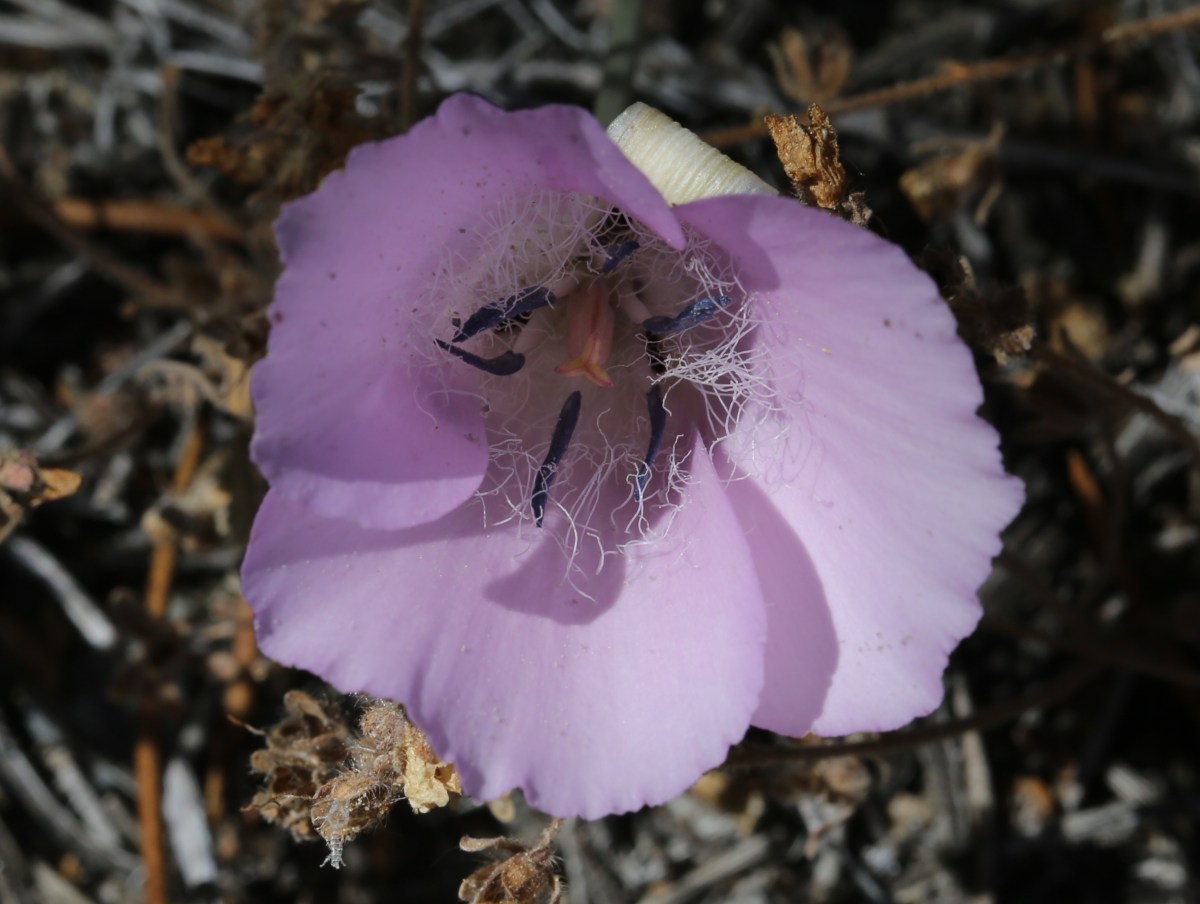
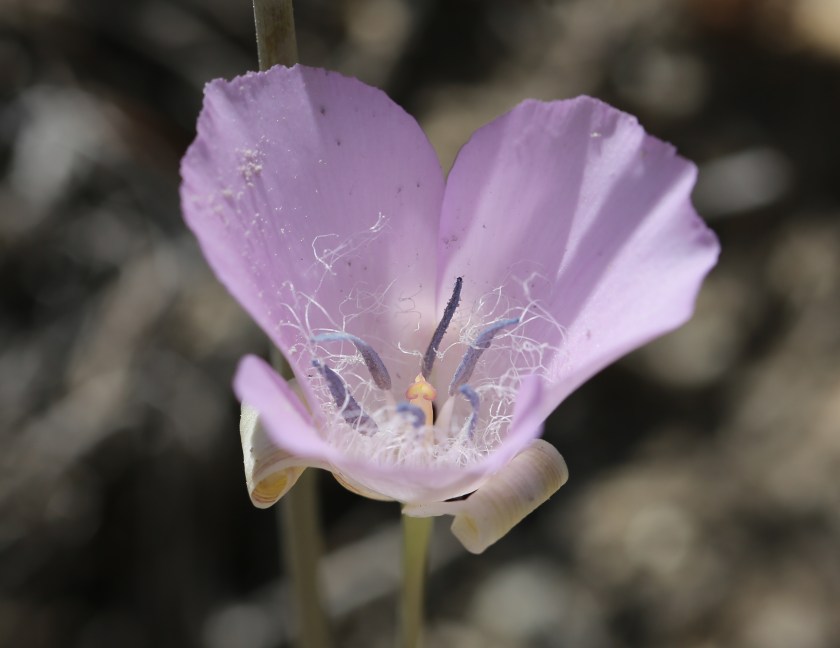
Description by the California Native Plant Society. Calochortus splendens is a species in the Liliaceae Family known by the common name “Splendid Mariposa Lily”. It is native to California and Baja California where it is found primarily near the coast, in foothills and valleys and on the west slope of the mountains. Growing from a bulb, it is usually found coming up among dense, low shrubs, herbs or grasses. It grows to a maximum of 60 cm in height and 15 cm in width. It is a thin-stemmed lily with few leaves (thin, strap-like, arising from the base) and bearing flowers singly or in flower clusters of up to four. Each flower is ringed with smaller, ribbonlike, curling leaves. The bowl-shaped flowers are of varying shades of blue, pink, purple, or lavender, with a spot of darker purple at the base of each petal. The flower may have numerous white hairs in the center and bright purple pollen. In the wild it blooms profusely following fire and then may not bloom again for years. In the garden do not expect it to bloom every year as flowering requires considerable expenditure of stored energy from the bulb.

Reference Books. The gem of a book for all Calochortus aficionados is : “Calochortus Mariposa Lilies and their Relatives”. By Mary E. Gerritsen and Ron Parsons. 2007. Timber Press. 

Calochortus splendens 03
Calochortus splendens from the Lockwood Valley in California.
Calochortus splendens 02
Calochortus splendens from the Lockwood Valley in California.

Calochortus venustus

Ethnobotany. A food for many Amerindian Peoples of California: the bulbs were eaten raw or roasted. It was specified for the Miwok People by Barrett, S. A. and E. W. Gifford in “Miwok Material Culture” (Bulletin of the Public Museum of the City of Milwaukee. 1933).

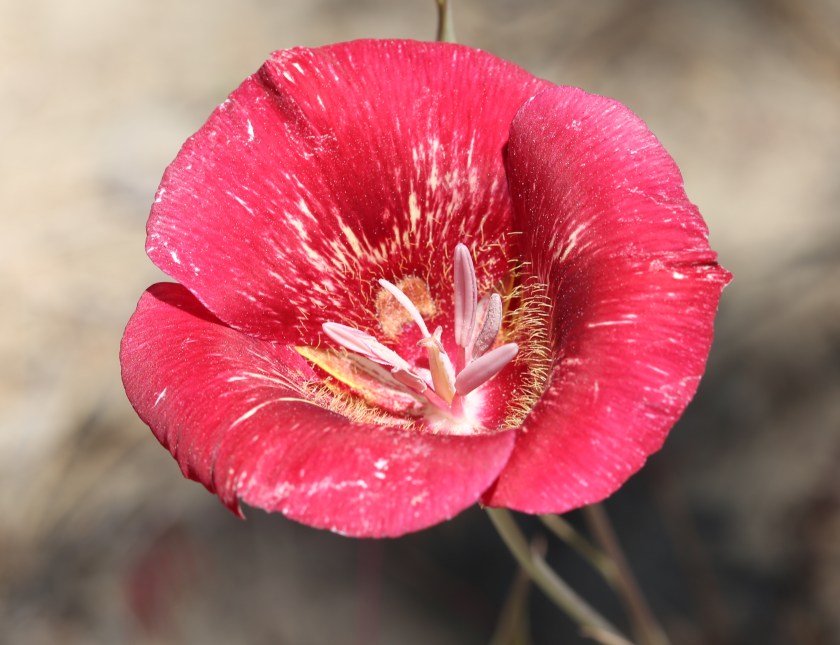
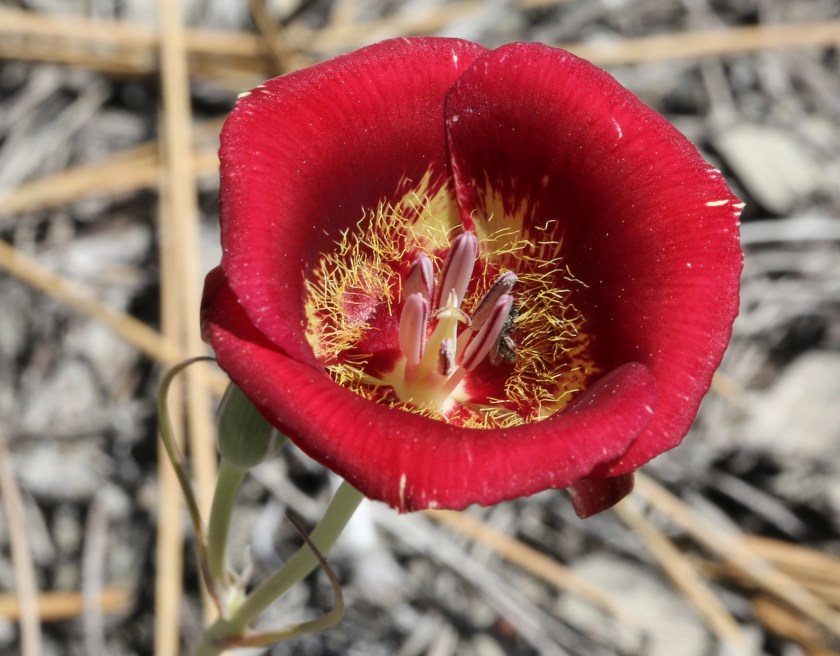
Description by the California Native Plant Society. Calochortus venustus is a species of flowering plant in the lily family known by the common name Butterfly Mariposa Lily. It is endemic to California, where it can be found in the sandy soils of a number of habitats in the mountains and foothills in the central part of the state. It is a perennial herb producing a branching stem 10 to 60 centimeters tall. There is a basal leaf up to 20 centimeters long which withers by the time the plant blooms. The flower cluster is a loose cluster of 1 to 6 erect, bell-shaped flowers. The flowers are variable in size and color pattern (cream, lavender, orange, pink, purple, red and white) though white is the most common color. They are often showy and intricately patterned. They generally have three curving sepals 2 or 3 centimeters long and three oval-shaped, clawed petals up to 5 centimeters long. The petals may be a variety of colors from white to pale pink or purple to bright red or orange, and sport a large dark central blotch and a smaller, paler blotch above. The fruit is an angled capsule 5 or 6 centimeters long. Although they tend to grow singly in the wild, they have more visual impact when massed in the garden. This plant needs summer dormancy, so withhold water after it has finished blooming. It grows naturally in the sandy (often granitic) soil in grassy places, typically hilly areas of the Coast Ranges and Sierra foothills.

Reference Books. The gem of a book for all Calochortus aficionados is : “Calochortus Mariposa Lilies and their Relatives”. By Mary E. Gerritsen and Ron Parsons. 2007. Timber Press. 

Calochortus venustus 05
Variety of Calochortus venustus from the Mt Pinos region in California.
Calochortus venustus 04
Variety of Calochortus venustus from the Mt Pinos region in California.
Calochortus venustus 06
Variety of Calochortus venustus from the Mt Pinos region in California.

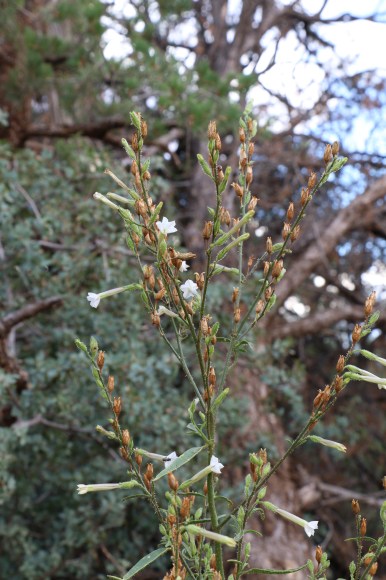
Nicotiana attenuata

Ethnobotany. According to James Alexander Teit (1864-1922) in “Ethnobotany of the Thompson Indians of British Columbia” (1900): «The Thompson Indians, at least the upper division, have smoked from time immemorial. Their substitute for tobacco was a plant, a genuine wild tobacco (Nicotiana attenuata), which grew in the warmest valleys. The leaves were gathered, dried, and greased, and when used were broken up and mixed with bearberry-leaves (Arctostaphylos uva-ursi), which had first been dried or roasted over a fire. This wild tobacco is now almost altogether replaced by the tobacco of the whites, of which most members of the tribe are very fond, though hardly any of them will smoke it alone, preferring to mix it with bearberry-leaves. Among the upper division of the tribe the women smoke equally as much as the men. Two or three generations ago, however, women seldom or never smoked. Smoking was looked upon as the privilege solely of the men. Only such women smoked as laid claim to being strong in “medicine.”»

According to James Alexander Teit and Elsie Viault Steedman (1930) : «The leaves of this plant are the most important source of tobacco. They are dried and toasted before being smoked. They are often greased to keep the leaves from getting too dry. Leaves of the bearberry…were usually dried, toasted, and mixed with tobacco»… «A decoction of wild tobacco was used as a wash to remove dandruff and prevent falling out of hair. Some people believed it would prevent the hair from turning gray until very late in life. They believed the soaps and shampoos of the Whiteman cause dry, scanty, prematurely gray hair, whereas their own scalp and hair treatments were effective ». 

Among the Zuni People, the smoke is blown over the body to reduce the throbbing from rattlesnake bite. (Ethnobotany of the Zuni Indians. Marilda Coxe Stevenson. 1915).

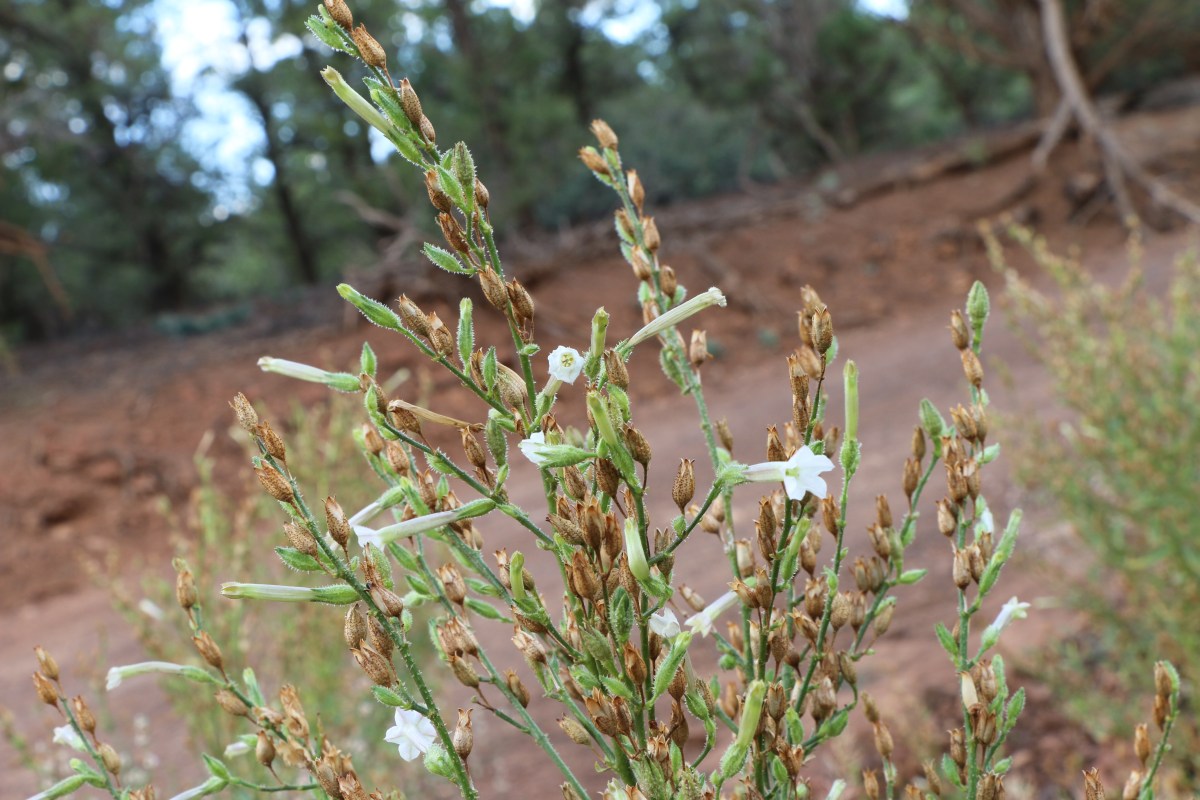
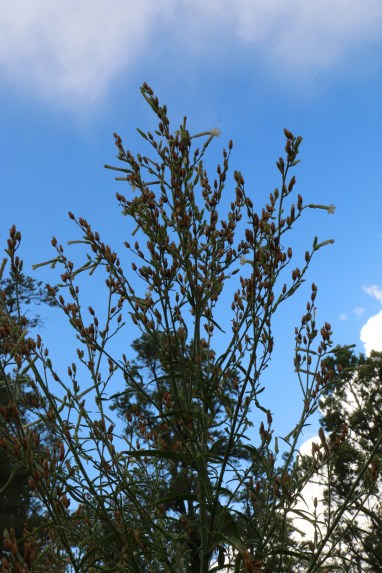
Description. Nicotiana attenuata is a species of wild tobacco known by the common name coyote tobacco. It is native to western North America from British Columbia to Texas and northern Mexico, where it grows in many types of habitat. It can grow tall and compact or, as pictured, shrub-like to several feet tall and wide. It is a hairy and sparsely hairy annual herb exceeding a meter in maximum height. The leaf blades may be 10 centimeters long, the lower ones oval and the upper narrower in shape, and are borne on petioles. The flower cluster bears several flowers with pinkish or greenish white tubular throats 2 to 3 centimeters long, their bases enclosed in pointed sepals. The flower face has five mostly white lobes. The fruit is a capsule about a centimeter long. Flowering season from May to October.

Recent researches. The genomic analysis of Nicotiana attenuata has been recently published by the Max Plank Institute.

In 2012, on the subject of green leaf volatiles released as warning signals, an article was published “Herbivory-induced volatiles function as defenses increasing fitness of the native plant Nicotiana attenuata in nature” by Bartel, Schumann and Baldwin. «Now, a 2-year field study by Schuman et al. has shown plants that emit green leaf volatiles (which are a type of HIPV) produce twice as many buds and flowers – a measure of fitness – as plants that have been genetically engineered not to emit green leaf volatiles. This study was conducted with Nicotiana attenuata, which is a wild tobacco plant that is often targeted by Manduca sexta, a type of moth that is also known as the tobacco hornworm. Green leaf volatiles only increased plants’ fitness when various species of Geocoris—a bug that preys on Manduca sexta—reduced the number of herbivores by a factor of two. This is the first evidence that HIPVs offer indirect defense against herbivores.»

Predators/Pollinators. The main species of pollinators are two hawkmoths: Manduca quinquemaculata and Manduca sexta. The botanist Paulo Cabrita wrote a beautiful article about the Coyote Tobacco titled “The Four Lives of Nicotiana attenuata. «The drawback is that the larvae of these night-active pollinators hawkmoths, also known as tobacco hornworm or goliath worm, are voracious herbivores that cause tremendous damage to coyote tobacco by eating its leaves. Like many larvae of butterflies and moths which are immune to the poisons of the plants they feed from, these larvae are immune to nicotine.»

IMG_8654

IMG_8655 copie

IMG_8663

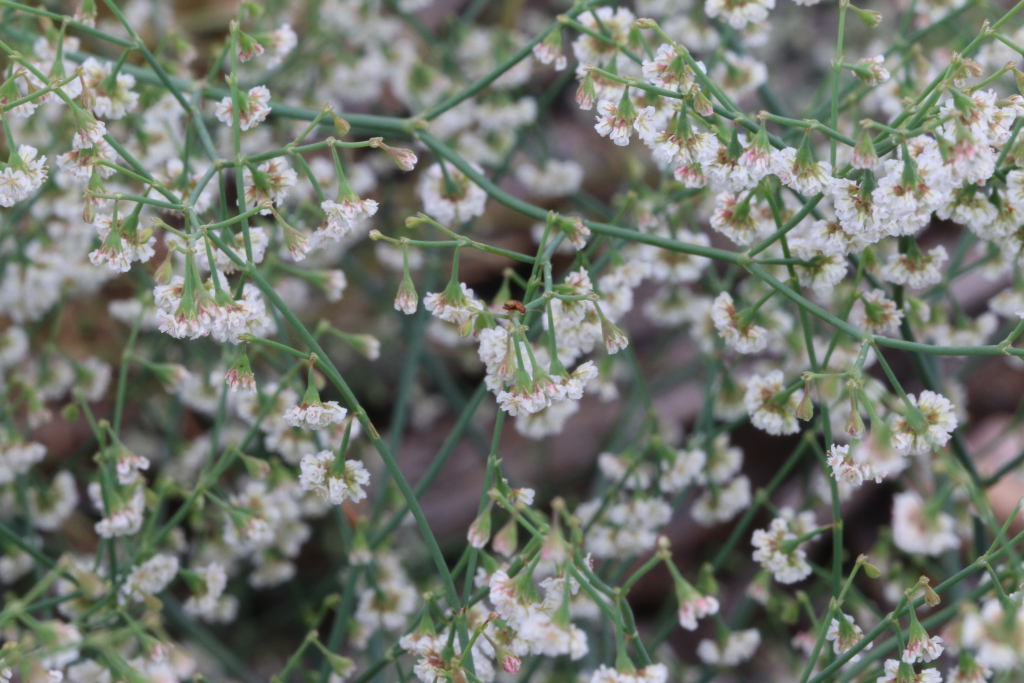
Eriogonum cernuum

Ethnobotany. According to the book “The Ethnobotany of the Kayentah Navaho” (Wyman, Leland C. and Stuart K. Harris. The University of New Mexico Press. 1951), Eriogonum cernuum was used for skin rashes and for kidney diseases. The seeds were also made into a mush for food.

According to the book “The Ethnobotany of the Ramah Navaho” (Vestal, Paul A., 1952, Papers of the Peabody Museum of American Archaeology and Ethnology), Eriogonum cernuum was used as a poultice of chewed leaves applied to red ant bite.

According to the book “CRC World Dictionnary of Medicinal and Poisonous Plants” (Umberto Quattrocchi), Eriogonum cernuum was used also as a tonic and a antiseptic.  

With the Gosiute Peoples of Nevada and Utah, Eriogonum cernuum is called “Oi’tcu-mo”,  from Oi’tcu for bird and Mo’a for leg.

In the Bear Medicine of the Tewa (Pueblos) of New Mexico,  Eriogonum cernuum – “poe unipi” –  is used as a birth plant: a decoction of the plant is given after the birth. The other species used by the midwives are the following: Gilia rigidula; Phoradendron juniperum; Gutierrezia sarothrae; Croton texensis; Aquilegia caerulea; Dyssodia papposa; Euphorbia serpyllifolia; Mentzelia pumila; Asclepias latifolia; Malva parviflora.

In “Navajo Indian Medical Ethnobotany” (University of New-Mexico Bulletin. 1941) authored by Leland C. Wyman and Stuart K. Harris we find the following: Diseases (especially kidney and bladder disease, sudoresis, and stomach distress) attributed to swallowing a red ant (in food or water), or to other types of “red ant infection,” may be treated by Red Ant Way; hence plants used for these conditions may pertain to this Chant Way. Decoctions or infusions of the plants are taken internally and are said to “kill the ant.” Itching and sores caused by red ant bites are treated by applying decoctions or infusions as lotions, or by chewing the leaves of the plants and applying them as poultices. The plants may be designated by the Navajo names “red ant medicine” {1}  “red ant killer” {2}  “red ant food” {3}  or included in the Navajo family or form genus “red ant decoction” {4}. See diuretics. 

  • {1} wóláchííʼ azee (c’il) – red ant medicine. Dyssodia accrosa; Dyssodia papposa; Gaura coccinea; Viguiera multiflora; Lepachys tagetes;  Polygonum aviculare. 
  • {2} wóláchííʼ be-tkah – red ant killer: Grindelia aphanactis.
  • {3} wóláchííʼ da – red ant food: Erlogonum cernum; Grindelia aphanactis; Androsacae septentrionalis, var. puberulenta var. glandulosa; Arenalia fendleri; Erigeron divergens; Euphorbia novomexicana; Oxybaphus spp.; Psilactis asterioides. Various botanical species of a “spidery” habit are often included in this group as generalizations, often being the same as those in the groups of “spider plants”. See {5} and {6}.
  • {4} wóláchííʼ yiłbéézh – red ant decoction: Actinea leptoclada, var. ivesiana; Coreopsis cardaminefoiia; Corispermum hyssopifolium; Dyssodla accrosa; Eriogonum cernuum; Menodora scabra; Paronychia jamesii; Polygala alba; Silene pringlei; Tetraciea coulteri; Thelesperma longipes; Thelespermas ubnudum.
  • {5} naʼashjéʼii c’il – spider plant: Androsacae septentrionalis var. puberulenta; Arenaria fendleri; Astragalus hosackiae; Hoffmanseggia drepanocarpa; Linum puberulum; Polygonum aviculare; Potentilla pennsylvanica; Potentilla propinqua.
  • {6} naʼashjéʼii da – spider food: Androsacae septentrionalis var. puberulenta var. glandulosa; Boerhaavia sp.; Bouteloua eriopoda; Cladothryx lanuginosa: Galium fendleri; Gaura coccinea; Hoffmanseggia drepanocarpa; Petalostemum oligophyllum; (Vesicaria fendleri; Croton texensis) The last two groups include plants with a “spidery'” habit. Androsacae spp. may be.

Description from Jim Reveal’s Manual. Plants herbs, spreading to erect, annual, 0.5–6 dm tall, glabrous, grayish, greenish or reddish; stems with caudex absent, the aerial flowering stems erect, solid, not fistulose, 0.3–2 dm long, glabrous; leaves basal or sheathing up stems 2–10 cm, the petioles 1–4 cm long, tomentose, the blades round-ovate to orbiculate, (0.5) 1–2 (2.5) cm long and wide, white- to grayish-tomentose abaxially, tomentose to floccose or glabrate and grayish or greenish adaxially, the margins plane; inflorescences cymose, open to diffuse, 5–50 cm long, 5–40 cm wide, the branches glabrous, the bracts 3, scalelike, 1–2 mm long, 1–2.5 mm wide; peduncles spreading to ascending or deflexed to cernuous, infrequently absent, straight or curved, slender, 0.1–2.5 cm long, glabrous; involucres turbinate, (1) 1.5–2 mm long, 1–1.5 mm wide, glabrous, the teeth 5, erect, 0.4–0.7 mm long; flowers 1–2 mm long, glabrous, the perianth white to pinkish, becoming rose to red, the tepals dimorphic, those of outer whorl pandurate, those of inner whorl obovate, the stamens mostly exserted, 1–2 mm long, the filaments pilose proximally; achenes light brown to brown, trigonous, 1.5–2 mm long, glabrous.