Asclepias tuberosa

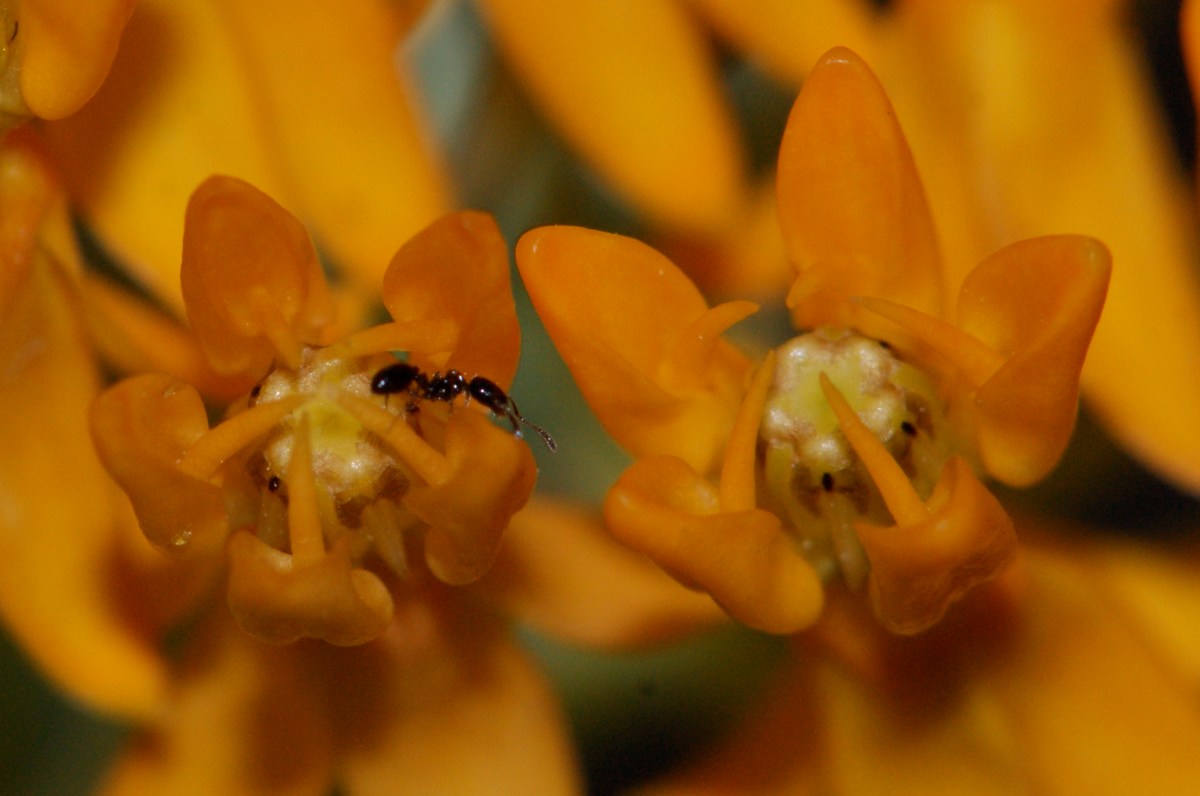
Ethnobotany. Asclepias tuberosa has been used as medicine by the following First Peoples: Cherokee, Delaware, Iroquois, Menominee, Mohegan, Navajo, Omaha, Ponca, and Rappahannock. 

Recent researches. Asclepias tuberosa

Materia Medica. According to Harvey Wickes Felter in “The Eclectic Materia Medica, Pharmacology and Therapeutics” (1922) : «Asclepias is one of the most important medicines for broncho-pulmonic inflammations and catarrhs, and an agent for re-establishing suppressed secretion of the skin. It is the most perfect diaphoretic we possess, so completely does it counterfeit the normal process of insensible perspiration. When the secretion of sweat is in abeyance it restores it; when colliquative it restrains it through its effect of promoting normal functioning of the sudoriparous glands. It may be indicated even though the patient be freely perspiring, for sometimes when the liquid excretion is abundant there is a retention of the solid detritus, the removal of which is one of the effects of asclepias. By softening and moistening the skin, temperature is safely reduced. Asclepias never causes an outpouring of drops of sweat. If such occurs, it is due to bundling with bed-clothing, or the too copious administration of either hot or cold water with. it. Given in alcoholic preparations, in the usual small doses, it merely favors the reestablishment of natural secretion. While Asclepias is serviceable when the temperature is high, it does its best work when heat is but moderately exalted, and when the skin is slightly moist, or inclined to moisture, and the pulse is vibratile and not too rapid. In fact, in febrile and inflammatory disorders Asclepias is not a leading remedy, but is largely a necessary accessory. If the pulse be rapid and small, aconite should be given with it; if rapidly bounding, large and strong, veratrum. While useful in disorders of adults, especially old persons, asclepias will be most often indicated in diseases of infants and children. While it acts best when strictly indicated, it is almost never contraindicated in acute respiratory affections.

In acute chest diseases Asclepias is useful to control cough, pain, temperature, to favor expectoration, and restore checked perspiration. When cough is dry and there is scant bronchial secretion, Asclepias stimulates the latter and thus relieves the irritation upon which the cough depends. In chest disorders requiring Asclepias our experience verifies the classic indications for it.»

Description.

SONY DSC


Asclepias speciosa

Ethnobotany. Asclepias speciosa has been used as a food or as medicine by the following First Peoples: Acoma, Apache, Cheyenne, Chiricahua, Crow, Flathead, Keres, Hopi, Laguna, Lakota, Miwok, Mescalero, Montana, Navajo, Okanagan-Colville, Paiute, Pomo and Shoshoni. Except the roots and the seeds, all parts of the plant were eaten – raw or cooked depending on the stage of the plant. Even the latex of the stem was left to harden to be used as a gum.

A decoction of the roots was used for many diverses conditions: eye pathologies, gastrointestinal problems, venereal diseases, skin sores, ringworms, measles, cough, warts, rheumatism, headaches, etc. 

The ripe seeds were ground and made into a salve for sores. Seeds were boiled and the liquid used to draw the venom from rattlesnake bites. Among the Catawba People, the Milkweed Medicine is very reputed for snakebites.

Recent researches. Asclepias speciosa and Asclepias syriaca (and their hybrids) have been tested, since 1985, for commercial seed floss production as a hypo-allergenic substitute for goose down. 

Materia Medica. According to Stephen Harrod Buhner in his book “Sacred Medicine”: «The root, when taken as medicine, is primarily an herb for the lungs. It softens bronchial mucous, facilitates expectoration and dilates the bronchial passageways. Like its cousin inmortal (Asclepias asperula), the herb stimulates lymph drainage from the lungs, though not so markedly. As such, it can find use in treatment of asthma, symptoms of cold and flue that are seated in the lungs, bronchitis, pleurisy and chronic problems such as emphysema and cystic fibrosis. The herb acts well also as diuretic and increases sweating. Too much can cause nausea and, eventually, vomiting if one persists. I generally recommend to start with 15 drops of the tincture 3 to 4 times a day and increase dosage until the edge of the nausea is just starting to make itself apparent, then back off a bit.»

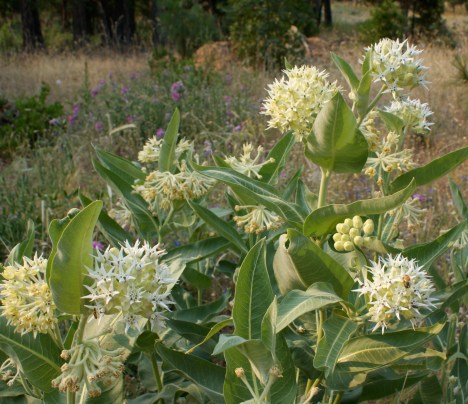
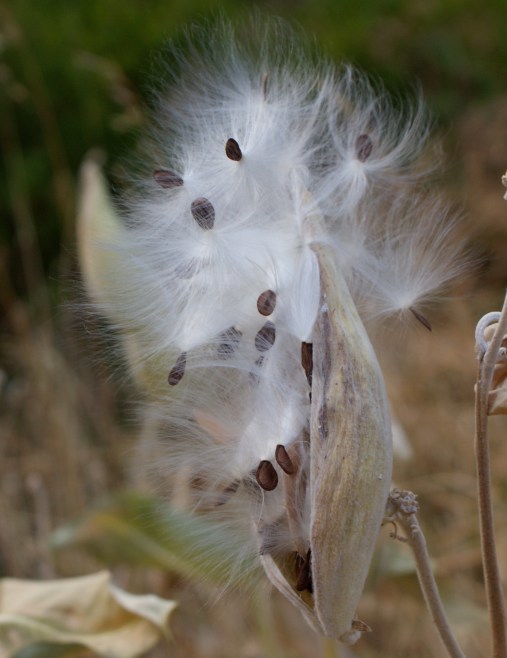
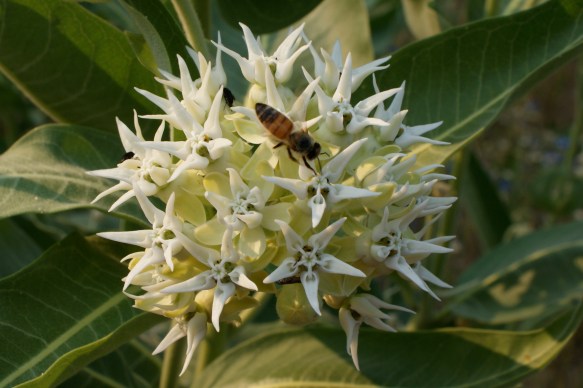
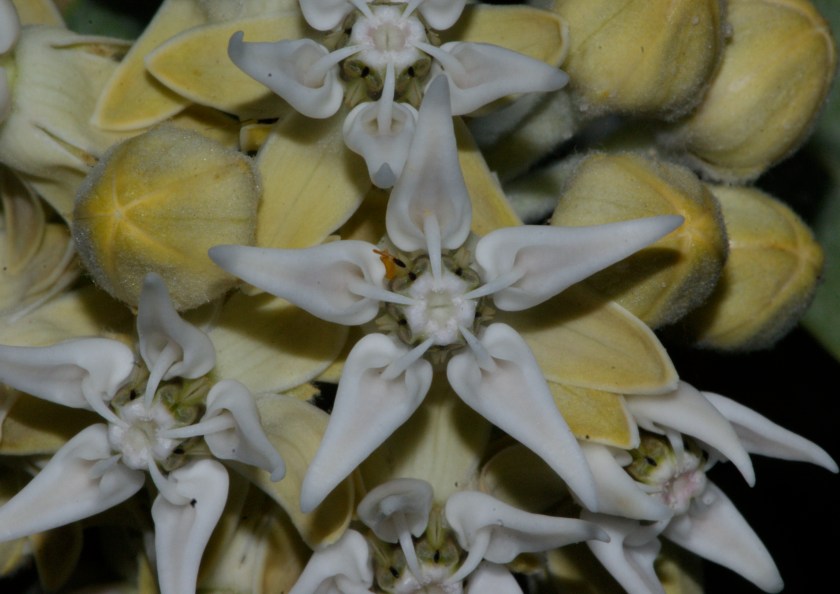
Description from the NRCS.  Showy milkweed is a native herbaceous perennial from widespread rhizomes, which produce stems that grow to 1½ to 5 ft tall in summer. The graygreen leaves are opposite, 4 to 7 inches long, oval, and covered in velvety hairs. Stems and foliage exude milky latex sap when cut. Flowers are in loose clusters at the top of the stems and are rose-purple, aging to yellow. Individual Asclepias flowers look like crowns, with the corolla (petals) reflexed, and hoods above the corolla. Plants flower from May to September. Thick seed pods 3 to 5 inches long split down one side in fall to release reddish-brown, flat seeds. Each seed has a tuft of white, silky hairs that allows them to be dispersed by wind.

SONY DSC

SONY DSC

SONY DSC

SONY DSC

SONY DSC

SONY DSC

SONY DSC

SONY DSC

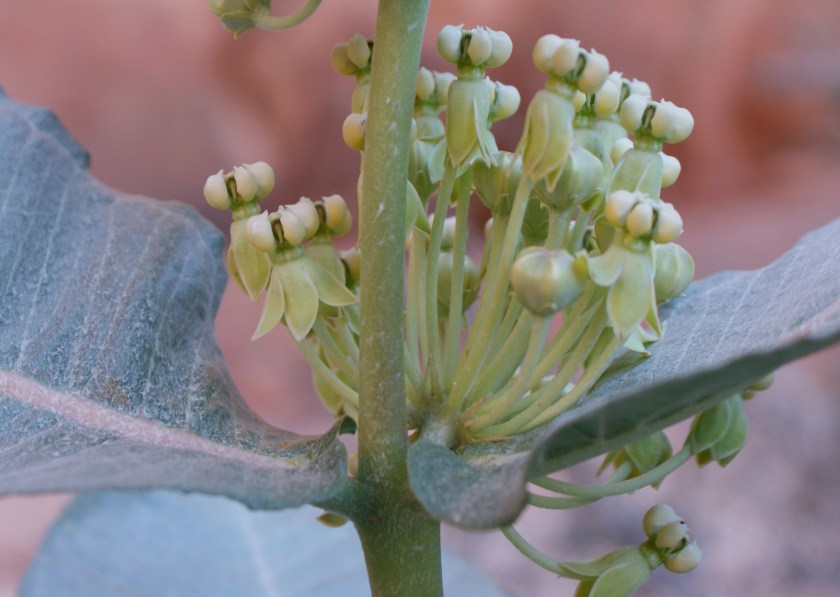
Asclepias latifolia

Ethnobotany. The Isleta People used the ground leaf and stem powder to be inhaled for catarrhs as mentioned in “The Ethnobotany of the Isleta Indians”. Jones, Volney H. 1931, University of New Mexico.

Description. Plant: perennial herb; stems erect or ascending, unbranched, 20-80 cm tall, short woolly to more or less glabrate; milky sap Leaves: opposite, subsessile or the petioles to 10 mm long, the blades nearly circular to mostly broadly elliptic, 5-14 cm long, 4-12 cm broad, broadly rounded to subcordate at the base, broadly rounded to truncate or retuse at the apex, apiculate, short woolly when young, in age more or less glabrate on both surfaces Inflorescence: Umbels lateral at most of the upper nodes, persistently short woolly, (4-)5-8 cm broad, subsessile or the peduncles to 2(-3) cm long Flowers: large; calyx lobes ca. 4 mm long; corolla greenish, the lobes 7-10 mm long; hoods whitish to yellow-brown, erect or uncommonly ascending, mostly oblong-quadrate, truncate at the apex, 3-4 mm high, 2-3 mm broad, about as long as the gynostegium, the horns radially flat, fused nearly the full length of the hoods, triangular to sickle-shaped, abruptly incurved and short-exserted; anther wings 2.7-3.2 mm long; corpusculum 0.4-0.5 mm long, the pollinia 1.7-1.9 mm long Fruit: Follicles erect on deflexed pedicels, 7-9 cm long Misc: Canyons and rocky slopes, desert grasslands, spreading to roadsides; 750-2150 m (2500-7000 ft); Jun-Sep. Source: Asclepiadaceae. Eric Sundell. 1993.

SONY DSC
Asclepias latifolia
SONY DSC
Asclepias latifolia
SONY DSC
Asclepias latifolia